
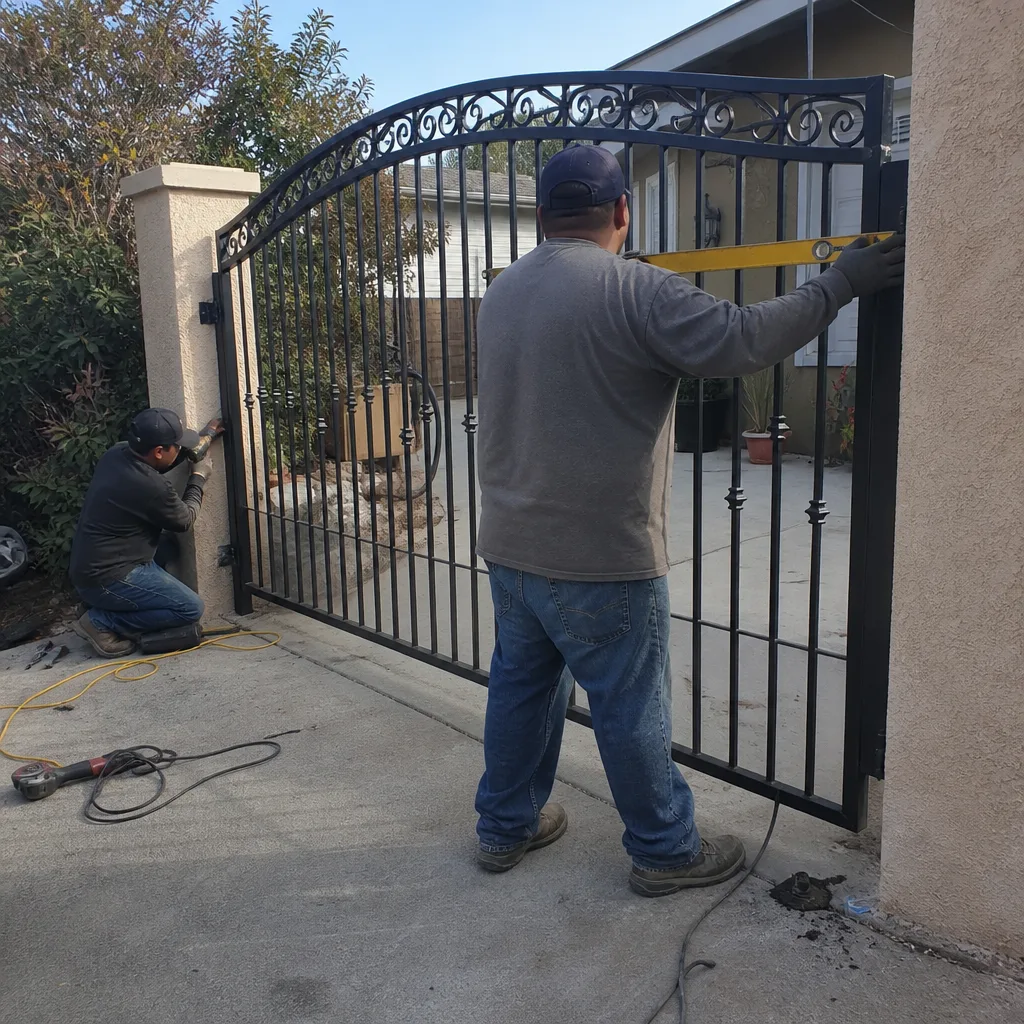
Last updated November 15, 2026
 Wrought iron
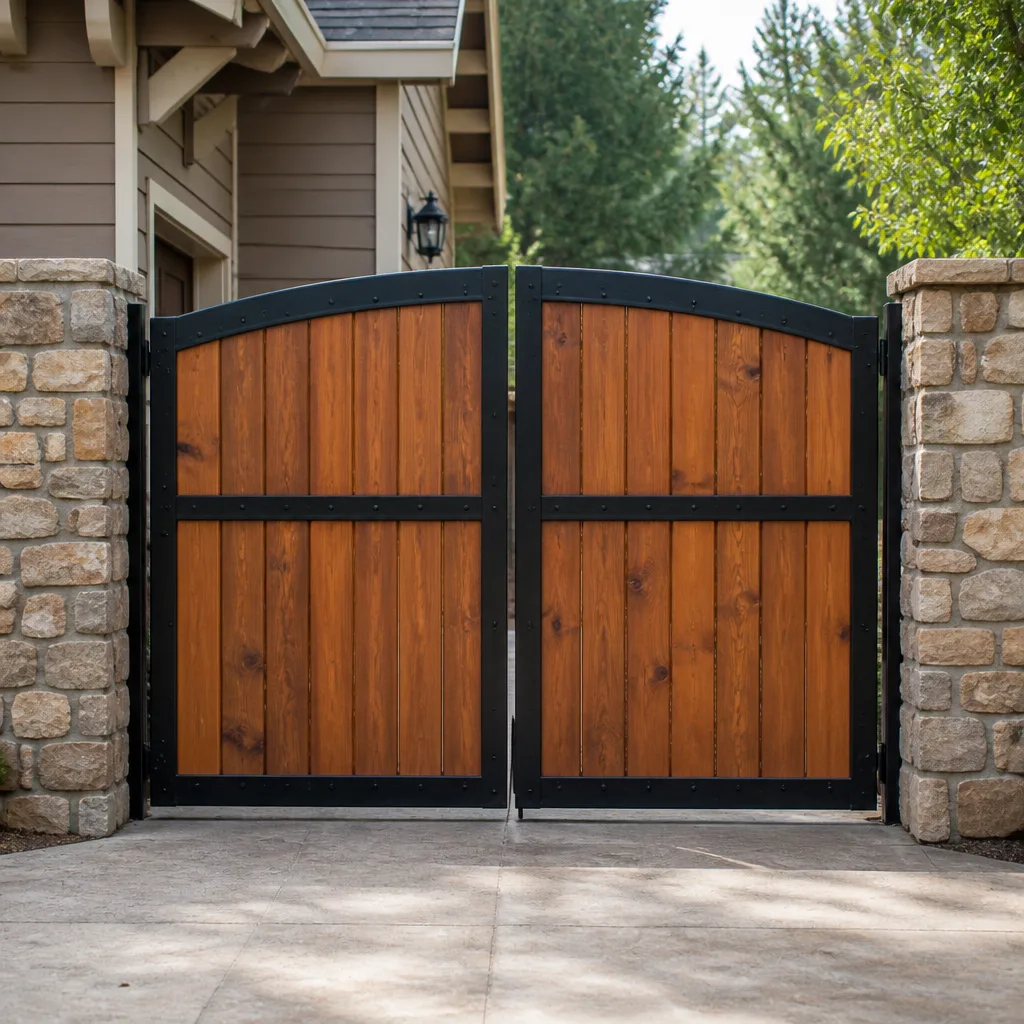 Wood & steel frame
 Farm & ranch
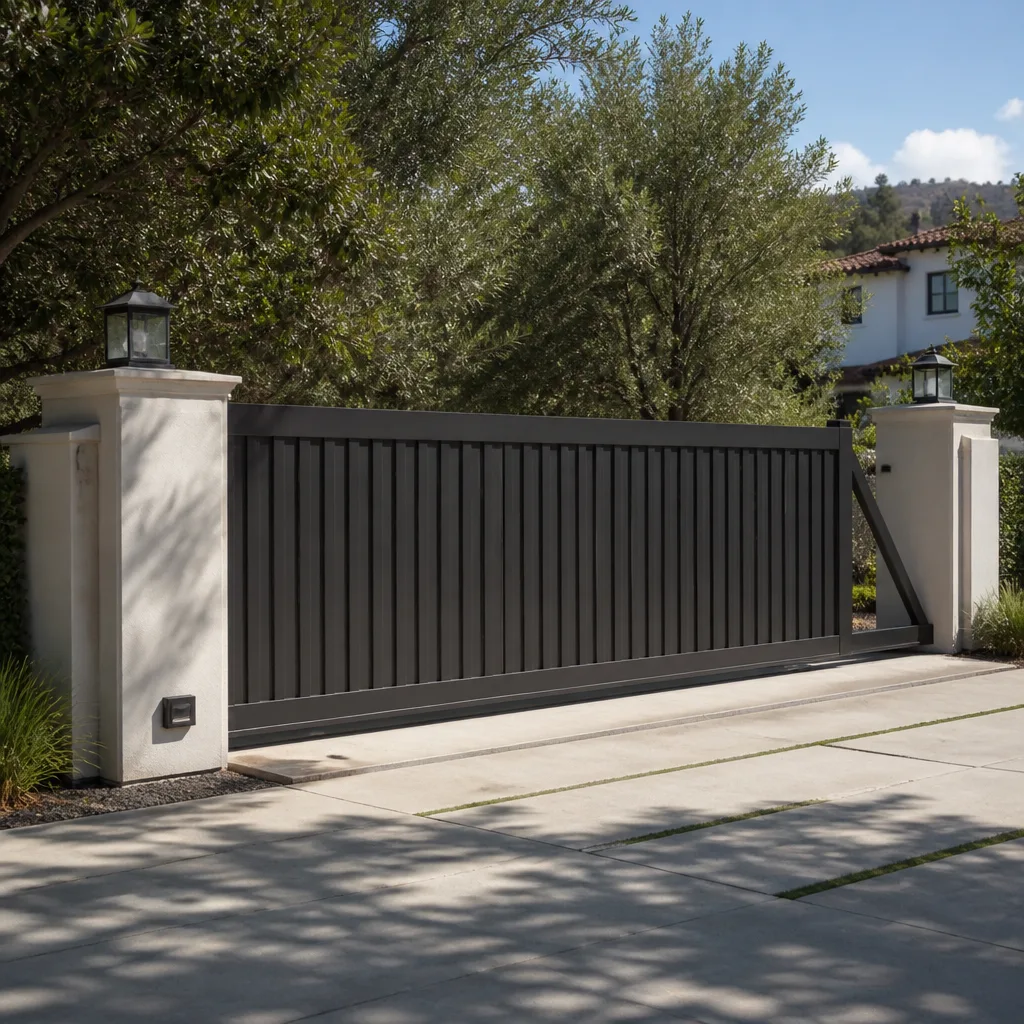 Sliding driveway gates
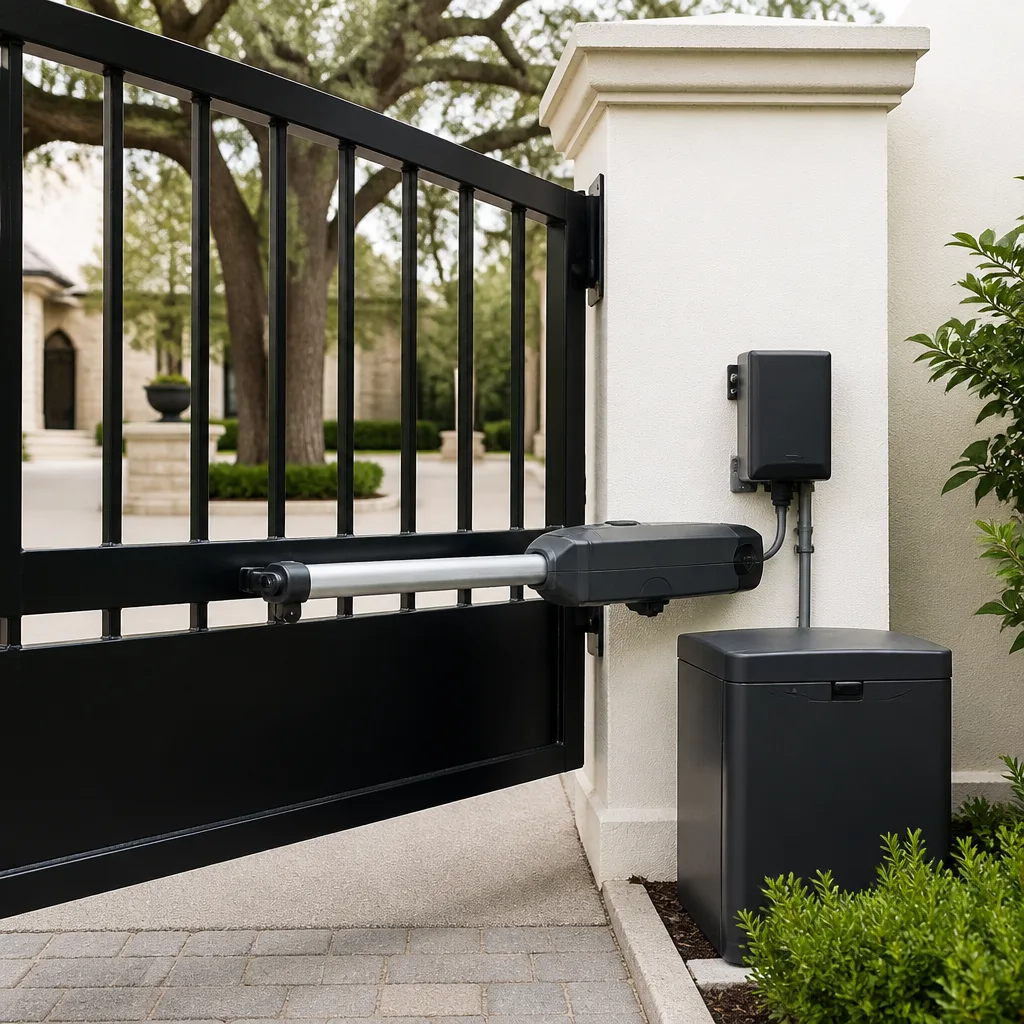 LiftMaster operators
Free on-site gate assessment - hinges, posts, and your LiftMaster or Nice gate operator checked before anything is quoted
The assessment is free and the quote is the invoice.
Get your free estimateGate Repair Warning Signs: An El Cajon Homeowner’s Reference Guide
A gate that hesitates for two seconds before it moves isn’t being slow. It’s telling you the control board is compensating for a torque reading outside normal parameters, which means the motor is working against something it shouldn’t be. Most homeowners write off that pause as a quirk right up until the gate stops entirely and the fix grows from a small adjustment into a motor replacement. This guide decodes the sounds, movements, timing changes and visual clues a failing gate gives you well before it quits, so you can call a technician in El Cajon with an accurate description instead of “it’s acting weird.”
Quick Answer
The warning signs of a failing gate are grouped into five families: unusual sounds (grinding, clicking, humming with no movement), wrong movement patterns (stuttering, reversing, stopping short, swinging past the stop), slower open and close times, visible wear at hinges, posts and steel, and access-control glitches (flaky keypads, inconsistent remotes, phantom loop triggers). Catching any one of these early usually means a small, targeted repair. Ignoring it lets strain spread into the operator and control board, where costs climb fast.
Styles & brands we work with
- Wrought iron
- Wood & steel frame
- Farm & ranch
- Sliding driveway gates
- LiftMaster operators
Table of Contents
- What Is Your Gate Trying to Tell You? Sound-Based Diagnostics
- Which Movement Patterns Signal a Specific Failing Component?
- Why Does a Gate That Opens Slower Than Before Matter?
- What Visual Signs Do El Cajon Properties Show First?
- How Do You Read Access Control Warning Signs?
- Does a Manual Gate Give Different Warnings Than an Electric One?
- The 5-Minute Monthly Walk-Around
- How to Describe the Problem to a Technician
What Is Your Gate Trying to Tell You? Sound-Based Diagnostics
Sound is the fastest diagnostic tool a gate gives you, and it’s the one most people ignore. Before you ever touch a wrench, stand back and listen through a full open-and-close cycle. The type of noise narrows the problem to a handful of components, which tells a technician where to start. Here’s how the three most common sounds translate.
- Grinding. Usually a track and roller problem. Debris, a worn roller, a bent track section or a dry pivot can all produce a grinding or scraping sound. On a slide gate, look at the track itself; on a swing gate, listen near the hinges. Grinding left alone wears the roller or hinge faster and puts extra load on the operator.
- Clicking. A click, especially one repeated at the same point in travel, points to a limit switch or a relay. The control board relies on limit switches to know where open and close are; a sticky or misaligned switch clicks as it fails to register. A relay that clicks but doesn’t engage is an electrical fault that belongs with a technician.
- Humming with no movement. The motor is getting power but the gate isn’t moving. That’s typically a motor or capacitor problem, or a mechanical jam the motor can’t overcome. A humming operator is under load and can overheat or damage the board if you keep cycling it. Stop using the gate and get it looked at.
In our experience, the humming-with-no-movement call is the one homeowners wait longest on, and it’s the one that most often turns a small repair into a bigger one. When you hear any of these sounds on a gate in El Cajon, note which part of the cycle triggers it. That detail alone speeds up diagnosis.
Which Movement Patterns Signal a Specific Failing Component?
Watch the gate’s motion closely, not just its sound. Movement tells you which subsystem is straining. Each of the four patterns below traces back to a specific part, and each has a distinct meaning for an electric gate.
- Stuttering or jerking. A gate that stutters mid-travel often has a load problem: a binding roller, a misaligned track, or a hinge that’s stiffened. On an electric gate, the operator may be fighting friction it shouldn’t have to. Fixing the mechanical bind usually resolves the stutter.
- Reversing mid-travel. A gate that opens partway and then reverses is telling you the safety system detected an obstruction that may not exist. On many operators, a false reversal points to the safety edges, the loop detector, or the force setting on the board. It’s a safety circuit doing its job; the job is figuring out why it’s tripping.
- Stopping short of fully open or fully closed. This is a limit-switch or travel-setting issue. The board thinks the gate has reached its endpoint when it hasn’t. Recalibrating travel settings on brands like LiftMaster or Elite is often all it takes, but the underlying cause can also be a slipping clutch or a worn gear.
- Swinging past the stop point. Over-travel means the gate isn’t being told to stop, or the mechanism can’t hold it. On a swing gate that’s usually a limit setting or a failing stop; on a slide gate it can signal a worn physical stop. Either way, over-travel puts stress on the operator’s end-of-travel components and should be corrected.
If you’re seeing more than one pattern at once, the first step is electric gate repair that diagnoses at the source rather than guessing at a single part. The operator, the board and the mechanicals work together, and the fix has to address all three.
Why Does a Gate That Opens Slower Than Before Matter?
A gate that used to open in ten seconds and now takes twelve is showing early motor strain, even if everything else looks fine. That twenty-percent slowdown is the earliest and quietest warning sign there is, because nothing has broken yet. The motor is simply working harder to overcome resistance that’s crept in: a drying hinge, a slightly misaligned track, a worn gear or a weakening capacitor. By the time it slows down noticeably, the strain has usually been building for weeks.
Timing is easy to track on your own. Pick a day, run a full cycle with a stopwatch or a phone timer, and write down the open time and the close time. Do that again in four to six weeks and compare. A small, consistent drift is your cue to book a technician before the operator is under constant load. A sudden change, where the gate is dramatically slower or faster, is a call-us-now signal.
Two El Cajon-specific factors feed timing drift here. Our mild winters mean gates run year-round with no seasonal downtime, so wear accumulates steadily rather than in bursts. And a stretch of hot weather can affect a solar-powered operator (common on driveway gates in the foothills neighborhoods) if its panel or battery is degrading, which shows up as slower cycles and weak starts. If your gate is solar, a slowdown combined with panel discoloration is worth investigating together.
For a gate you rely on for daily access, a two-second drift is not the moment for a full replacement. It’s the moment for gate repair that finds the root cause, whether that’s on a DoorKing control board or a Mighty Mule operator.
What Visual Signs Do El Cajon Properties Show First?
Walk the gate line with your eyes once a month. You’ll catch things a running gate hides. These are the visual indicators we see most on gates across El Cajon, and each points to a specific repair.
- Hinge plate separation at the post. A gap between the hinge plate and the post, or a hinge that’s pulling away, means the fasteners have loosened or the post has shifted. Long posts in our dry, shifting soil can move slightly over time. A loose hinge transfers extra load to the operator and stresses the gate frame; re-secure it before it turns a swing gate into a sagging one.
- Ground-level rust bubbling under paint on hollow steel sections. Rust that pushes the paint up from the inside on a hollow steel gate, especially low near the ground, means moisture has entered the section. Bubble rust spreads fast and weakens the frame. Catch it early and it’s a surface treatment; ignore it and the structural integrity of the gate is at risk.
- Solar panel discoloration or cloudiness. On a solar operator, a panel that’s yellowed or cloudy delivers less charge and shortens battery life. Combined with a gate that’s slower to move or that trips its battery back-up sooner, it’s a clear sign to look at the power side of the system.
- Roller wear and track buildup. Flat-spotted rollers, a track with grit or debris, or a visible gap between roller and track are all early drag. Clean and inspect; replace worn rollers before the drag reaches the motor.
These same visual checks apply whether you’re deciding to repair or considering installation. If a gate’s frame has deteriorated to the point where repairs can’t be trusted, our Gate Repair El Cajon team can talk you through replacement options and a fresh setup.
How Do You Read Access Control Warning Signs?
Access problems are the warning signs people notice first and understand least. The gate moves fine, but getting it to open has become a chore. Each symptom points to a different part of the control system, and diagnosing at the source saves you from replacing good equipment.
- A keypad that needs multiple entries. If you’re punching the code three times, the keypad or its wiring is failing, or the control board is losing the signal intermittently. Keypads have their own electronics and can degrade with moisture and age. Replacing a keypad is straightforward once the fault is confirmed; guessing at remotes won’t fix it.
- Remotes that work inconsistently. A remote that works from far away sometimes and not at all up close is usually a receiver or battery issue, or a control board input that’s dropping signals. Test with a second remote you know works: if both are flaky, the receiver is the suspect.
- Loop detectors that trigger without vehicles. A loop that opens or holds the gate with nothing on it is almost always a loop or detector fault, not a gate fault. There’s a loop detector buried in the driveway, wired to the board, and when it fails, the operator can behave erratically. This is the classic “gate keeps opening on its own” complaint, and it belongs on the electrical side of the system.
- Intercom or access panel misbehavior. On larger systems, especially on multi-unit El Cajon properties, an access panel that buzzes or doesn’t release is a wiring or board issue. Linear and DoorKing access systems cover much of this ground, and each has its own quirks worth knowing.
When several access symptoms show up together, the control board is usually the common thread. That’s where a gate specialist’s focus pays off: we work on your brand rather than pushing a replacement, and diagnosis happens where the fault actually lives, on the board, the wiring or the detector.
Does a Manual Gate Give Different Warnings Than an Electric One?
A manual gate warns you through drag and alignment rather than power and control. With no operator to compensate, the signs are physical: a gate that scrapes as you push, a hinge that’s stiff, a latch that doesn’t catch cleanly, a gate that’s dropped and now drags the ground at the swing end. Those aren’t the gate being “heavy” – they’re bind, wear or settling. Handle them early and a manual swing gate stays smooth for years.
An electric gate is different in one important way: the operator masks early mechanical problems by applying more force. That’s why a manual gate’s drag is obvious while an electric gate’s equivalent wear may only show up as a slower cycle, a force setting that keeps getting adjusted upward, or a stutter the gate can power through. The access side (keypads, remotes, loop detectors) is unique to electric systems, and so is the control board, which is the component most often misdiagnosed by a generalist. When an electric gate’s warnings point to the operator or board, book our electric gate repair service; a specialist reads the fault codes and tests the board before recommending parts.
On the manual side, the fix is usually hinges, rollers, stops or alignment. On the electric side, it’s the interplay of motor, board, limits and safety circuits. Both fall under gate repair as a focused specialty, not a general handyman task.
The 5-Minute Monthly Walk-Around
Five minutes a month, done in order, catches most of what this guide describes.
- Listen to a full cycle. Open and close the gate once. Note any grinding, clicking or humming.
- Watch the motion. Look for stutter, reversal, stopping short or over-travel.
- Time it. Stopwatch the open and close and compare to your last reading.
- Walk the posts and hinges. Check for hinge plate separation, loose fasteners, and movement at the post.
- Scan the steel and solar panel. Look for rust bubbling under paint and panel discoloration.
- Test access controls. Punch the keypad, try the remote, and watch the loop detector for phantom triggers.
Write it down. A gate’s story is a timeline, and a note in your phone is a better diagnostic tool than memory. If any step fails, it’s worth a call before the next cycle. Our technicians have up to 15 years of experience, and reading the difference between “worn” and “failing” is the job.
How to Describe the Problem to a Technician
The faster you can describe the fault, the faster it gets fixed. When you call, be ready with these four things: what the gate is doing (sound, movement, timing), when it started (suddenly or gradually), the brand of the operator if you know it, and whether it’s manual or electric. Include whether the gate is on solar power, because that opens a whole power-side path for the technician to check.
We work across nine major gate and operator brands, from LiftMaster and FAAC to BFT, Linear, Viking, Ghost Controls, DoorKing, Elite and Mighty Mule. Nine brands is a deep bench because most gate companies stock parts for only two or three, and mis-sourcing is often why a “fix” doesn’t hold. We carry the diagnostic know-how for all of them and work on the equipment you already own. One call covers troubleshooting, parts and, where it makes sense, a new gate system.
We answer 24/7, and fast dispatch from 7am to 7pm, Sunday through Friday, gets a technician to your gate. Estimates are free, and the price is quoted and agreed before any work starts.
Common Mistakes to Avoid
- Adjusting the force setting to hide a bind. Turning up the operator’s force makes the gate move today and wears the motor and board faster. Find the bind and fix it instead. El Cajon’s year-round gate use means hidden strain adds up in months, not years.
- Cycling a humming operator. A motor that hums without moving is under load and can overheat or damage the board. Stop using the gate and get it checked. Each extra cycle costs you margin on the repair.
- Ignoring a small timing drift. A two-second slowdown is the cheapest warning you’ll get. Waiting until the gate is visibly slower or stops entirely turns an adjustment into a motor or board job.
- Replacing the remote when the receiver is the fault. Test a second remote before buying anything. If both are flaky, the receiver or board input is the culprit, and a new remote won’t fix it.
- Painting over rust bubbling. Bubbling rust on hollow steel looks like a cosmetic issue; it isn’t. Paint traps moisture and the section rusts from the inside. Treat the rust properly or the frame weakens.
- Patching a loose hinge without checking the post. A hinge that’s pulling away may be a fastener issue or a post that’s shifted. Check both before tightening. El Cajon’s shifting soil can move a post under a gate that’s worked fine for a long time.
- Calling a generalist for a control-board problem. A fence company or a handyman may not have the board-level familiarity to source the right part or read the fault. On an electric gate, start with a specialist.
See the difference
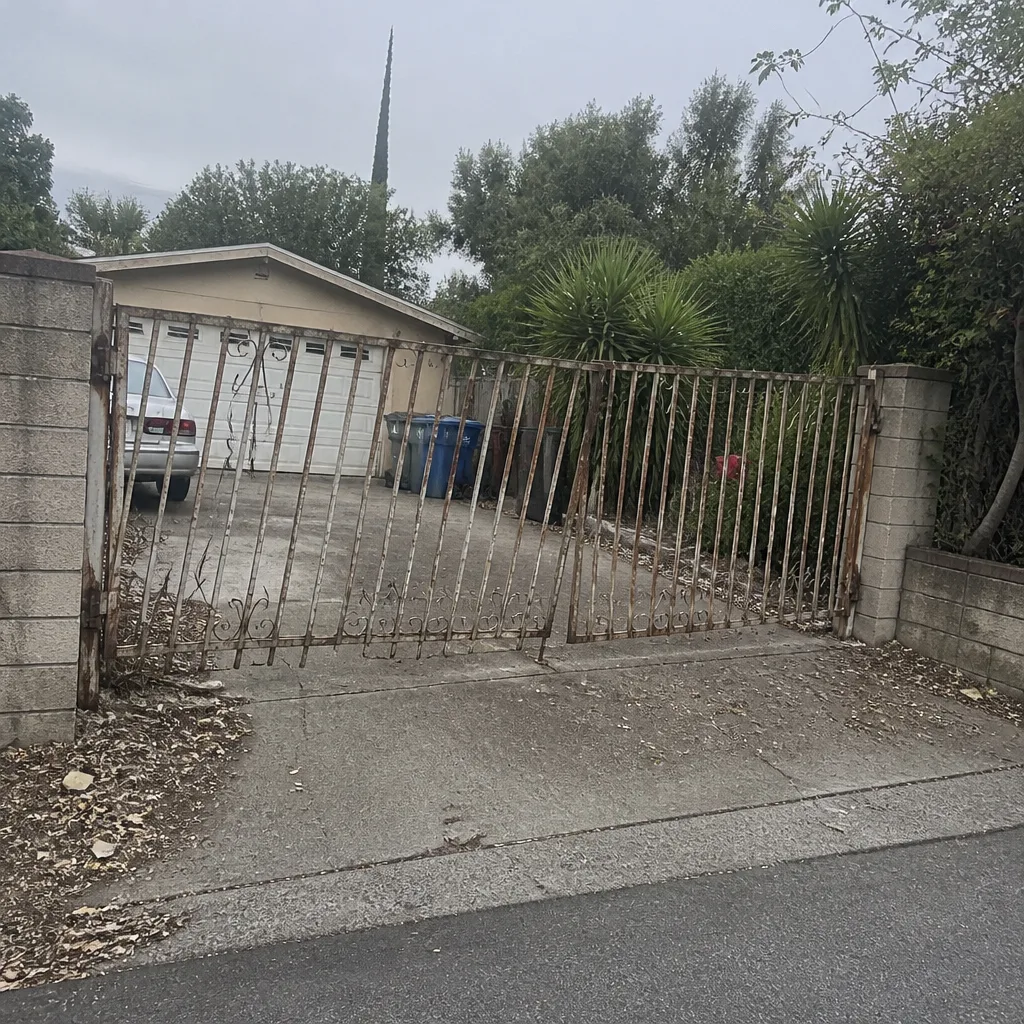 Before
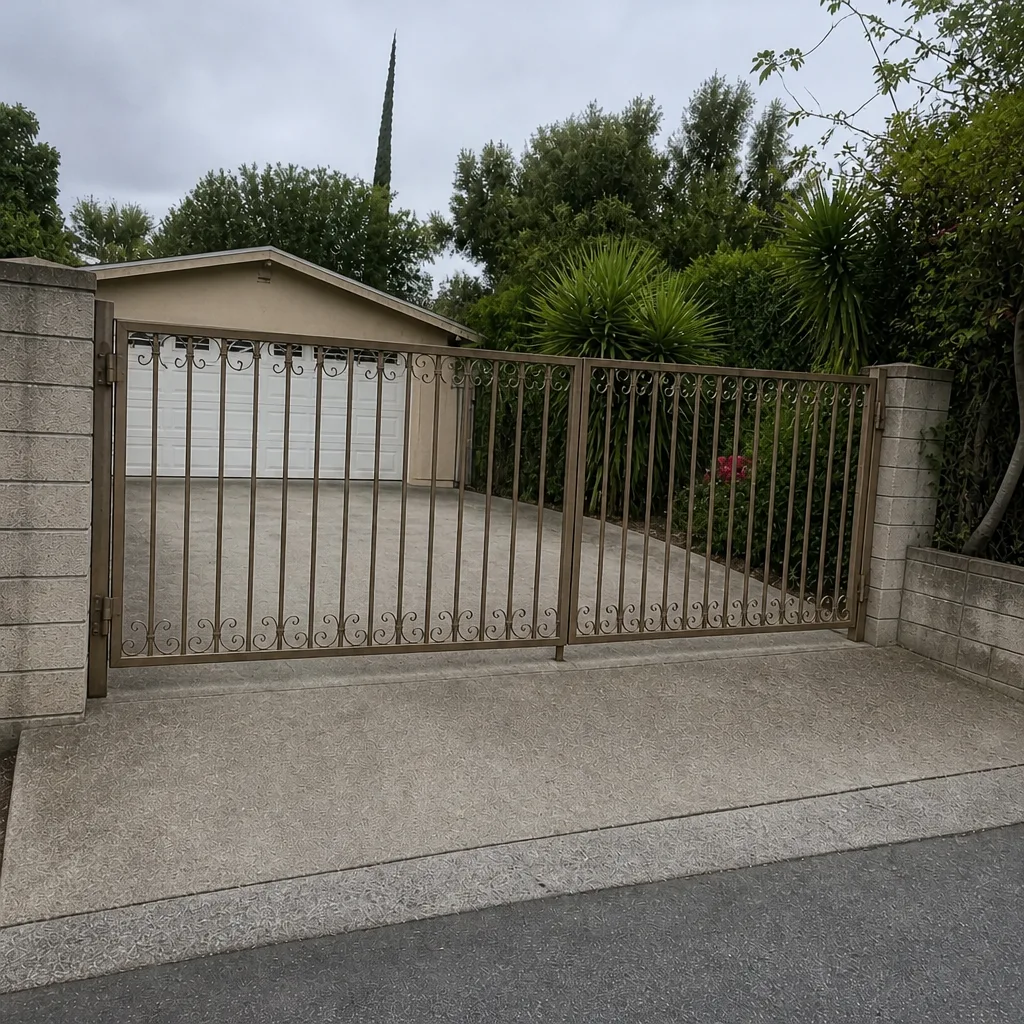 After
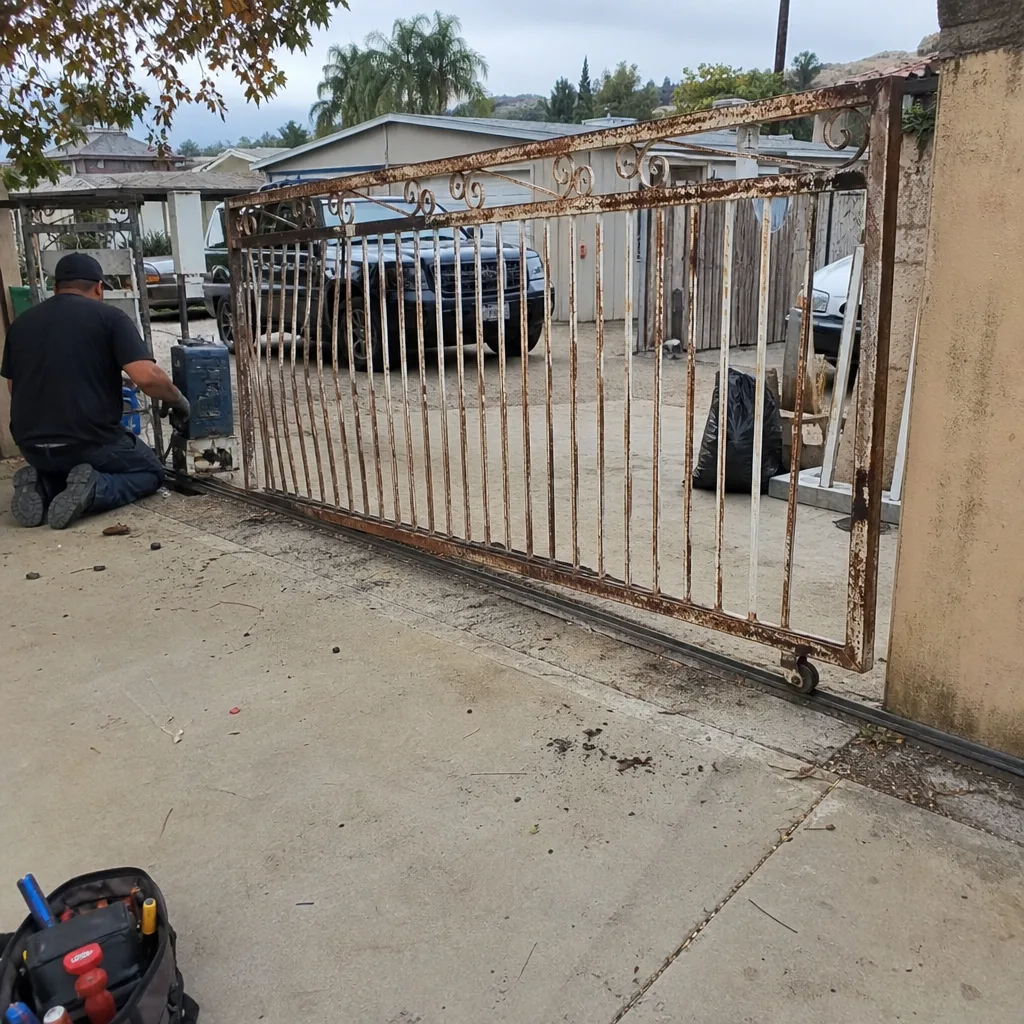 Before
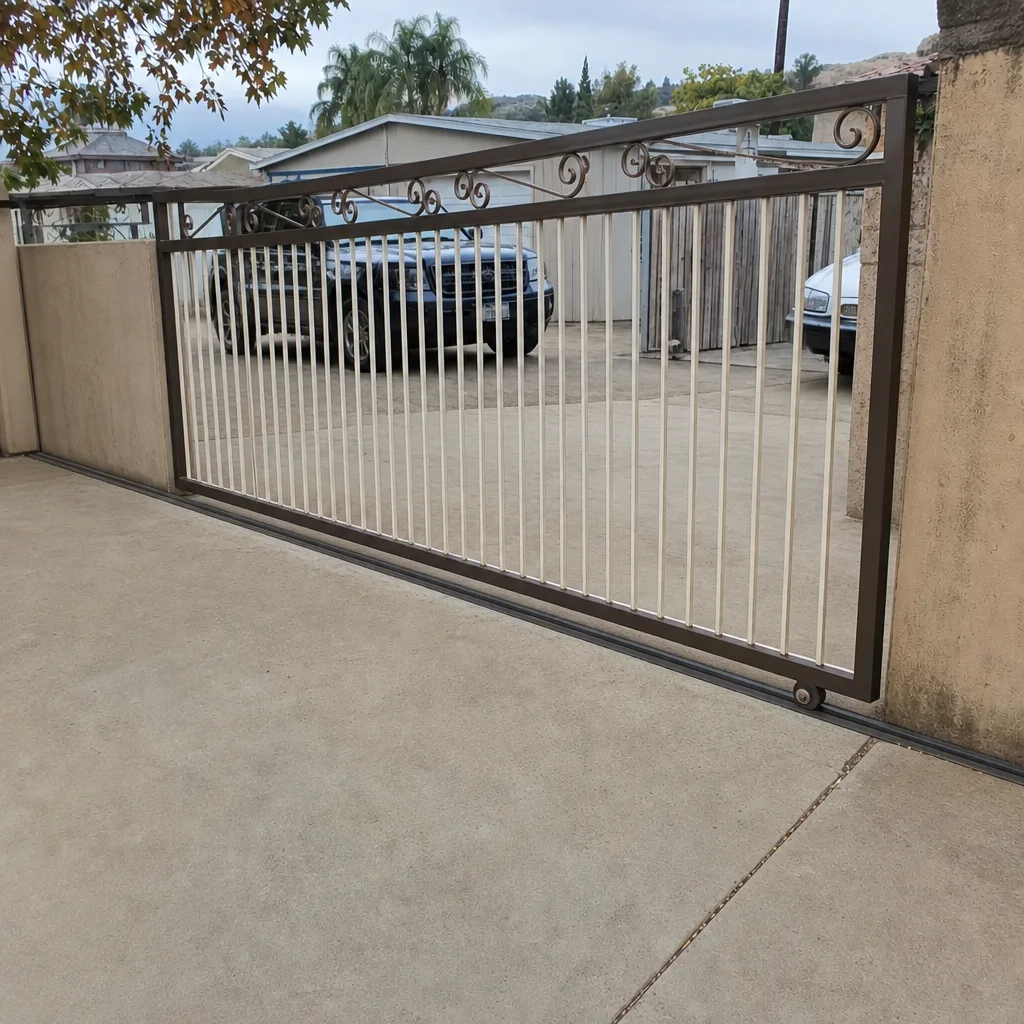 After
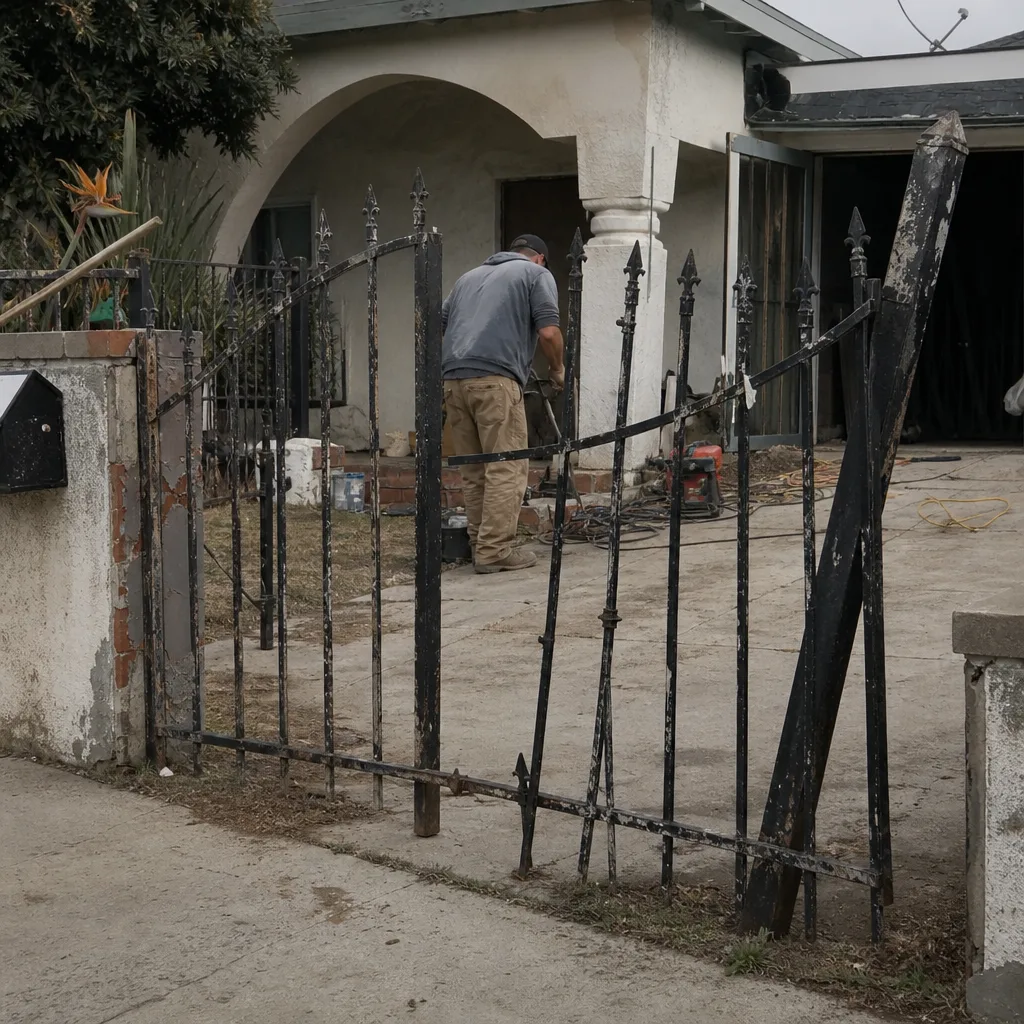 Before
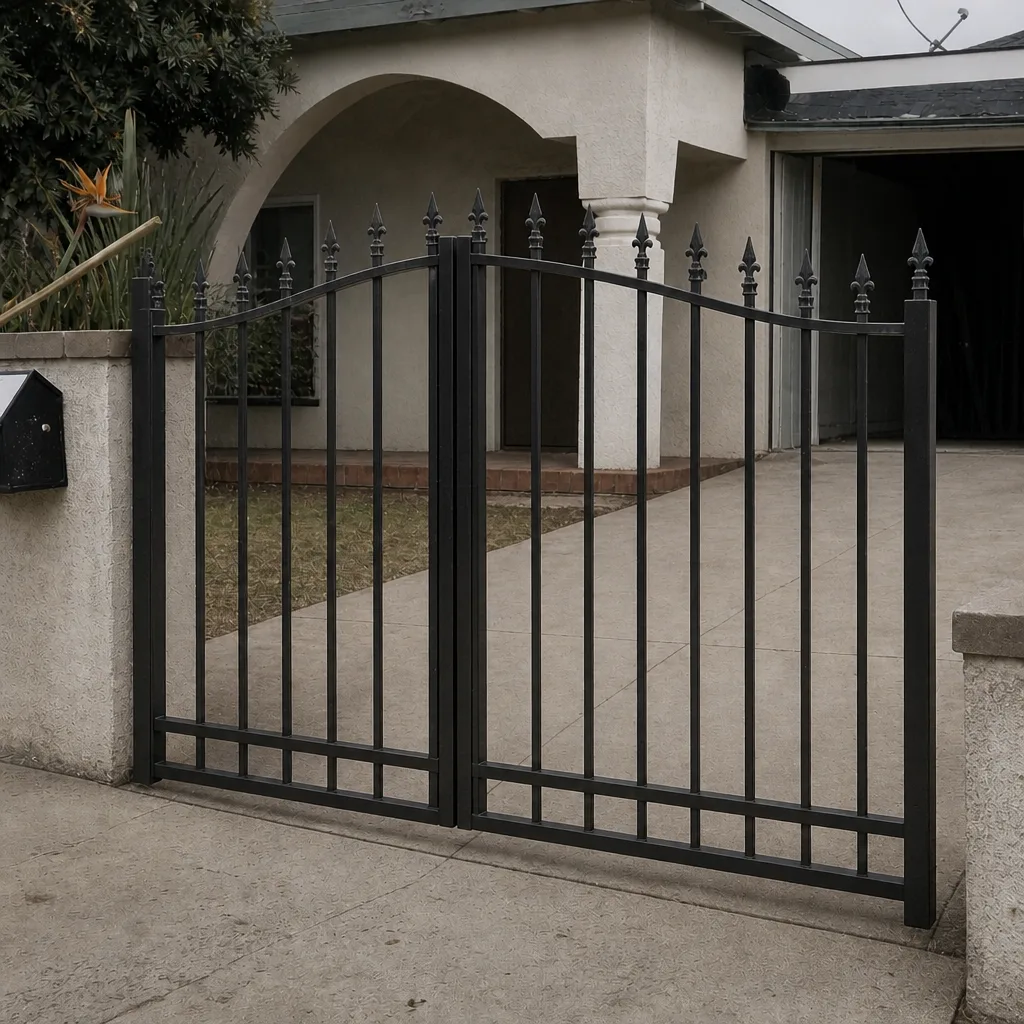 After
When to Call a Professional
Call a professional when the gate hums but doesn’t move, when it reverses or stops short without an obvious obstruction, when the control board or loop detector misbehaves, when a hinge plate has pulled away from the post, or when your stopwatch shows a consistent slowdown. Those are the signs that a small repair is spreading into the operator or the power system, and where a specialist’s diagnosis saves money over guesswork. If the gate is over-traveling, dragging the ground or has rust bubbling around the frame, call as well; structural items can be unsafe to leave. Gate Repair El Cajon offers free estimates in El Cajon – call (866) 361-9590. We answer 24/7. Fast dispatch from 7am to 7pm, Sunday through Friday.
The El Cajon market has plenty of generalists who will happily look at your gate. A gate-only specialist knows where to check first and what every sound means. That’s the difference between a first-visit fix and a string of returns.
Frequently Asked Questions
A slowdown in the open or close time is usually the first sign, often before any sound or movement problem appears. That drift means the motor is already working harder. If your gate once took ten seconds and now takes twelve, book a check before it gets worse.
No. A humming operator is receiving power but can’t move the gate, which is a motor, capacitor or mechanical-jam warning. Cycling it puts extra load on the motor and board. Stop using the gate and call (866) 361-9590 for a diagnostic.
On most electric gates, phantom opens trace to a loop detector or a safety circuit that’s triggering without a vehicle. It’s an electrical fault, not a gate fault. A technician who works on the control board and detector can find the source without replacing good parts.
Usually not yet, and that’s exactly the point. A little slower is the best time to call, because the fix is small. Ignore the drift and it can grow into the operator or board. Call (866) 361-9590 for a free estimate before that happens.
Very likely. We work on equipment from LiftMaster, FAAC, BFT, Linear, Viking, Ghost Controls, DoorKing, Elite and Mighty Mule, and we work on the equipment you have. That saves you from a replacement you didn’t need.
A five-minute walk-around: listen to one full cycle, watch for stutter or over-travel, time the open and close, check hinge plates and the post, scan for rust bubbling and solar panel discoloration, and test the keypad, remote and loop. Note anything new. If one check fails, call (866) 361-9590.
The Bottom Line
Gates rarely fail suddenly. They warn you through what they sound like, how they move, how long they take, and what their steel and control panels look like. The five warning families in this guide, grouped by sound, motion, timing, visible wear and access glitches, cover nearly every early sign. Catch one early and the repair stays small; ignore it and the problem spreads into the operator and control board. The five-minute monthly walk-around and a note in your phone are the best tools you own. If any warning shows up on a gate in El Cajon, call a specialist who checks the source before quoting a part.
Our team covers manual and electric gates, diagnosis, repair and installation, and we work on your brand rather than pushing a replacement. Call (866) 361-9590 for a free estimate. We answer 24/7. Fast dispatch from 7am to 7pm, Sunday through Friday. Your written estimate sets the price, quoted and agreed before any work starts.
Written by the team at Gate Repair El Cajon.