
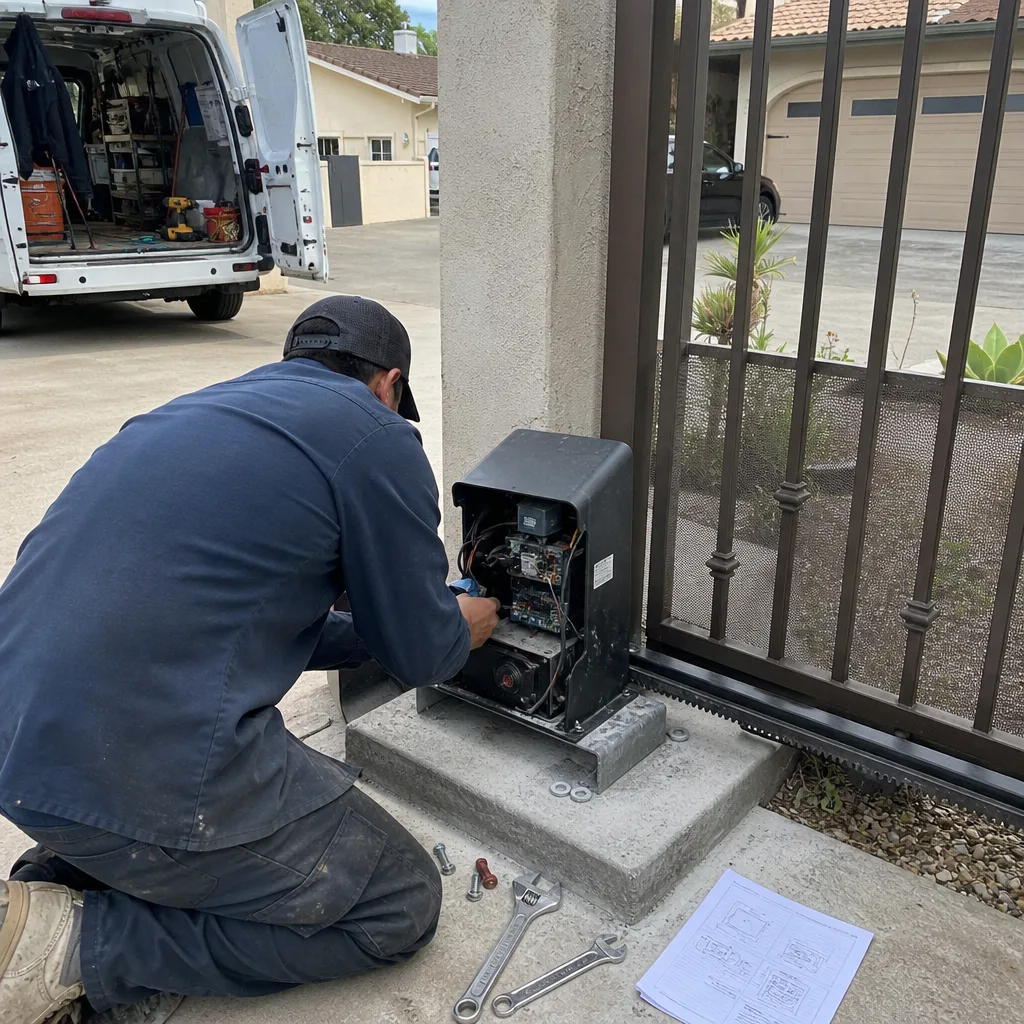
Last updated November 15, 2026
 Wrought iron
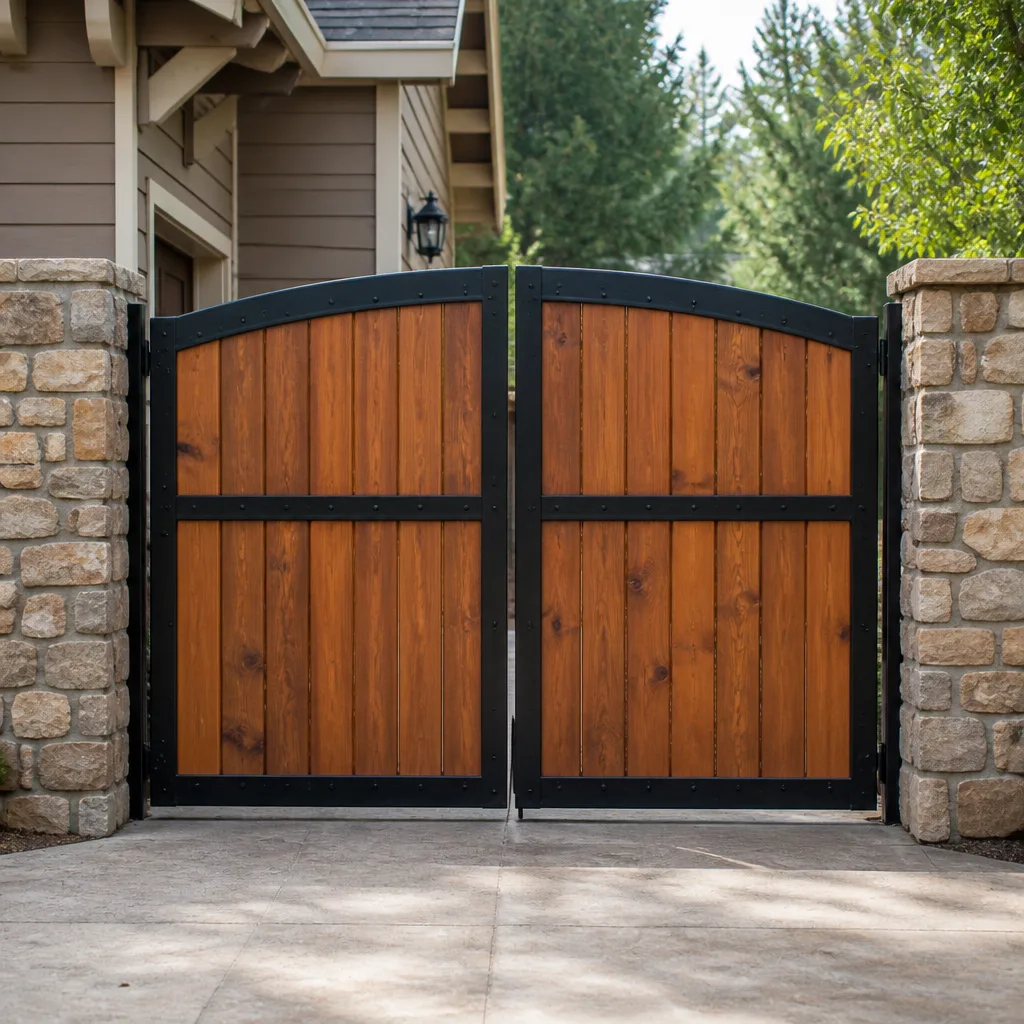 Wood & steel frame
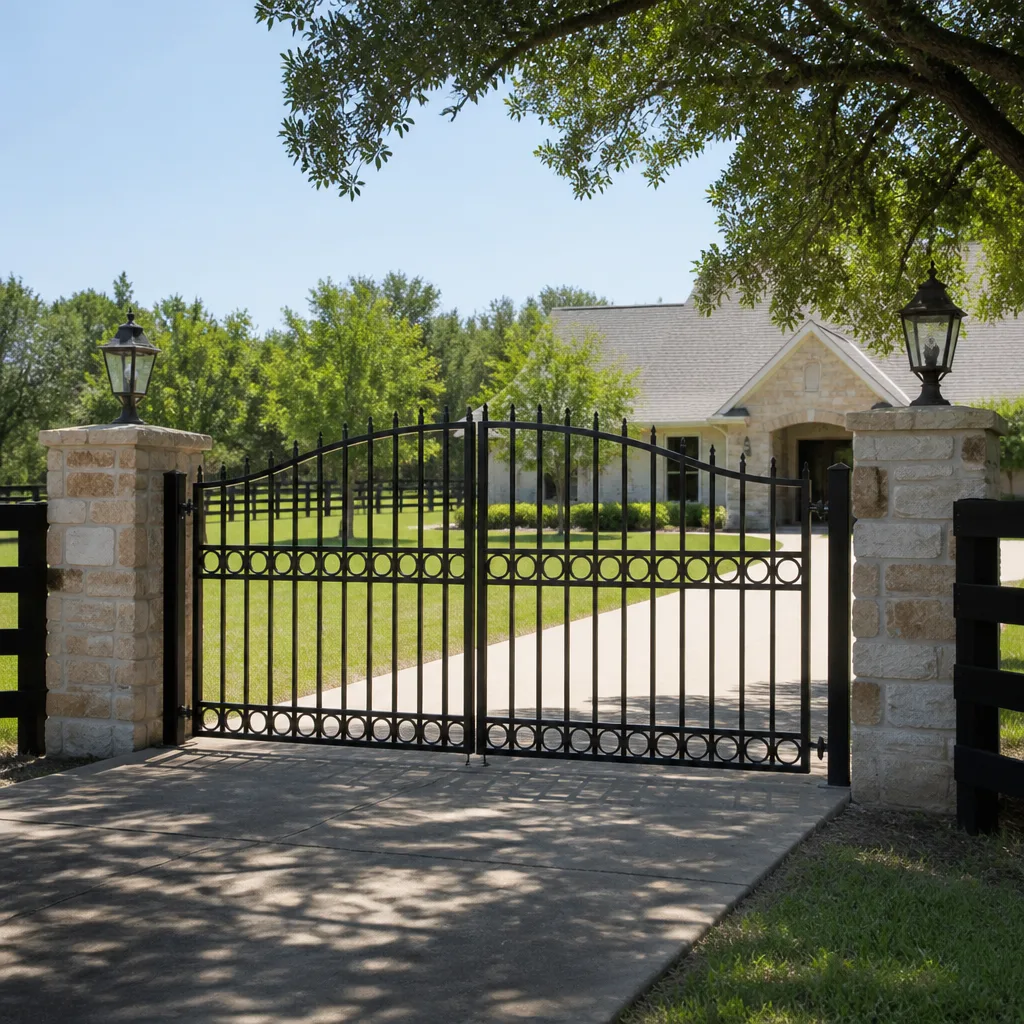 Farm & ranch
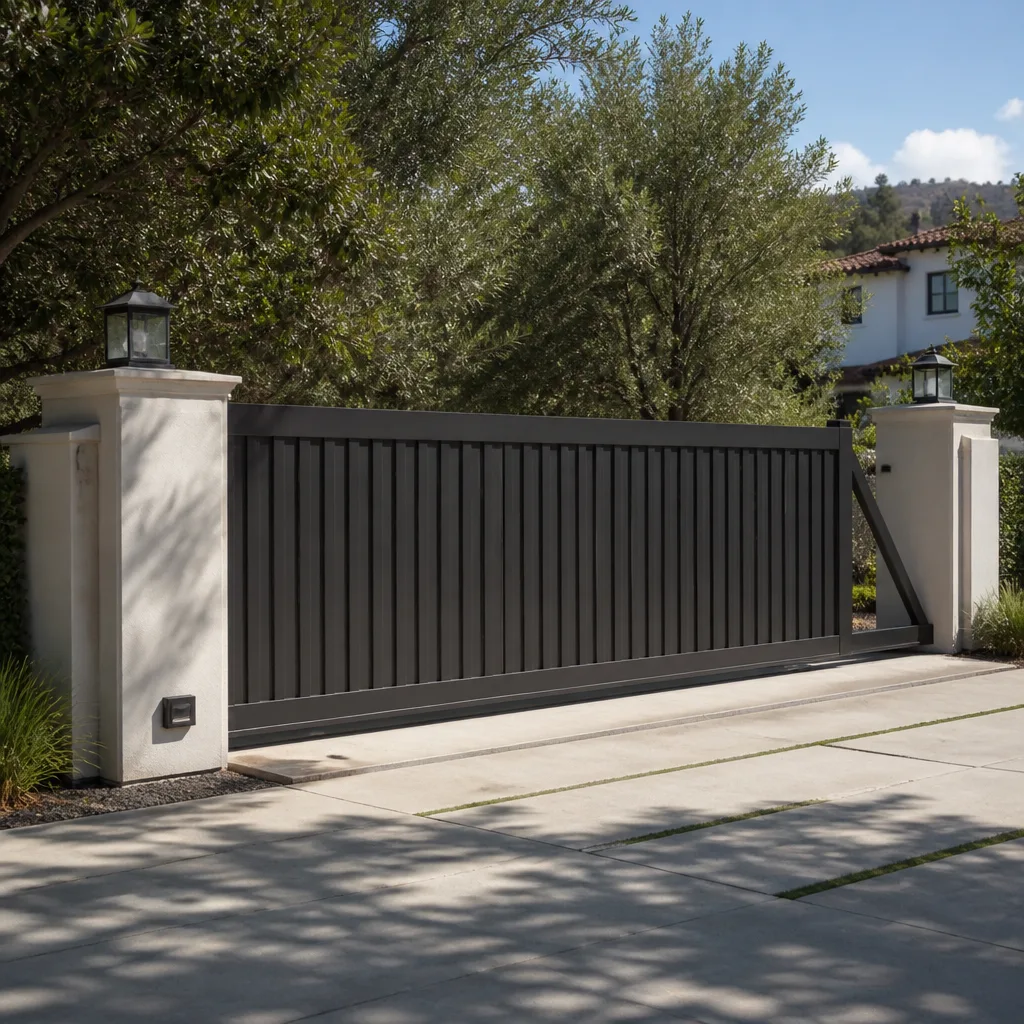 Sliding driveway gates
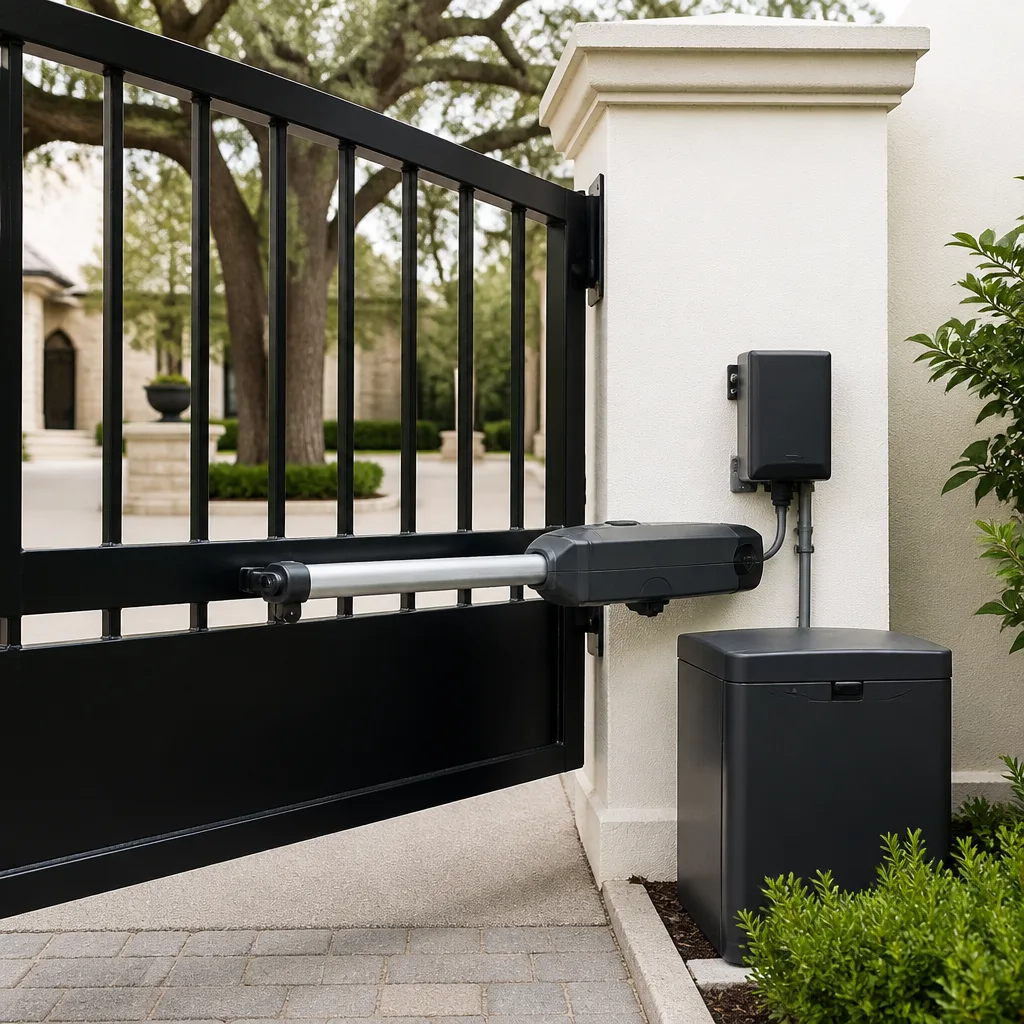 LiftMaster operators
Free on-site gate assessment - hinges, posts, and your LiftMaster or Nice gate operator checked before anything is quoted
The assessment is free and the quote is the invoice.
Get your free estimateGate Repair Emergency Preparedness Guide for El Cajon Homes
Most gate failures we diagnose aren’t mechanical mysteries. They’re plan gaps. A homeowner knows the opener brand, maybe the keypad code, and nothing else. Then the power drops or an evacuation warning goes out, and the gate that opens every morning becomes the thing standing between a family and the road. This guide is about closing that gap before you need it. We’ll cover manual release protocol by operator type, battery backup testing, surge protection after a Santa Ana wind event, the right order to call for help, and why your safest default in an El Cajon wildfire zone is a gate held open and locked, not closed and waiting on a motor.
Quick Answer
A gate emergency in El Cajon is survivable and manageable if you’ve done three things in advance: located and tested your operator’s manual release, confirmed your battery backup holds a charge, and written down the brand of your operator plus the name of a gate specialist you can reach. Without those three, a power outage or evacuation order turns a simple access problem into a genuine safety risk. Preparation takes under an hour and costs nothing. Reacting cold can cost you the access you need most.
Styles & brands we work with
- Wrought iron
- Wood & steel frame
- Farm & ranch
- Sliding driveway gates
- LiftMaster operators
Table of Contents
- Why El Cajon Gates Face a Different Kind of Emergency
- Manual Release Protocol by Operator Type
- Battery Backup: What to Expect and How to Test It
- Power Surges, Santa Ana Winds, and Post-Storm Inspection
- Pre-Evacuation Gate Positioning for Wildfire-Adjacent Homes
- Who to Call During a Gate Emergency, and What to Have Ready
- The Annual Prep Walk-Through
- When to Call a Professional
Why El Cajon Gates Face a Different Kind of Emergency
El Cajon sits in a bowl of chaparral and dry hills, and the county’s Santa Ana wind events hit this area with force. When those winds combine with utility shutoffs or downed lines, a lot of automatic gates go dark at once. The same weeks that bring wildfire risk are the weeks your gate is most likely to lose power. That overlap is the core of the problem.
Add the neighborhoods. Homes in Fletcher Hills, Rancho San Diego, and the hillside pockets off Horizon View Drive often sit on slopes with long driveways and single access points. A gate at the bottom of a long driveway isn’t a convenience item, it’s the choke point. When it fails closed and you can’t release it manually, you’re not delayed. You’re blocked.
There’s a second El Cajon factor. Many residential properties here have older operators that were installed years ago and never updated. Control boards age, batteries quietly die, and release mechanisms stiffen from disuse. None of that shows up until the day you need it. Our technicians have up to 15 years of experience and the pattern is consistent: the gates that fail hardest are the ones nobody has touched since installation.
If you’re considering a full replacement rather than repair, our Gate Repair El Cajon page covers the service scope, and the El Cajon page has the local overview.
Manual Release Protocol by Operator Type
The manual release is the single most important thing on your gate. It’s also the thing most homeowners have never located. Every automatic operator has one. Your job, before any emergency, is to find it, understand how it works, and physically test it once a season.
The general idea is the same across brands: a release lever or key disengages the motor from the gate so the gate swings or slides by hand. The specific mechanism differs. Here’s how the common brands on El Cajon properties work:
- LiftMaster swing and slide operators: Most models use a manual release lever or a keyed release on the operator housing. On swing operators, the lever is typically under a cover on the arm. Pulling it releases the arm from the gate. On slide operators, the release is usually a lever or chain hoist at the operator.
- Viking operators: Viking swing operators commonly use a manual release key and lever setup at the operator arm. Slide models use a release lever near the motor, and some use a hand crank or chain. Locate the release before you need it and confirm it moves.
- Mighty Mule: Mighty Mule swing operators typically have a release lever and lockable pin on the operator arm. The lever disengages the arm; the pin keeps it disengaged while you move the gate.
- Linear and Ghost Controls: Linear and Ghost Controls operators use a manual release lever or keyed mechanism at the operator arm or housing. The principle holds: disengage, then move the gate by hand.
- DoorKing: DoorKing slide and swing operators for heavier residential and commercial gates use a manual release that may involve a key, a lever, or a chain hoist depending on the model. Heavier gates need more force, so know which release type you have.
Here’s the catch. The release lever isn’t the whole protocol. Once you disengage the motor, the gate can swing or slide freely. On a slope, a heavy gate can move on its own. That’s a crush hazard. Before you release, make sure nobody is in the gate’s path, and be ready to control the gate’s weight. If your gate is heavy or on a slope, don’t test this alone.
Write the steps down and keep them where you can find them under pressure. Better still, walk through them once with everyone in the household who might need to open the gate in a hurry. Ninety seconds of practice now beats an hour of guessing later.
A quick note on safety
The manual release is a homeowner task. The wiring, control board, and power to the operator are not. Electric gate operators carry line voltage, and a gate operator that fails mid-release or behaves unexpectedly may have an electrical fault. Don’t open the operator housing or work on the power side yourself. Call a specialist.
Battery Backup: What to Expect and How to Test It
Battery backup is the difference between a gate that keeps working through a power outage and a gate that’s dead the moment the grid drops. In El Cajon, where Santa Ana events and utility shutoffs can knock out power for hours, a working backup battery is not a luxury. It’s the thing that lets your gate operate normally while you decide what to do next.
What runtime should you expect? It depends on the operator, the gate weight, and the battery’s condition, but a healthy backup battery on a residential operator typically gives you a limited window of normal operation, not days. A gate that cycles a few dozen times on backup is normal. A gate that opens once and then stalls is telling you the battery is weak or nearly dead.
Testing takes two minutes and you should do it before every fire season:
- Locate the battery. On most operators it’s inside or attached to the control housing, sometimes under a cover.
- Check the terminals for corrosion and tightness. Loose or corroded connections are a common cause of backup failure.
- Cut power at the breaker or the operator’s power switch, then cycle the gate once or twice by remote or keypad. If it moves normally, the battery is doing its job. If it’s sluggish or won’t move, the battery needs attention.
- Restore power and confirm the gate returns to normal operation.
- Note the battery’s age. Backup batteries degrade over time and need periodic replacement even if they test fine in mild weather.
If the battery won’t hold a charge or the gate won’t run on backup at all, that’s a diagnostic call, not a guess. The problem could be the battery, the charging circuit on the control board, or the operator itself. A gate specialist can test the whole chain and tell you what’s actually failing. That’s electric gate repair done at the source rather than swapping parts until something works.
Power Surges, Santa Ana Winds, and Post-Storm Inspection
Santa Ana wind events in San Diego County are famous for downing lines and causing the kind of power fluctuations that damage electronics. Gate operators are electronics. A surge doesn’t have to kill your gate outright to cause a problem. It can partially damage a control board, corrupt a setting, or weaken a battery charger. The gate may keep working for weeks before the fault shows up as erratic behavior, a gate that stops midway, or a remote that suddenly won’t respond.
This is why a gate operator should be inspected after any significant power fluctuation, not just when it stops working. The failure you catch early is cheap to fix. The failure you catch after the gate has jammed a car or trapped someone on a long driveway is not.
What to look for after a wind event or outage:
- Does the gate open and close smoothly, or does it hesitate or reverse unexpectedly?
- Do the safety edges and loop detectors still stop and reverse the gate correctly? A safety feature that fails silently is the most dangerous outcome of a surge.
- Do the remotes and keypad still work reliably? One failing access method often points to a control board issue.
- Is the battery still charging? Check runtime on backup after the event.
- Are there any burn smells, scorch marks, or tripped breakers at the operator?
If something’s off, don’t reset and hope. A control board that took a surge may pass power but misread a safety input, and the gate will operate in a way that’s unsafe without obvious warning. Get it looked at by someone who diagnoses electric access systems as their core work.
Pre-Evacuation Gate Positioning for Wildfire-Adjacent Homes
Here’s the counterintuitive part, and it’s the most important recommendation in this guide. If you live in a wildfire-adjacent El Cajon neighborhood, the safest default position for your automatic gate ahead of fire season is open and manually locked, not closed and automatic.
Why? Because during an evacuation order, you may not be home. You may be at work, or away, or you may have to leave fast. A closed gate on automatic is a gate that depends on power, a charged battery, and a working control board to open. An open gate that’s physically locked in place depends on nothing. It can’t fail closed. Emergency responders can get in, and you and your household can get out without stopping to troubleshoot a motor.
This doesn’t mean leaving your property unsecured. There are ways to hold a gate open and locked that keep the access you need while removing the failure mode. Depending on your gate type, that might mean a physical drop rod, a padlock through the gate frame, or a fixed position lock. The right method depends on your gate, and it’s worth a specialist’s look to set it up correctly.
The broader point for El Cajon homeowners: your gate should have two modes. Normal mode is automatic. Fire-season mode is open and locked. Know how to move between them, and know which one you want during a wind event or red flag warning.
For more on the repair side of gate ownership, see our gate repair service description.
Who to Call During a Gate Emergency, and What to Have Ready
When a gate fails during an emergency, the order you call in matters almost as much as who you call. Here’s the sequence that keeps you safe and gets help moving:
- If there’s an immediate safety emergency, call 911 first. If someone is trapped, injured, or there’s fire or a downed power line near the gate, that call comes before anything else.
- If the gate has someone trapped but no injury, and you can safely release it manually, do so. Disengage the operator and move the gate by hand, keeping clear of the moving gate. If you can’t release it safely, call 911.
- If the gate is stuck but nobody is trapped, call a gate specialist. Call (866) 361-9590. We answer 24/7. Fast dispatch from 7am to 7pm, Sunday through Friday.
- If power is out and your backup battery failed, call the specialist after you’ve decided whether you can leave the gate open and locked safely. A dead battery isn’t a life-safety emergency unless it’s blocking access you need.
- If a surge or wind event damaged the operator, schedule a diagnostic. This is a scheduled repair, not an emergency call. Get it looked at before the next event.
To get a technician to your property faster, have this ready before you call:
- The operator brand. LiftMaster, Viking, Mighty Mule, Linear, Ghost Controls, DoorKing, FAAC, BFT, or Elite. If you’re not sure, a photo of the operator housing helps.
- What the gate is doing. Stuck open, stuck closed, opening partway and reversing, no response to remote, or making a new noise.
- Whether the gate is on a slope and how heavy it is.
- Whether power is on at the property and whether the battery backup engaged.
- Whether anyone is trapped or whether the gate is blocking the only access to the property.
- Your address and any gate or keypad code the technician will need to get in.
That information is what turns a phone call into a plan. A specialist who knows the operator brand and the symptom can often tell you what’s wrong before anyone drives out, and can bring the right part the first time.
The Annual Prep Walk-Through
Gate emergency prep is a yearly habit, not a one-time project. Before fire season, walk through these steps. It takes under an hour and it’s the difference between a gate that works when you need it and one that doesn’t.
- Locate and test the manual release on each operator. Confirm it disengages the motor and moves the gate by hand.
- Test the battery backup by cutting power and cycling the gate.
- Check the safety edges and loop detectors. Make sure the gate reverses when something is in its path.
- Inspect the gate’s track (for slide gates) and hinges (for swing gates) for wear. A gate that binds will strain the operator and drain the battery.
- Look at the control board and wiring for corrosion, loose connections, or signs of heat.
- Decide on your fire-season position: open and manually locked, or closed and automatic. Confirm you know how to get to the open-and-locked position.
- Write down the operator brand, the symptoms you’d report, and a specialist’s number. Keep it somewhere you’ll find it.
Most of what goes wrong with a gate under pressure is a maintenance issue that was there all along. Catching it in the walk-through is cheap. Catching it during an evacuation is not.
Common Mistakes to Avoid
- Not knowing where the manual release is. The single most common failure we see. Owners know the keypad code and nothing else. Find the release before you need it, and test it once a season.
- Testing the manual release while the gate is on a slope with nobody spotting. A released gate on an incline can move on its own and cause injury. Have a second person ready and control the gate’s weight.
- Assuming the backup battery is fine because the gate worked last week. The battery only proves itself under a power cut. Test it, don’t assume it.
- Resetting a tripped breaker and calling it fixed. After a surge, a gate that powers back on can still have a damaged control board or a misreading safety input. Get it inspected.
- Leaving the gate closed and automatic through fire season. In a wildfire-adjacent El Cajon neighborhood, that’s the failure mode most likely to block you when it matters. Set the open-and-locked position ahead of time.
- Working on the operator’s wiring or control board yourself. Electric operators carry line voltage and a miswired control board can cause a gate to move unexpectedly. That’s a specialist’s work.
- Calling a general handyman for a brand-specific operator. A generalist may not know the control board on a DoorKing or a Viking, and may not be able to source the right part. A gate specialist works on your brand.
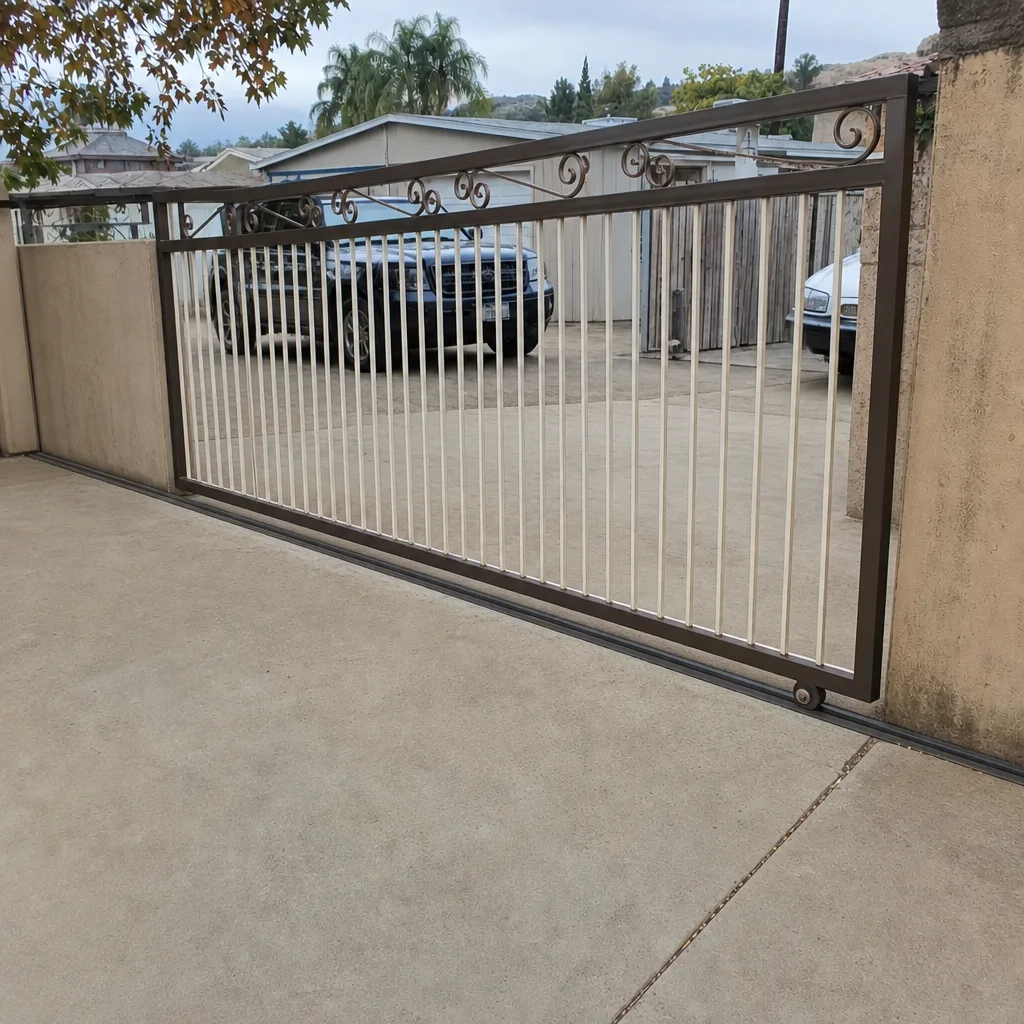
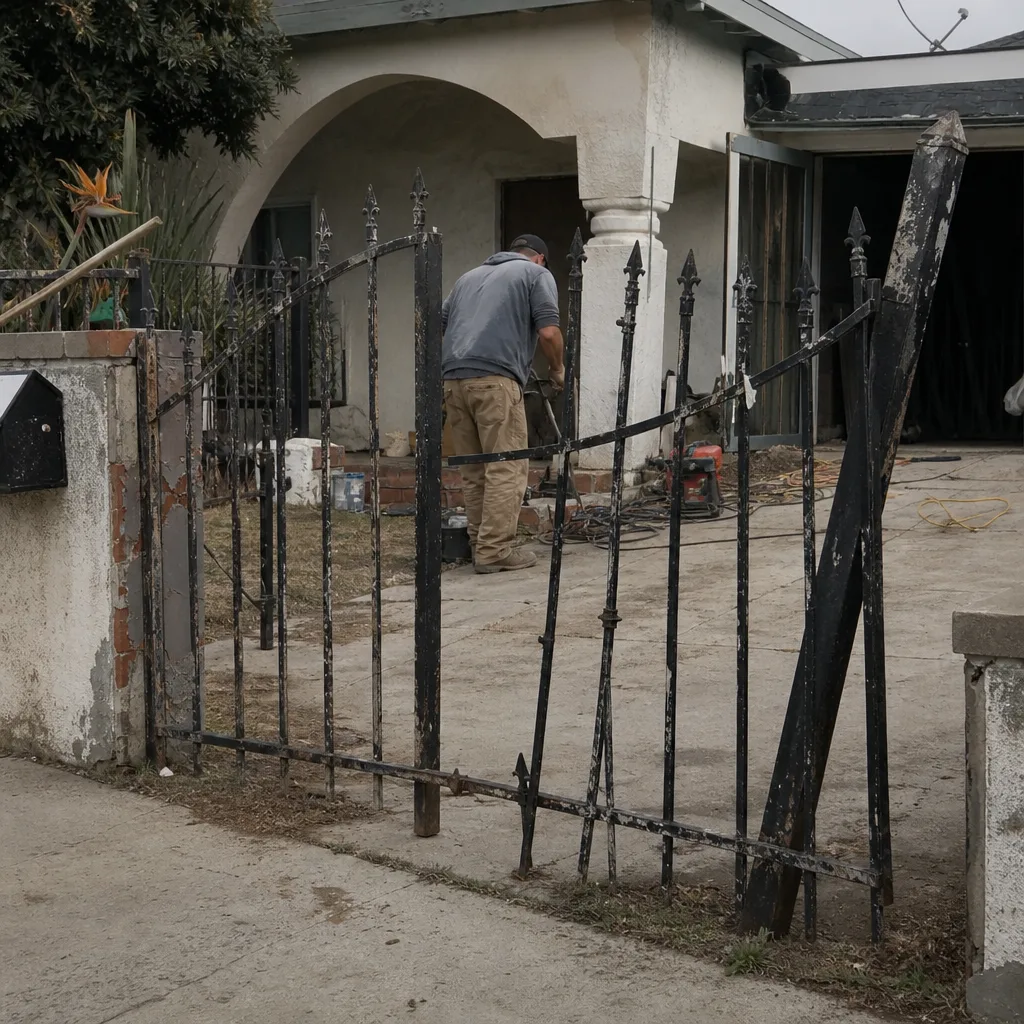
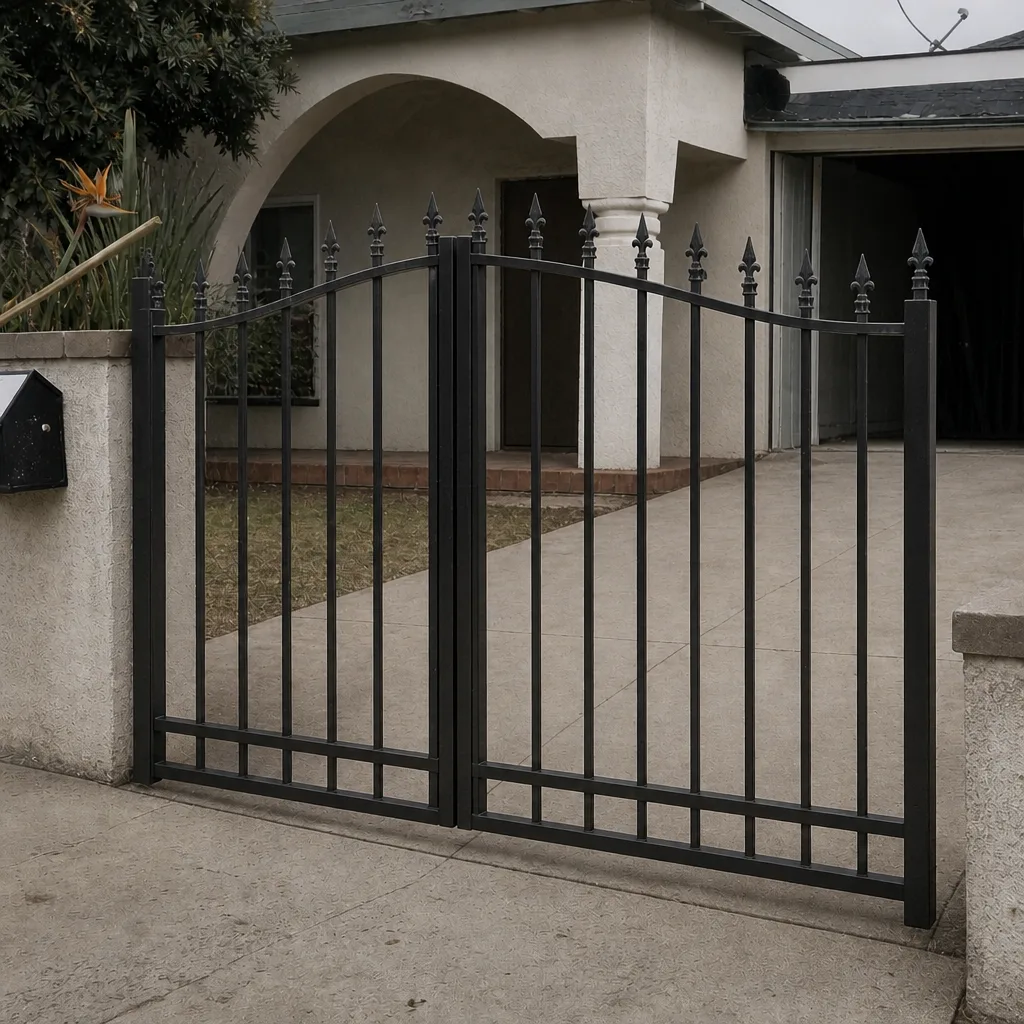
See the difference
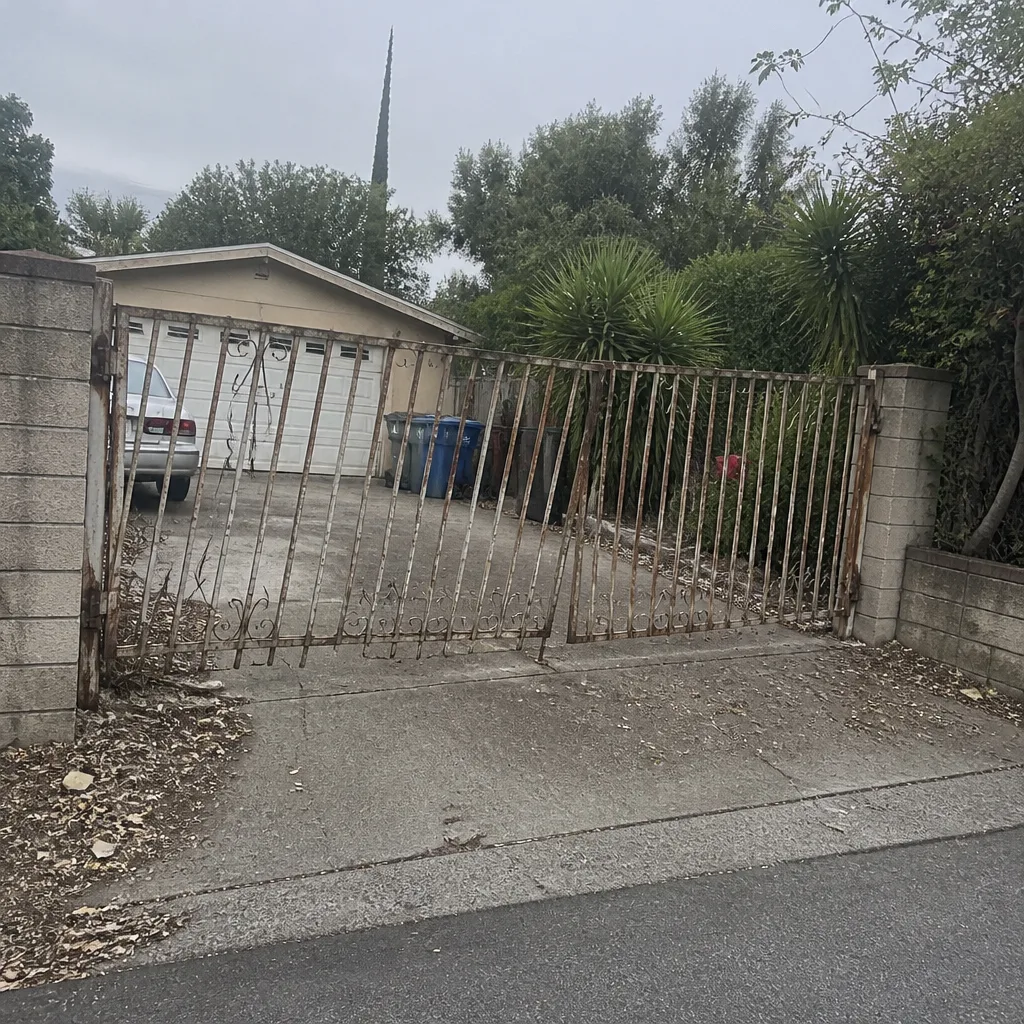 Before
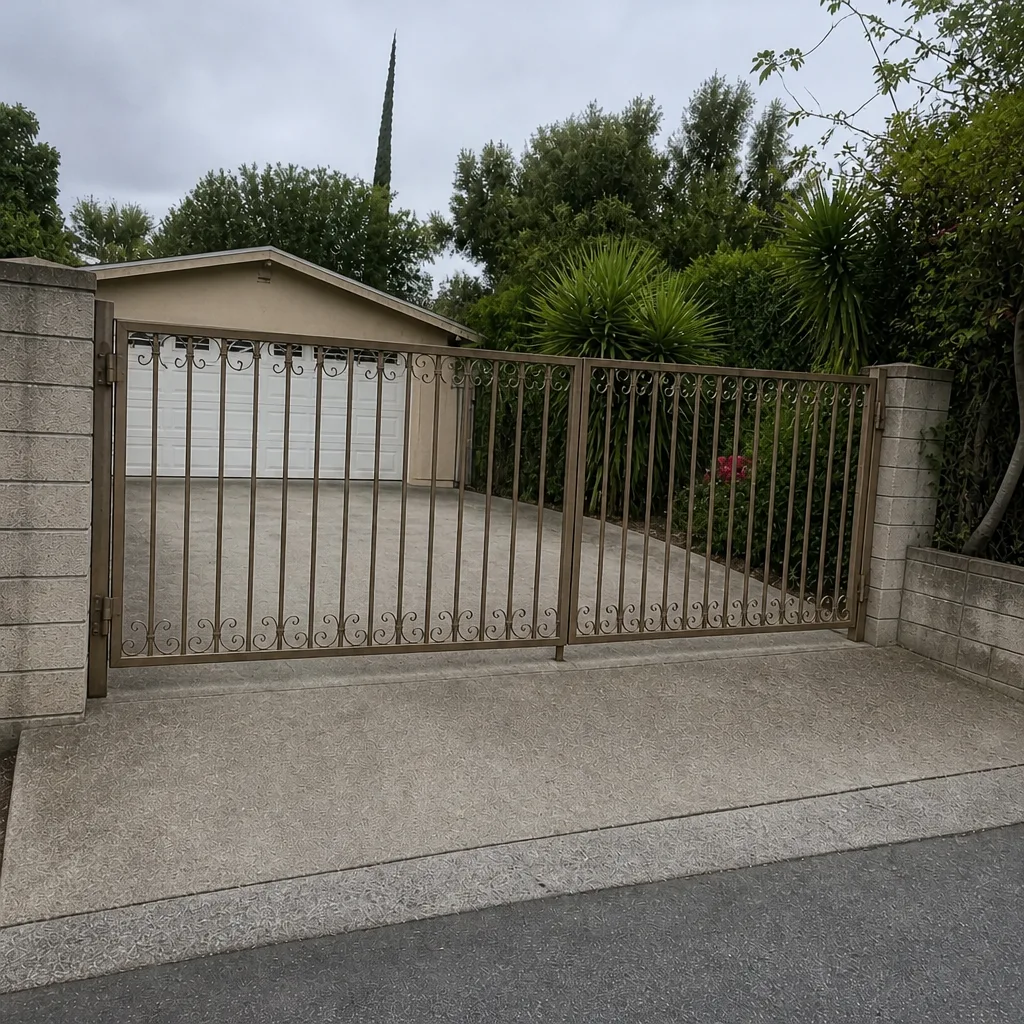 After
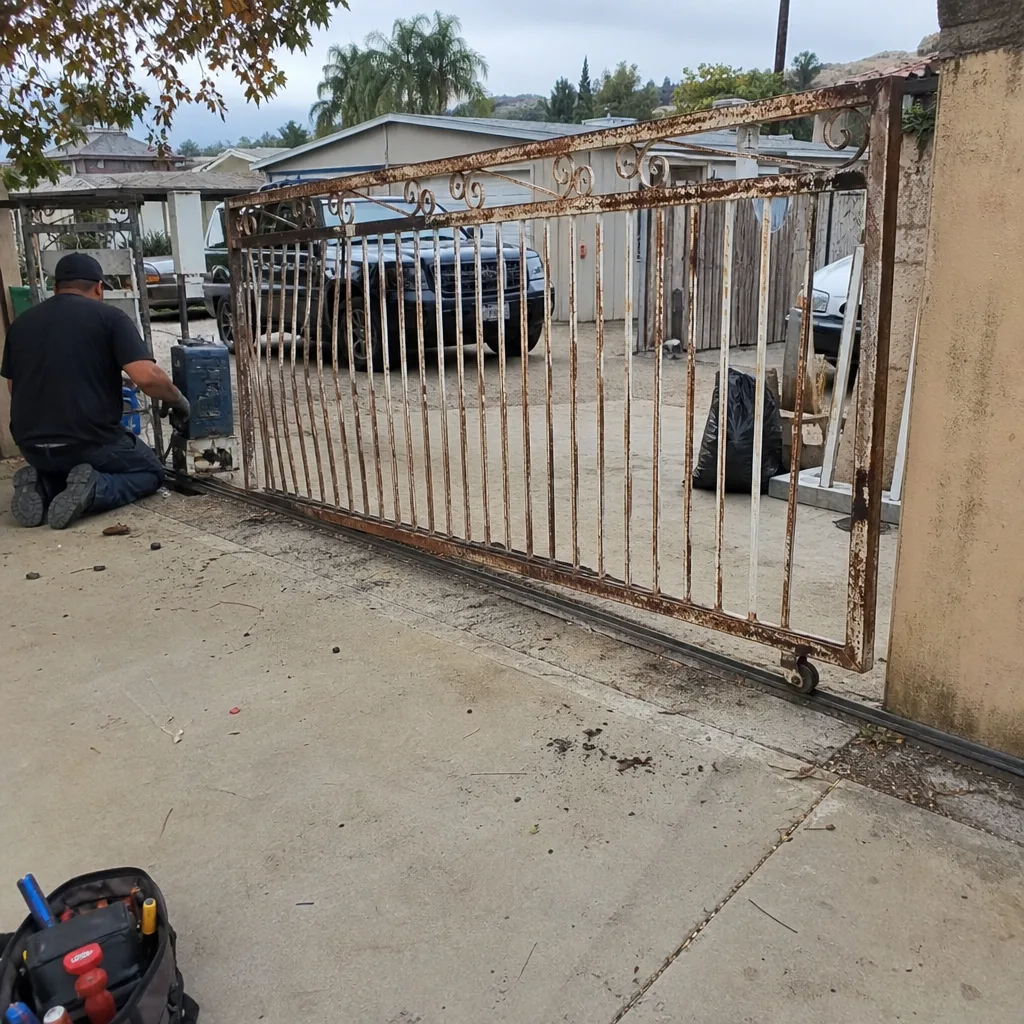 Before
 After
 Before
 After
When to Call a Professional
Call a gate specialist when the manual release won’t disengage, when the gate won’t run on battery backup, or when the operator behaves erratically after a power event. Call when the gate won’t reverse on a safety edge or loop detector, because a failed safety input is a genuine crush hazard. Call when you’re not sure which operator you have and you can’t identify the release mechanism, because guessing under pressure is how people get hurt. Call when a slide gate comes off its track and won’t move freely, since forcing a heavy gate back onto a track is a two-person job at minimum. And call when you want your fire-season open-and-locked position set up correctly rather than improvised.
Gate Repair El Cajon offers free estimates in El Cajon. Call (866) 361-9590. We answer 24/7. Fast dispatch from 7am to 7pm, Sunday through Friday.
Frequently Asked Questions
The manual release is usually a lever, keyed mechanism, or chain hoist at or near the operator arm on swing gates, and at the operator housing on slide gates. On most LiftMaster, Viking, Mighty Mule, Linear, Ghost Controls, and DoorKing operators it’s under a cover or on the arm itself. Look for a keyed lock, a pull lever, or a chain, and check your owner’s manual for the exact location. If you can’t find it, call (866) 361-9590 and we’ll walk you through it – estimates are free if you need a technician out.
A healthy backup battery on a residential operator typically gives you a limited window of normal operation, not days. The exact runtime depends on the operator, the gate’s weight, and the battery’s condition, and it drops as the battery ages. Test it before fire season by cutting power and cycling the gate. If the gate is sluggish or won’t move, the battery or charging circuit needs attention. Call (866) 361-9590 for a diagnostic – estimates are free.
If you live in a wildfire-adjacent El Cajon neighborhood, yes, an open gate that’s physically locked in place is the safer default. A closed gate on automatic depends on power, a charged battery, and a working control board to open, and any of those can fail during a Santa Ana wind event or utility shutoff. An open, manually locked gate depends on nothing. Set that position up ahead of fire season and know how to switch back to normal automatic operation when the risk passes.
In most cases a surge or power fluctuation damages a control board, a battery charger, or a safety input, and the operator can be repaired rather than replaced. That’s why an inspection after any significant power event matters. A specialist can test the board, the battery, and the safety devices and tell you what’s actually failing. Call (866) 361-9590 – estimates are free.
You can, but with caution. Once the motor is disengaged, a heavy gate on an incline can move on its own, which is a crush hazard. Before you release it, make sure nobody is in the gate’s path and have a second person ready to control the gate’s weight. If the gate is heavy and you can’t control it safely, don’t release it alone – call a specialist. Reach us at (866) 361-9590.
Have the operator brand, the symptom, whether the gate is on a slope, whether power is on, whether the battery backup engaged, and whether anyone is trapped or the gate is blocking access. Add your address and any gate code the technician needs. A photo of the operator helps if you’re not sure of the brand. That information lets us diagnose faster and bring the right part. Call (866) 361-9590 – we answer 24/7.
The Bottom Line
Gate emergency prep in El Cajon comes down to a few things you can do this week. Find and test your manual release. Confirm your battery backup works under a real power cut. Decide on your fire-season position, which for wildfire-adjacent homes means open and manually locked. Inspect the operator after any Santa Ana wind event or surge. Keep the operator brand, the symptoms you’d report, and a specialist’s number where you’ll find them. None of it costs money. All of it makes a genuine emergency manageable instead of overwhelming.
Gate Repair El Cajon works on your brand, diagnoses electric gate problems at the source, and covers the full gate lifecycle from repair to installation. Call (866) 361-9590 for a free estimate. We answer 24/7. Fast dispatch from 7am to 7pm, Sunday through Friday.
Written by the team at Gate Repair El Cajon.