
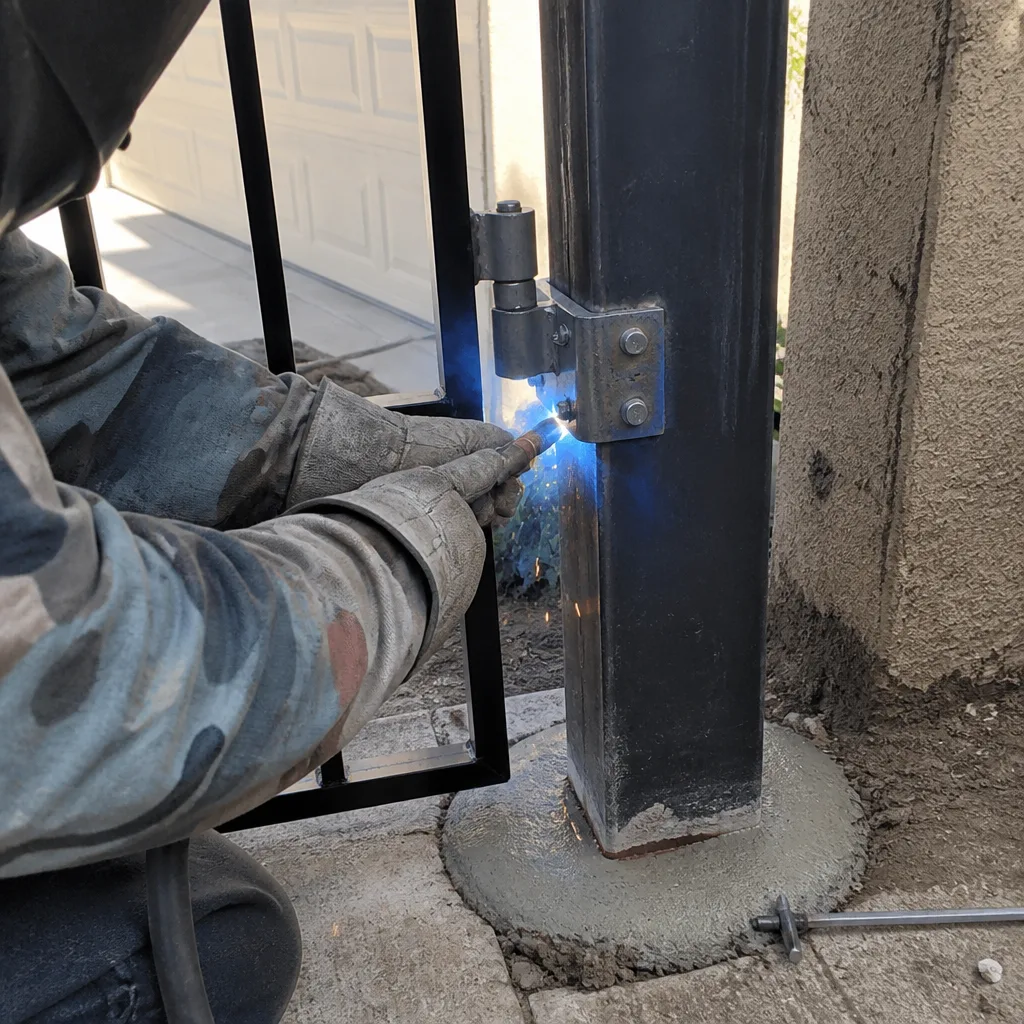
Last updated November 15, 2026
 Wrought iron
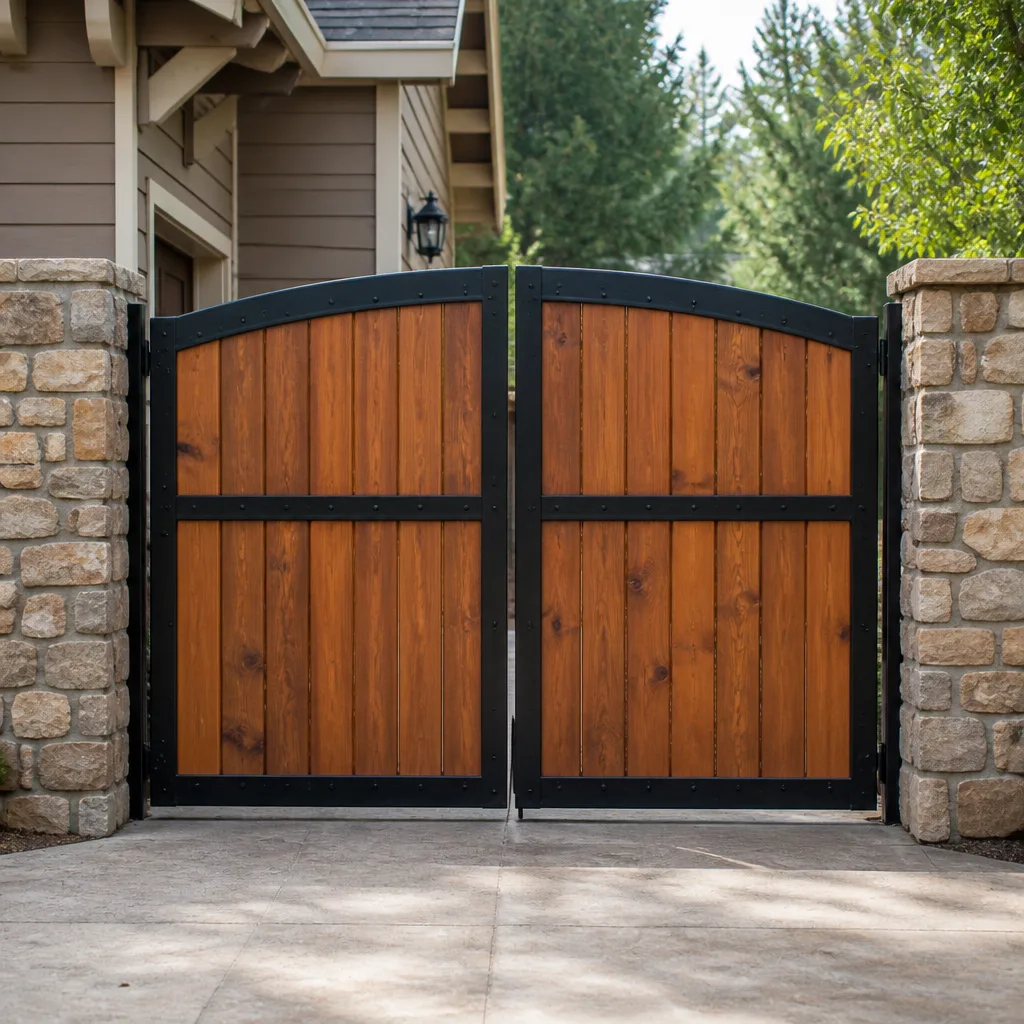 Wood & steel frame
 Farm & ranch
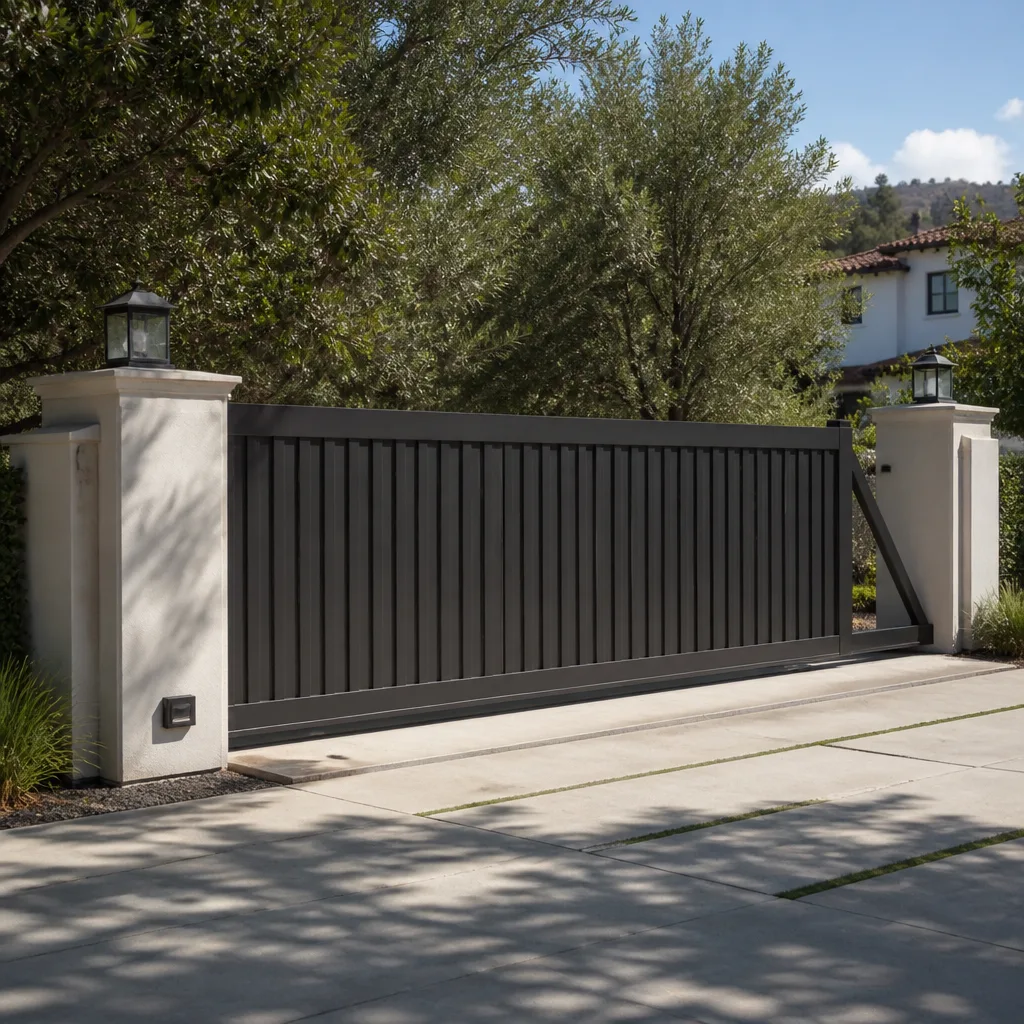 Sliding driveway gates
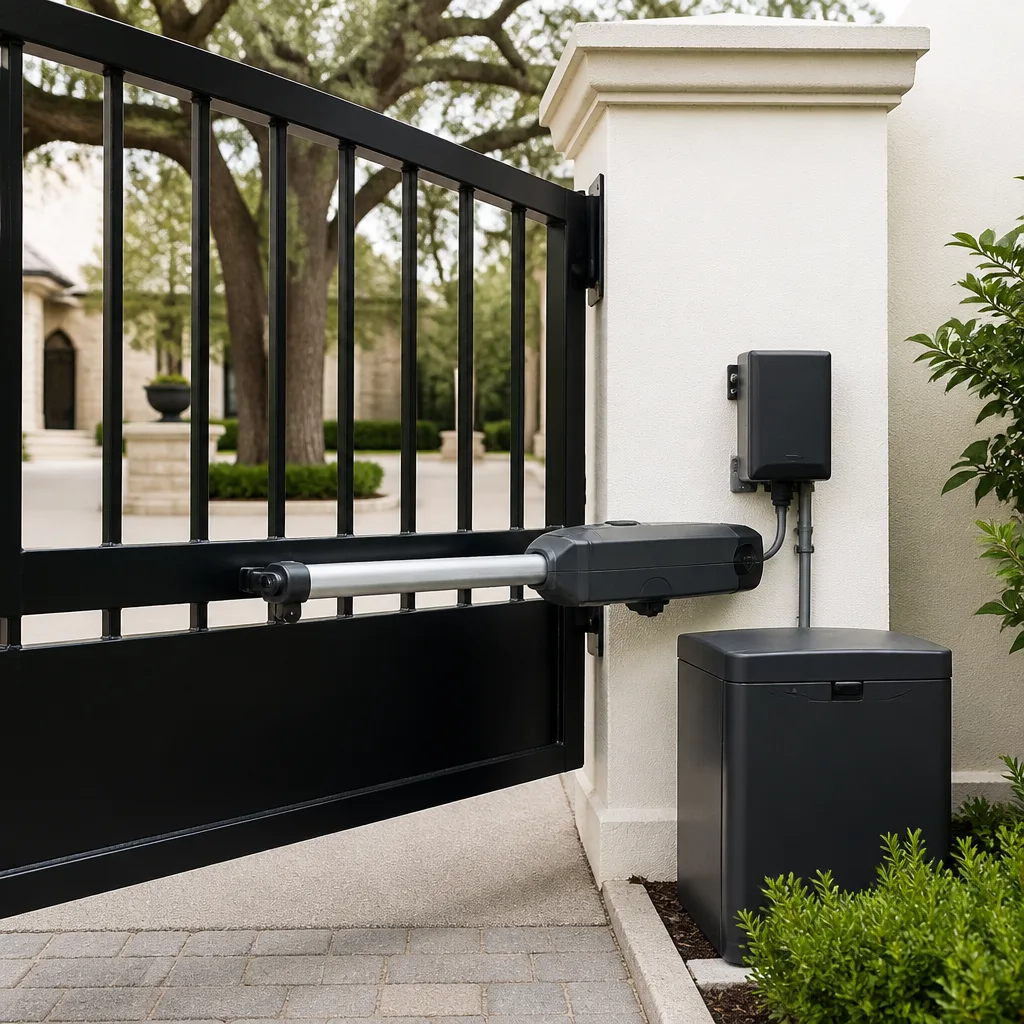 LiftMaster operators
Free on-site gate assessment - hinges, posts, and your LiftMaster or Nice gate operator checked before anything is quoted
The assessment is free and the quote is the invoice.
Get your free estimateGate Repair Maintenance Checklist for El Cajon Homeowners
Most gate maintenance checklists start with “lubricate the chain.” In El Cajon, that’s item six. The first thing to check is whether your solar panel is tilted the way it should be, because a drifted panel and a drained battery cause more no-open calls here than any mechanical failure we see. El Cajon gets intense sun and long dry stretches, and those two things wear on a gate system differently than the mild, damp climates most online checklists were written for. This guide covers the seven checks that actually matter here, in the order a gate specialist would walk them, so a five-minute monthly pass catches most failures before they strand you.
Quick Answer
A monthly seven-point walk-around is enough to catch most gate failures before they happen: check solar panel angle and battery health, inspect hinges and pivot pins for staining, clear the track and rollers of debris, test electrical wire terminals, run a swing-gate drag test, check the safety edges and photo-eye, and listen to the operator. In El Cajon’s high-UV, low-humidity climate, solar power health and electrical connections fail more often than the mechanical parts most checklists focus on, so check those first. Manual gates and electric gates both benefit, though the checks differ slightly.
Styles & brands we work with
- Wrought iron
- Wood & steel frame
- Farm & ranch
- Sliding driveway gates
- LiftMaster operators
Table of Contents
- 1. Start With the Solar Panel and Battery
- 2. Inspect Hinges and Pivot Pins
- 3. Clear the Track and Rollers
- 4. Test the Electrical Connections
- 5. Run the Swing Gate Drag Test
- 6. Check Safety Edges and Photo-Eyes
- 7. Lubricate and Listen
- Seasonal Timing for El Cajon
1. Start With the Solar Panel and Battery
If your gate runs on a solar operator, this is the check that saves you the most grief. A solar panel only produces full output when it faces the sun at the right tilt for your latitude, and a panel that’s drifted a few degrees off, or picked up a film of dust, quietly undercharges the battery all season. A weak battery shows up first as a gate that’s slow on the first open of the morning, then as a gate that gives up entirely. In El Cajon, where the sun is strong but the rain is scarce enough that panels rarely get rinsed, dust and hard-water film build up faster than owners expect.
Here’s the protocol:
- Wipe the panel face with a soft cloth and plain water. Skip abrasive cleaners, which cloud the glass.
- Check the tilt angle. A panel mounted at a shallow angle can’t catch enough low winter sun; one tilted too steep undercharges in summer. If you’re unsure what angle yours should be at, that’s a question for a gate technician, not a general handyman.
- Look for shade creep. A shrub or tree branch that grew over the panel since spring can cut charging by half without any visible sign on the gate itself.
- Note the battery age, and if the operator has a charge indicator, watch it over a few sunny days. A battery that won’t hold a charge across two clear days is telling you it’s near the end.
Battery replacement and solar charge troubleshooting are core parts of what we handle on our electric gate repair visits, and brands like LiftMaster and FAAC both rely on the same charge-health logic. If your gate is manual, skip this section and go straight to the hinges.
2. Inspect Hinges and Pivot Pins
Hinges and pivot pins carry the full weight of the gate, and they’re where you’ll see the earliest sign of trouble if you know what you’re looking at. The key skill is telling surface rust from structural rust, and you can do it in about a minute.
Surface rust is a light orange film on the arm or the hinge face. Wipe it with a rag; if it comes off and the metal underneath is solid, it’s cosmetic and mostly a sign to keep the joint lubricated.
Staining at the base plate is different. Rust-colored streaks running down from where the hinge or pivot mounts to the post or frame usually mean water is pooling inside the joint and the metal is thinning from the inside. On a swing gate, that staining plus a gate that sags a little when you lift it by the outer edge is the classic pair your gate specialist looks for. A pivot pin that’s worn lets the gate drop, which throws the whole gate out of square and strains the operator.
- Wipe-test every hinge face for surface rust.
- Look for vertical rust streaks below the base plate and pivot bushings.
- Lift the outer edge of a swing gate an inch; a gate that rebounds loosely or clunks has a worn pin.
- Check that all hinge bolts are snug; loose bolts accelerate pin wear.
Catching a worn pivot pin early is a cheap fix. Catching it late usually means a new hinge set, and on a heavier gate, a bent frame.
3. Clear the Track and Rollers
Sliding gates ride on a track and a set of rollers, and both collect debris all year in El Cajon. Eucalyptus seed pods, chaparral leaf litter, dust, and the fine grit that blows off the surrounding hills all settle into the track channel. Once grit packs in, the rollers ride high on it, wear unevenly, and the gate starts to bind. A binding gate is a gate that strains the operator every cycle.
Clearing it is simple:
- Sweep or blow out the track channel, working from the high end down.
- Check the rollers for flat spots, cracks, or a wobble when you spin them by hand.
- Wipe the roller faces clean; grit embedded in a roller is what grinds the track surface.
- Look at the track for dents or a bend where the gate transitions between open and closed. A dent catches rollers and causes the gate to jump.
The debris season here really has two peaks: leaf drop after the dry summer, and the wind-driven grit that comes with fall and winter gusts. If your gate sits near a eucalyptus or a row of chaparral shrubs, a monthly sweep is worth the five minutes. Relying on an annual cleaning is how most neglected tracks we see got that way.
4. Test the Electrical Connections
The electrical connections on a gate operator are the quiet failure point, and they corrode faster in El Cajon’s canyon zones than most homeowners realize. The reason is the dust and the day-night temperature swing: warm days and cool nights pull moisture and fine dust into every exposed terminal, and over months that builds a crust on the contacts. The first signs are subtle. A remote that takes two presses instead of one. A keypad that occasionally doesn’t register. A gate that hesitates for a half-second before it moves.
Safety note: the wiring side of an electric gate operator carries line voltage, and the control board and power supply can hold a charge even with the breaker off. Don’t open the operator housing or touch terminals yourself. What you can safely do is observe and record:
- Look for visible white or green crust on terminals through any inspection window or vent.
- Check that the operator’s housing cover is sealed and no gasket is cracked or missing.
- Note any flickering or intermittent behavior and how often it happens.
- Confirm the ground fault or breaker has not tripped recently.
If you see crust or the gate behaves inconsistently, that’s a job for a trained technician who can isolate the circuit properly. Terminals, control boards, and loop detectors are exactly the parts generalists tend to guess at, which is why we treat gate repair El Cajon as an electrical specialty first and a mechanical one second. An experienced technician works on your existing LiftMaster, BFT, or Linear board rather than pushing a full replacement.
5. Run the Swing Gate Drag Test
The drag test is the simplest early-warning tool a swing gate owner has, and it predicts motor strain before the motor fails. The idea: with the operator disengaged (most operators have a manual release lever, or a keyed release for the operator’s drive), swing the gate by hand through its whole arc. A gate in good shape moves freely with one hand, with no binding, no scrape, and no point where it wants to stop.
- Engage the manual release so the gate swings free of the operator.
- Swing the gate open and closed slowly by hand.
- Feel for binding at any point, a grind, or a spot where the gate wants to catch.
- Listen for a scrape from the hinge or the ground clearance.
- Re-engage the operator and watch the first open and close. A gate that moves unevenly or stalls is telling you the motor is fighting resistance.
When the gate drags, the motor and gearbox work harder on every cycle. That extra strain shows up later as an overheated motor, a stripped gear, or a control board that trips out. Catching the drag at the hand-swing stage costs far less than replacing the operator. It’s also the single best diagnostic for a gate that “just started acting slow.”
6. Check Safety Edges and Photo-Eyes
Safety edges and photo-eyes are the parts of an automatic gate that protect people and vehicles, and they deserve a monthly check on their own. A photo-eye that’s dirty, misaligned, or blocked by a weed will either fail safe (the gate won’t close) or, worse, fail to detect and let the gate close on something. On a heavy slide gate or a steel swing gate, that’s a real hazard.
- Wipe the photo-eye lenses on both sides of the gate path.
- Confirm the beam path is clear of vegetation and debris.
- Test the safety edge by pressing it gently with the gate in motion (or follow the operator manual’s test procedure), and confirm the gate reverses.
- Check that the photo-eye brackets are tight and the alignment has not shifted.
If a safety device ever seems to work intermittently, stop using the automatic function until a technician looks at it. That’s not a “keep an eye on it” situation.
7. Lubricate and Listen
Now you lubricate, and now you listen. Lubricate the hinges, pivot pins, rollers, and the chain or drive track with a lubricant suited to the part (a light grease on hinges, a chain-specific lube on a chain drive). Wipe off excess so it doesn’t collect grit. Then activate the gate and stand back. A healthy operator makes a smooth, even sound. Grinding, a rhythmic click, a rattle at the end of travel, or a whine that wasn’t there last month are all worth noting and reporting.
Listening matters more than most owners think. A control board or motor going bad often announces itself in sound weeks before it fails outright. On a Viking or Elite operator, a rhythmic click at the end of travel is a common early sign of a limit switch issue. A general handyman who doesn’t know the specific operator won’t catch it. We work on your brand, whether it’s LiftMaster, FAAC, BFT, Linear, or one of the other operators we handle, and that fluency is the difference between a five-minute diagnosis and a guessing game.
Seasonal Timing for El Cajon
El Cajon’s two-season climate means the timing of your checks is worth planning around. Late spring through early fall brings the peak UV and heat load, so solar panel and battery health checks matter most then. Fall and winter gusts bring the wind-driven dust and debris that fill track channels and corrode terminals, so the track sweep and the electrical check matter most in those months. The hinge, drag, and safety checks run year-round on a monthly cadence.
A simple rhythm:
- Monthly: panel and battery, hinges, track, drag test, safety devices, listen.
- Seasonal (spring and fall): full electrical check, and a deeper hinge and pivot-pin inspection.
- After any big wind event: sweep the track and confirm the photo-eye path is clear.
If a gate sits in one of the canyon-adjacent neighborhoods around El Cajon, the dust load is higher and the check interval tightens. Homeowners in the older, tree-heavy parts of town face a heavier leaf and seed load. The idea is the same everywhere: five minutes a month beats a two-week wait and a motor replacement.
Common Mistakes to Avoid
- Treating “lubricate the chain” as step one. On a solar El Cajon gate, the battery is step one; a dead battery looks like a mechanical failure and gets misdiagnosed constantly.
- Ignoring rust stains at the base plate. Surface rust on the arm is cosmetic. Staining below the pivot bushing usually means interior corrosion and a pin on its way out.
- Waiting for the annual track clean. In El Cajon’s debris seasons an annual clean is too late; grit packs into rollers and the gate starts binding before the year is out.
- Wiping down terminals yourself. The operator housing holds line voltage. An experienced technician isolates the circuit; a homeowner with a rag and a screwdriver does not.
- Confusing a slow gate with a worn motor. Run the drag test before assuming the operator is bad; binding hinges and debris cause most “bad motor” calls.
- Skipping the safety check because the gate “seems fine.” A dirty photo-eye or a failing safety edge fails silently until it doesn’t.
- Hiring a generalist for a control-board problem. A handyman who doesn’t know your operator will guess at parts and may not source the right board. A gate specialist diagnoses at the source.
See the difference
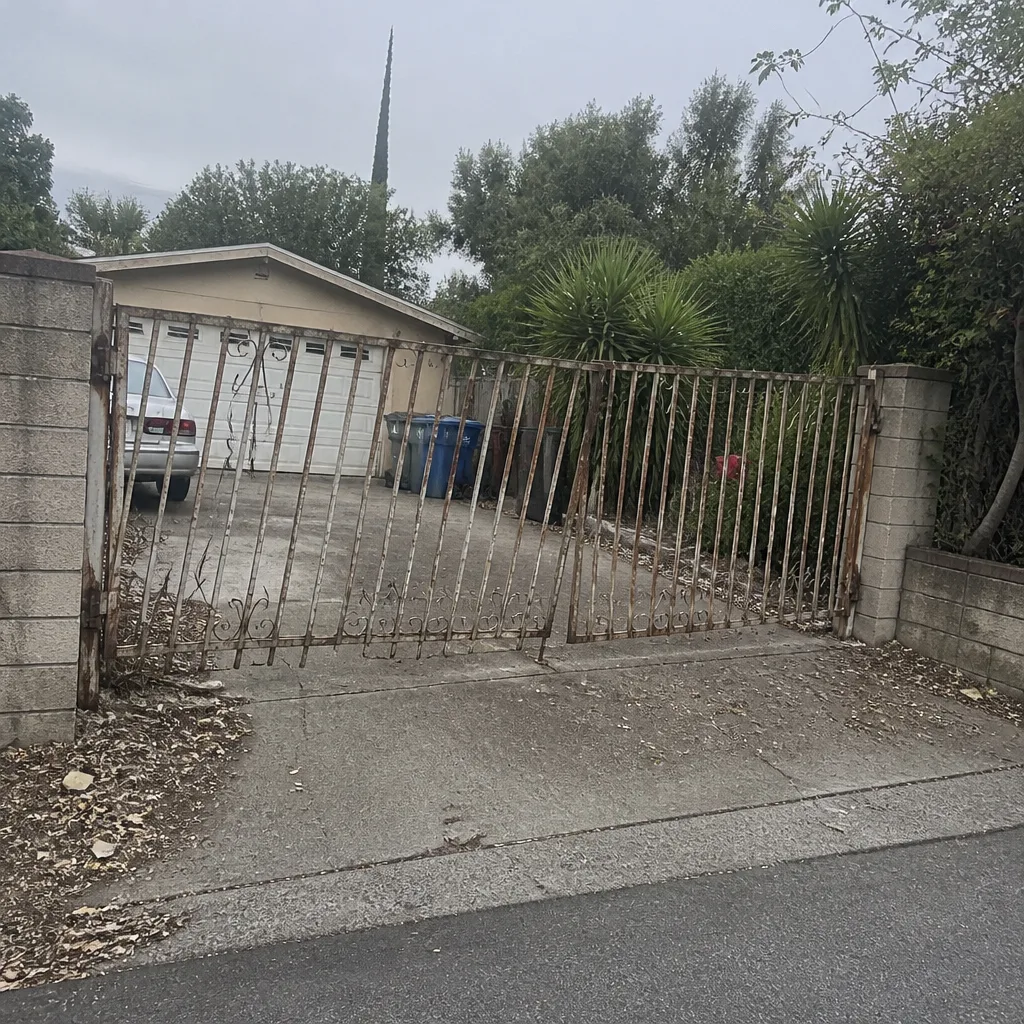 Before
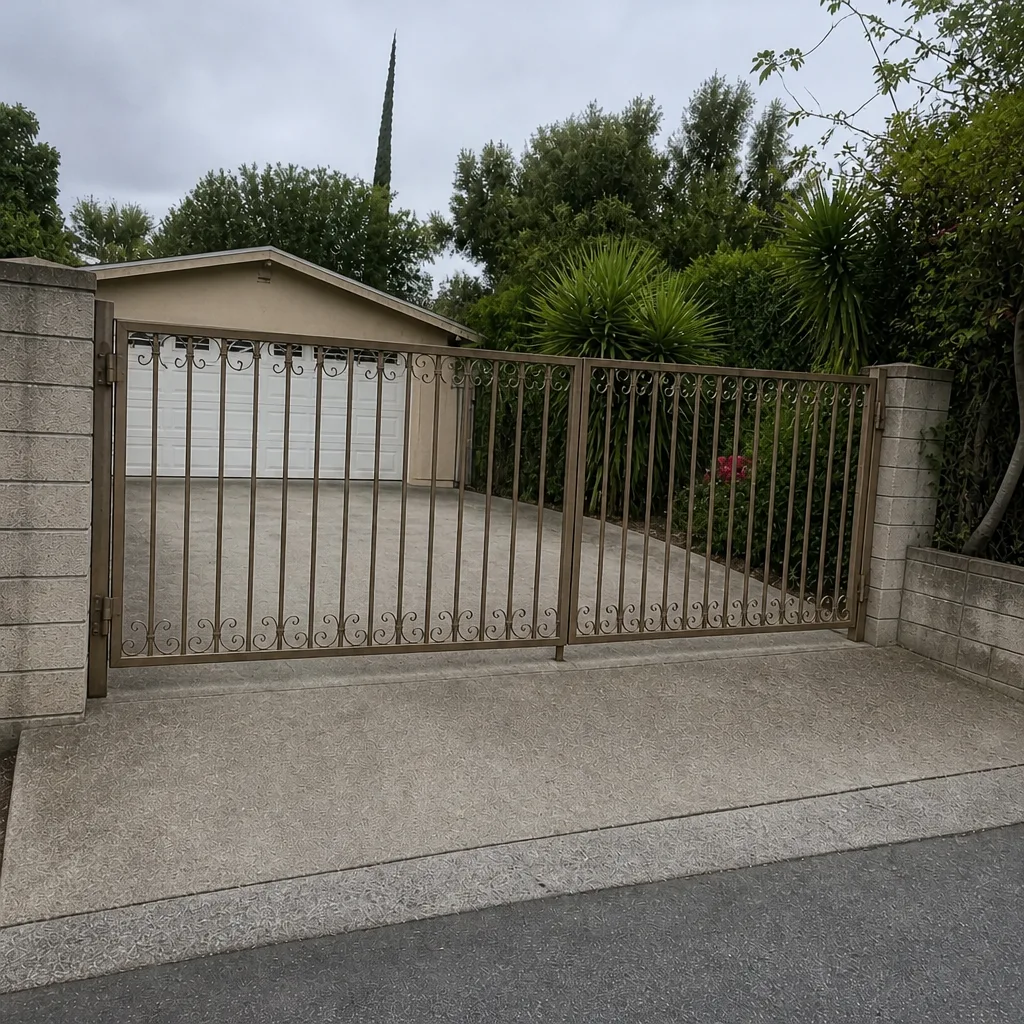 After
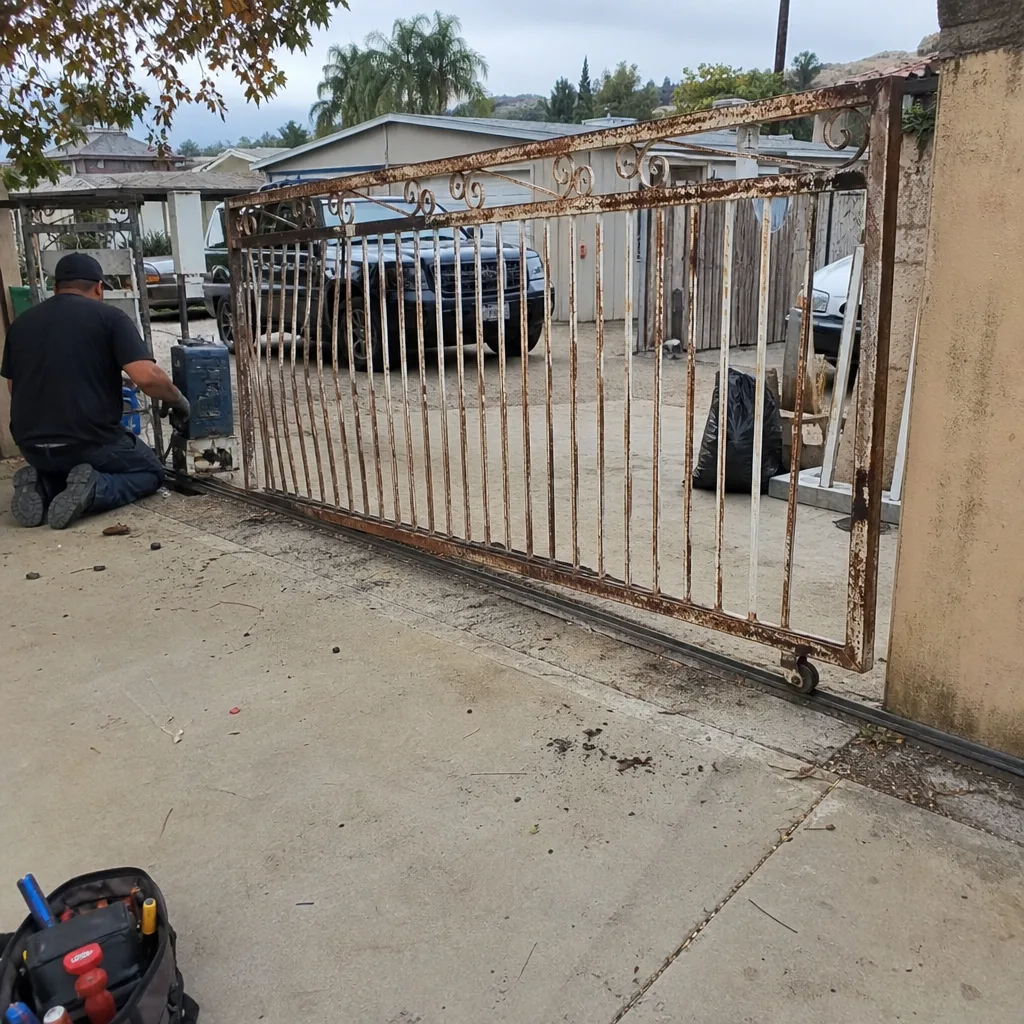 Before
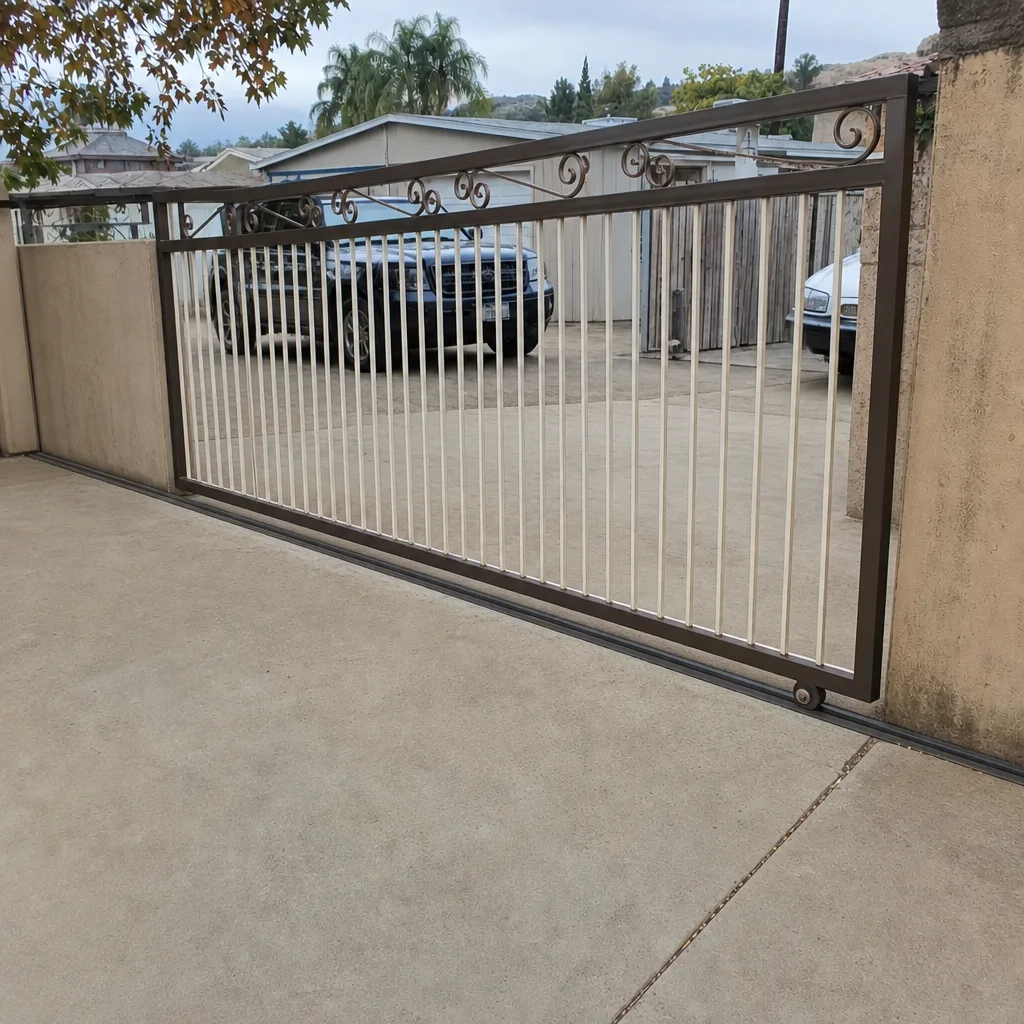 After
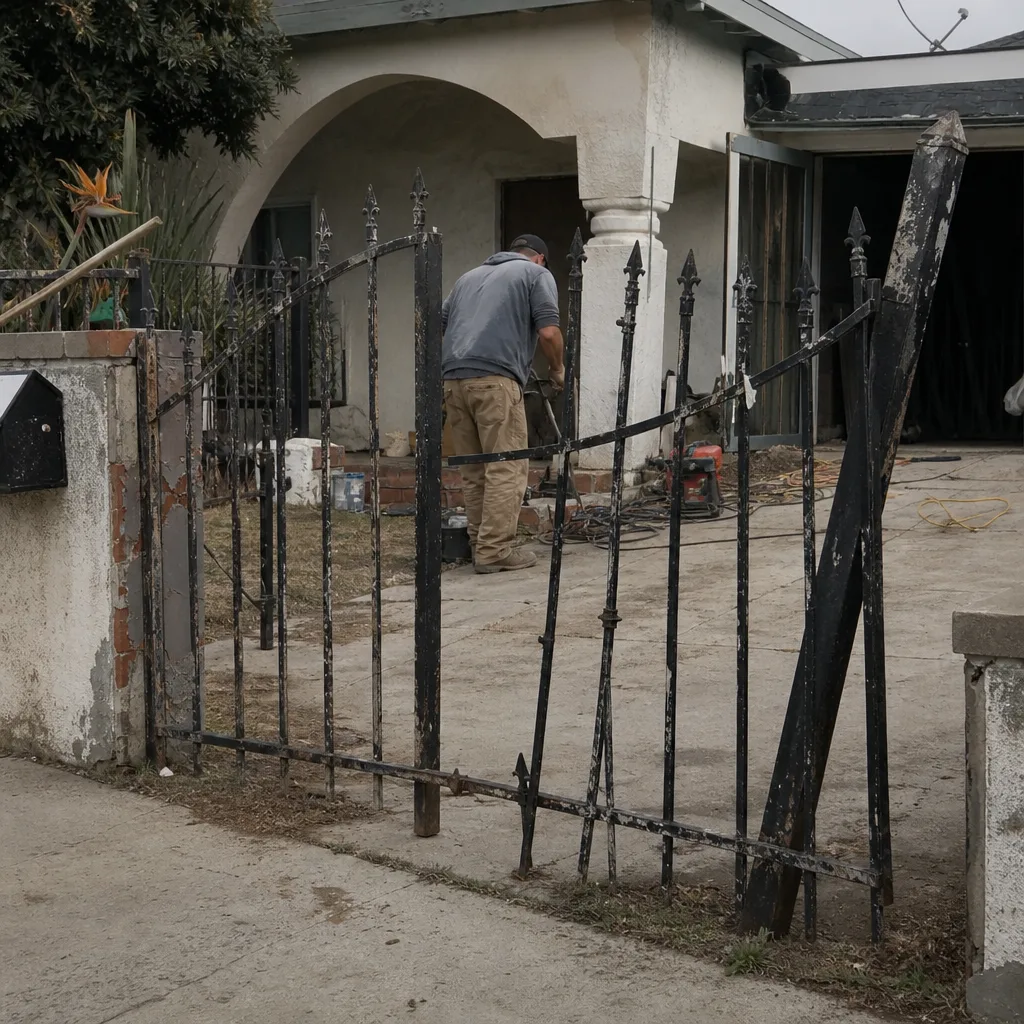 Before
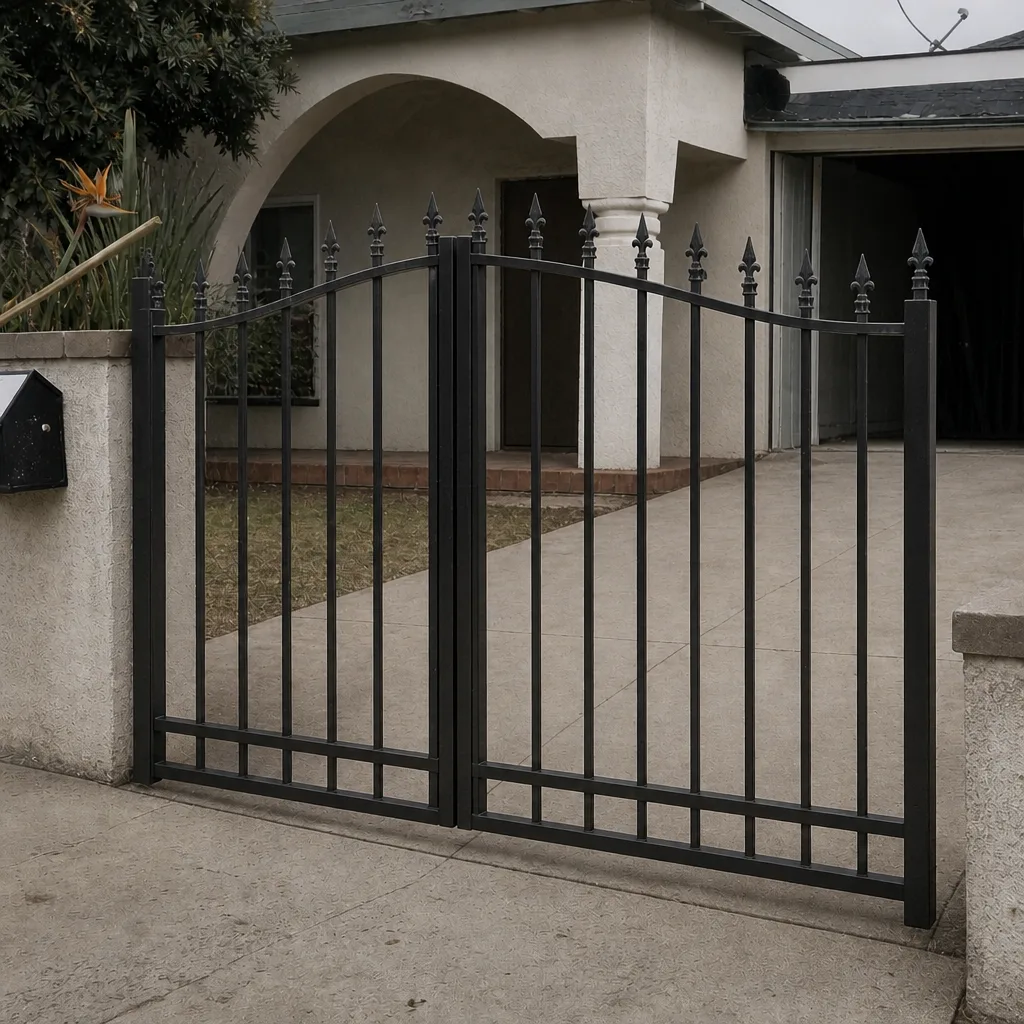 After
When to Call a Professional
Some problems are monthly-checklist territory. Others are a call today. Call a specialist if the gate won’t reverse on the safety edge, if you see corrosion or heat damage at the operator terminals, if the gate has fallen off its track or pivot, if a wiring or control-board issue is suspected, or if the drag test shows binding after you’ve cleaned and lubricated. Heavy swing and slide gates that have come loose are a crush hazard and shouldn’t be forced or propped. Electrical work on an operator is a real shock risk, so don’t open the housing. If your gate stalls mid-travel, trips a breaker, or makes a new grinding noise, that’s a professional call. Gate Repair El Cajon offers free estimates in El Cajon and can work on your existing brand rather than selling you a replacement. Call (866) 361-9590. We answer 24/7. Fast dispatch from 7am to 7pm, Sunday through Friday.
Frequently Asked Questions
Monthly for the seven-point walk-around, with a deeper seasonal check in spring and fall. El Cajon’s UV load and dry, dusty climate mean solar and electrical checks need a monthly cadence, and anyone near the canyon zones or heavy tree cover should tighten that interval. Call (866) 361-9590 for a free estimate if you want a professional pass.
Usually a solar battery that isn’t being charged fully, not a motor failure. Drifted panel angle, dust film, and shade creep all reduce charging, and a weak battery shows up first as a slow gate then a dead one. An experienced technician can test charge health and the battery in a single visit. Call (866) 361-9590. We answer 24/7.
Yes. Wipe the panel face with a soft cloth and plain water; skip abrasive cleaners. Don’t open the operator housing or touch terminals; the wiring side carries line voltage and can hold a charge. If the panel angle looks wrong or the battery won’t hold, that’s a gate technician’s call.
Do the sixty-second check: wipe the hinge face. If the rust comes off and the metal is solid, it’s surface rust and just needs lubricant. If you see a rust-colored stain running down below the base plate, or a swing gate that sags when you lift the outer edge, the pin or hinge is likely worn. Call us before it drops further. Call (866) 361-9590 for a free estimate.
Release the operator by hand, swing the gate through its full arc, and feel for binding, drag, or scrape. A gate that won’t move freely by hand is straining the motor on every cycle, which leads to an overheated motor or a stripped gear. Catching drag early is far cheaper than a new operator.
In most cases, yes. We work with LiftMaster, FAAC, BFT, Linear, Viking, Ghost Controls, DoorKing, Elite, and Mighty Mule, and we work on the existing equipment rather than pushing a replacement. A brand-agnostic approach means we diagnose the actual problem first. Call (866) 361-9590 for a free estimate.
The Bottom Line
The checklist that prevents most El Cajon gate failures isn’t the generic “lubricate the chain” list. It starts with solar panel angle and battery health, then moves through hinge and pivot-pin staining, track and roller debris, electrical terminal corrosion, the drag test, the safety devices, and finally lubrication and listening. Five minutes a month catches the majority of failures before they strand you, and it protects both a manual gate and a full electric access system. When a check turns up something more serious (corrosion, a binding gate, a safety device that won’t reverse), that’s a professional’s job. We can diagnose at the source, source the right parts, and repair or install on a single call.
If you’d rather have a specialist do the pass, or if something on this walk-around showed a problem you’d want looked at, call gate repair at (866) 361-9590 for a free estimate. We work on electric gates as a core service, cover both residential and commercial systems, and our technicians have up to 15 years of experience. We answer 24/7. Fast dispatch from 7am to 7pm, Sunday through Friday.
Written by the team at Gate Repair El Cajon.