
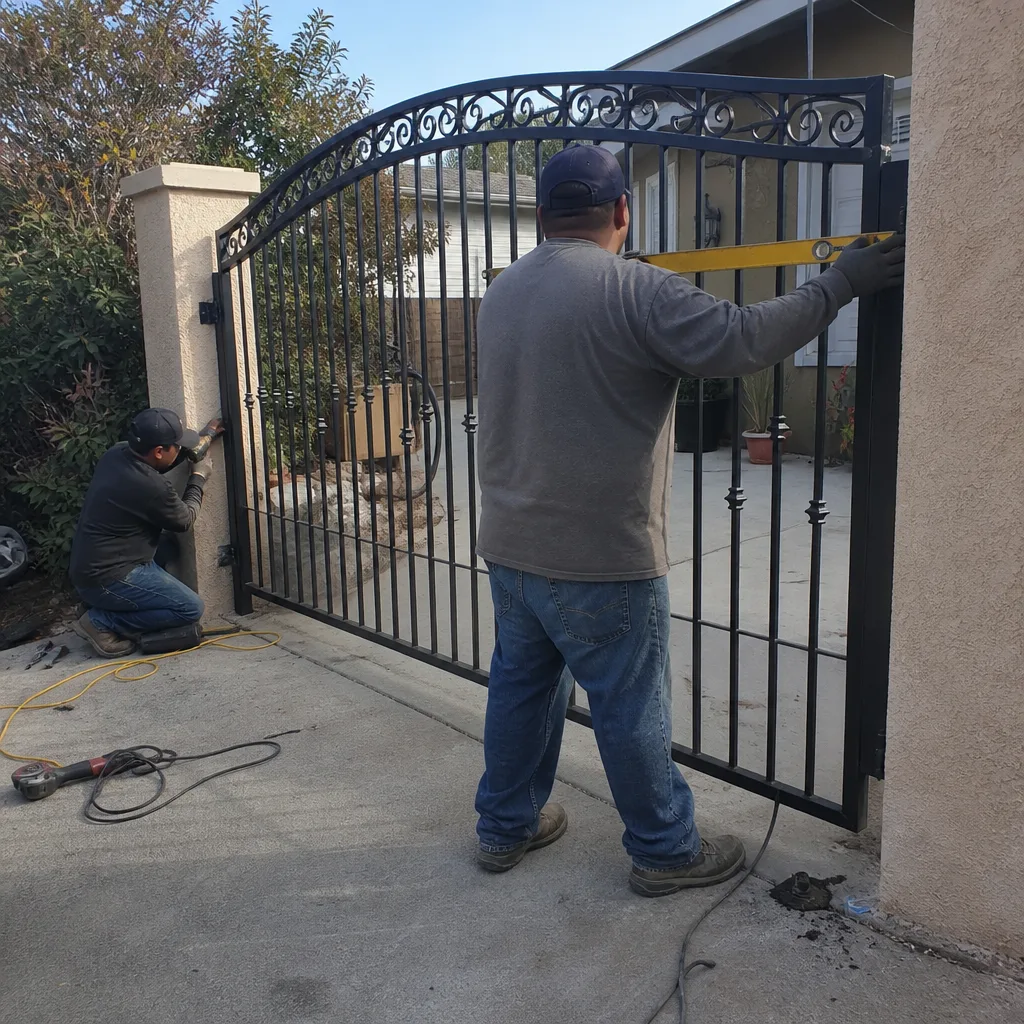
Last updated November 15, 2026
 Wrought iron
 Wood & steel frame
 Farm & ranch
 Sliding driveway gates
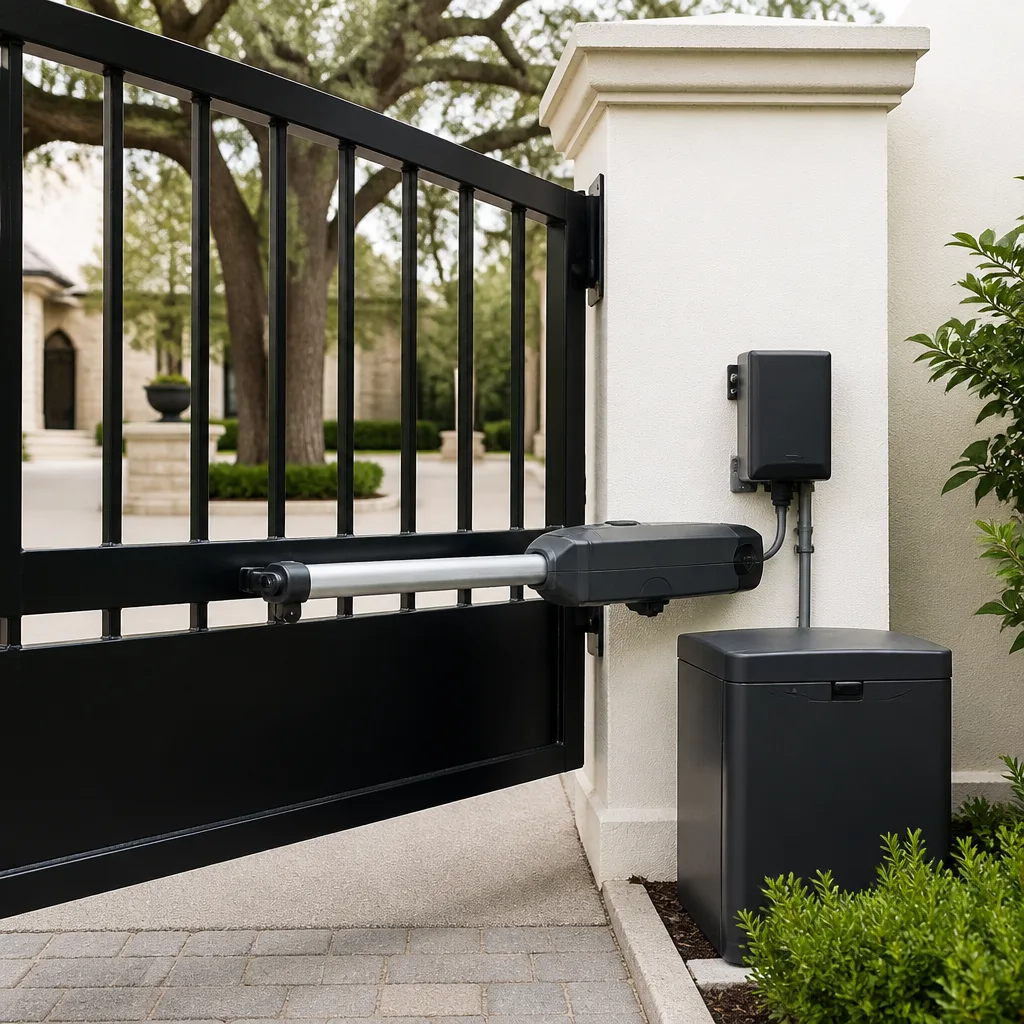 LiftMaster operators
Free on-site gate assessment - hinges, posts, and your LiftMaster or Nice gate operator checked before anything is quoted
The assessment is free and the quote is the invoice.
Get your free estimateGate Repair Troubleshooting in El Cajon: Common Problems and How to Fix Them
A gate that reverses before it closes isn’t malfunctioning. It’s communicating. The safety loop or the photo-eye sensor is doing exactly what it was programmed to do, and replacing the motor won’t fix it. Most gate failures trace back to one of five root causes: a sensor fault, a motor or operator problem, a limit switch that’s drifted, a control board failure, or a mechanical misalignment that only looks electrical. Once you know which category your symptom belongs to, diagnosis stops being guesswork. This guide shows you how to read your gate’s behavior the way a specialist does, what El Cajon’s heat does to gate hardware, and which problems you can safely check yourself versus which ones need a trained eye.
Quick Answer
In El Cajon, most gate problems fall into five groups: safety sensor faults (the gate reverses or won’t close), operator or motor failure (dead gate, no response), limit switch drift (gate stops short or over-travels), control board faults (erratic or repeated cycling), and mechanical misalignment caused by heat-driven expansion of aluminum frames. A gate that reverses on close almost always has a sensor or loop problem, not a bad motor. A gate that won’t move at all may only have a tripped internal breaker. Matching the symptom to the system is the fastest route to a correct repair.
Styles & brands we work with
- Wrought iron
- Wood & steel frame
- Farm & ranch
- Sliding driveway gates
- LiftMaster operators
Table of Contents
- Symptom-to-Cause Mapping: How to Read Your Gate
- How El Cajon’s Heat Cycles Affect Gate Hardware
- Dead Operator vs. Tripped Breaker: The Reset Sequence
- When the Manual Release Is the Right First Move
- Safety Sensors and Loops: The Most Misdiagnosed Gate Fault
- What’s Safe to Check Yourself vs. What Needs a Specialist
- Slide Gates, Tracks, and Heavy Panels
- Commercial Electric Access Systems in El Cajon
Symptom-to-Cause Mapping: How to Read Your Gate
Every gate symptom points to a specific system. The trick is knowing which. When a gate reverses before closing, the safety loop or photo-eye sensor is interrupting the cycle: the gate is telling you it detects an obstruction, real or false. When a gate won’t open at all, the problem is usually upstream of the motor, in power, a breaker, or the control board’s logic. When a gate opens partially and stops, you’re looking at a limit switch that has drifted out of position or a mechanical bind the operator is fighting. And when a gate cycles erratically or opens and closes on its own, the cause is most often a failing control board or a miswired accessory.
We work on your brand, which means we aren’t locked into one manufacturer’s diagnostic path. LiftMaster, FAAC, BFT, and Linear operators each handle faults differently, and a technician fluent in all of them reads the symptom faster than someone who only knows one system. That matters most on electric gates, where the control board hides the real cause until you test the inputs directly.
- Reverses on close or won’t close: photo-eye sensor, safety loop, or obstruction.
- Won’t open at all, completely dead: power supply, tripped internal breaker, control board, or operator.
- Opens partially, stops short: limit switch drift, mechanical bind, or low operator torque.
- Opens and closes on its own, erratic: control board fault, moisture in wiring, or a shorted loop.
- Motor runs but gate doesn’t move: stripped gear, disconnected arm, or a broken manual release chain.
- Loud grinding or clunking: mechanical wear in the operator, hinge, or track.
If you can answer two questions (does the motor run, and does the gate reverse or stop?) you’ve already cut the diagnostic field roughly in half. The rest is confirming which component inside that group is failing.
How El Cajon’s Heat Cycles Affect Gate Hardware
El Cajon summers push metal to its limits, and gate hardware feels it. Aluminum frames expand in the heat and contract overnight, and over hundreds of cycles that movement works its way into the gate’s alignment. A gate that binds in the afternoon but swings free in the morning can look like a failing motor when the real issue is a frame that’s warped a fraction of an inch at a hinge or latch point. Steel posts and anchors move too, especially where a gate is set in soil that dries and cracks through the hotter months.
We see this most in automatic gates that were set up in cooler weather, then start rubbing or reversing when the heat arrives. The operator isn’t weak. The gate itself has changed dimension, and the operator is now fighting drag it wasn’t tuned for. Thermal expansion is why a gate that worked perfectly in spring starts acting up in July without any other change.
- Hinge bind: a gate that sticks at a particular point in its swing usually has a hinge or post that’s shifted.
- Latch misalignment: the latch engages in cool weather and misses in heat, or the reverse.
- Track wander (slide gates): a track that’s out of level by a fraction of an inch causes drag that the operator translates as an obstruction.
- Operator over-torque: the operator compensates for drag until it hits its force limit and reverses, which looks exactly like a sensor fault.
Because the pattern here is temperature-driven, a proper diagnosis means checking the gate at the time of day it misbehaves, not just whenever the technician happens to arrive. If you can, note whether your gate fails in heat, in cool, or both. That single detail points a specialist straight at the right cause.
Dead Operator vs. Tripped Breaker: The Reset Sequence
A gate operator that appears dead is often just protecting itself. Many operators have an internal breaker or thermal cutoff that trips after an overload, a short, or a jam, and the gate won’t respond until that protection is reset. Before you assume the operator has failed, run the reset sequence in order. A dead gate and a tripped breaker look identical at the keypad, and knowing the difference saves both time and a replacement you may not need.
- Confirm power to the operator. Check that the circuit breaker feeding the gate is on and that any dedicated disconnect switch near the operator isn’t off.
- Find the operator’s reset. Most operators have a reset button on the control board or a power cycle procedure in the manual. LiftMaster, FAAC, and Linear operators each use a slightly different sequence, so check your model’s manual rather than guessing.
- Power cycle the operator. Turn off power at the breaker, wait a full minute, then restore it. This clears many transient faults and lets you hear whether the motor attempts to run.
- Test the command input. Press the keypad or remote again. If the gate now responds, you had a reset fault. If nothing happens, the problem is upstream in the board or operator.
- Listen for the motor. If you hear the motor run but the gate doesn’t move, the fault is mechanical (gear, arm, release). If there’s no sound at all, the fault is electrical.
If the breaker trips again right after reset, stop. Repeated tripping points to a short in the wiring or a failing control board, and continuing to reset it can cause more damage. That’s the point to call for electric gate repair rather than keep pushing the reset.
When the Manual Release Is the Right First Move
The manual release exists so the gate can be operated by hand during a power failure or after an operator fault. Used correctly, it’s the safe way to open the gate, park a car, or let emergency access through. Used when the underlying fault is mechanical, it can make the damage worse: a gate with a warped frame or a bent arm can bind harder by hand, and forcing it against a jam can bend the operator arm or strip a gear.
Reach for the manual release when the operator is dead but the gate itself swings or slides freely by hand. Do not use it when the gate won’t move by hand, when there’s grinding or a hard stop before the gate is fully open, or when the gate has visibly dropped off its hinges or track. In those cases, forcing the gate is how an inexpensive repair becomes a replacement.
- Safe to release: operator dead, gate swings or slides freely, no grinding, no visible damage.
- Stop and call: gate binds by hand, arm or linkage bent, hinge or track out of line, heavy panel dropped.
- Never force: a slide gate off its track, or a swing gate hanging on a broken hinge. Heavy panels can crush; let a trained technician handle it.
If the gate is at your home and access is a safety issue, use the release to open it once, then leave it open until the operator is repaired. Repeated opening and closing by hand on a binding gate accelerates wear on the hinges and the operator’s gear train.
Safety Sensors and Loops: The Most Misdiagnosed Gate Fault
Safety sensors and loop detectors are the number-one cause of gates that reverse, stop short, or refuse to close. Photo-eye sensors fire a beam across the gate’s path; when something breaks the beam, the operator reverses the gate. Loop detectors in the driveway sense a vehicle and hold the gate open. Both are designed to fail safe, which means a dirty sensor, a misaligned pair, or a failed loop makes the gate stop working correctly. Replacing the motor to fix a reversing gate is one of the most common and most expensive mistakes we see.
In El Cajon, sensor problems show up in specific ways. Dust and grit collect on the lens through the dry months, and a sensor that’s slightly out of alignment in the cooler hours can drift enough in the heat to break the beam every afternoon. Loop detectors embedded in the driveway can be damaged by ground movement or by the heat cycles working on the pavement. When the sensor is the fault, the gate reverses reliably at the same point in its travel and the motor sounds normal the whole time.
- Check the lens first: clean both photo-eye lenses and confirm they’re aimed directly at each other.
- Check the indicators: most photo-eyes have a small indicator light that shows whether the beam is received. A dark or flickering indicator points at the sensor.
- Test the reverse manually: with the gate closed and the operator idle, block the beam and command the gate to close. If it reverses, the sensor is working; if it ignores the block, the sensor or loop is the fault.
- Loops are a specialist job: a loop detector fault usually needs a technician to test the loop and the detector board, because the wiring runs under the driveway.
For a full walkthrough of how we handle automatic access, see our gate repair El Cajon page. If your gate reverses in the heat and works fine in the morning, note that pattern for the technician; it shortens the visit and rules out the motor before anyone touches it.
What’s Safe to Check Yourself vs. What Needs a Specialist
Some gate troubleshooting is genuinely safe to do yourself. Cleaning photo-eye lenses, confirming power at the breaker, checking the remote battery, and listening for the motor are all low-risk checks that tell you and a technician what’s happening. Everything on the other side of those checks involves the control board, the operator’s internal wiring, or heavy gate hardware, and those aren’t safe or productive to troubleshoot alone. The control board carries live voltage and its components are easy to damage with a careless probe. On electric gates, the operator’s power wiring and the gate panel itself are the dangerous parts: heavy panels can crush, and both swing and slide gates can move unexpectedly when powered.
A gate has no springs to work on, so the risk here isn’t a wound spring. It’s electrical and mechanical: the operator’s power, the control board, and the weight of the gate. Keep your own checks at the level of observation and safe testing.
- Safe: clean photo-eye lenses, test the remote and keypad, confirm the breaker is on, listen for the motor.
- Safe with care: test the sensor beam with your hand while standing clear of the gate’s path, and note where in the cycle the gate misbehaves.
- Not safe: opening the operator housing, testing the control board with a meter, rewiring sensor or loop connections, or forcing a binding gate by hand.
- Not safe: working under a heavy panel, reaching into the operator while it’s powered, or bypassing safety sensors to “get the gate working.”
Bypassing a safety sensor to make the gate close is one of the worst things you can do. The sensor protects a person or a vehicle from a heavy moving panel. If a sensor is failing, the fix is to repair or replace the sensor, not to disable it.
Slide Gates, Tracks, and Heavy Panels
Slide gates fail differently from swing gates, and the difference matters in El Cajon. A slide gate rides on a track and rollers, and a track that’s out of level or has shifted after ground movement causes the gate to drag. The operator senses that drag as resistance and either reverses or stops. Homeowners often read this as a motor fault when the gate is binding on its own track. A slide gate that comes off its track is a serious safety event and shouldn’t be moved or forced by hand. A heavy slide or swing panel that has dropped can crush a person or a vehicle; keep everyone clear and call a technician.
Rollers, tracks, and guides are mechanical parts that wear, and heat cycles on the concrete and soil around the track work the alignment loose over time. Clean debris out of the track, but if the gate still binds, stop and have it looked at. An operator forced to drag a binding gate will wear out its gear and motor early, so a binding gate is both a safety issue and a repair you’ll pay for twice if it’s ignored. Proper footing depth for posts and a level track keep a slide gate working through El Cajon’s temperature swings, and re-leveling the track is a job for someone with the right equipment.
We work on residential and commercial slide gates and swing gates alike, and we don’t push a replacement when a repair will do. For a broader look at how gate failures compare across the region, see our El Cajon guide.
Commercial Electric Access Systems in El Cajon
Commercial gates carry everything a home gate does and more: heavier cycles, more users, and access systems layered on top. Keypads, card readers, intercoms, and phone-entry systems all feed the operator, and any one of them can introduce a fault that looks like a gate problem. On a commercial property, a gate that won’t open for a tenant is a downtime problem, not just a repair, and the diagnosis needs to isolate whether the fault is in the access control layer or the gate operator itself.
We’re equipped to work on both residential and commercial electric access systems, and the diagnostic principle is the same: find the root cause at the source rather than swap parts until something works. DoorKing and LiftMaster access systems behave differently from residential operators, and a technician who knows the specific platform finds the fault faster. If a single keypad in a multi-user system stops working, the fix is often in that keypad or its wiring, not the operator; if every input fails at once, the control board or power is more likely. Knowing which is which saves the hours of trial-and-error that turn a small repair into an outage.
- One input fails: keypad, remote, or intercom wiring.
- All inputs fail: control board, power, or operator.
- Gate cycles on its own: loop detector or board fault.
- Gate won’t hold open for vehicles: loop detector or hold-open setting.
For commercial electric gate troubleshooting, the fastest path is a specialist on site with the right test gear. The same approach applies to gate repair on residential systems: diagnose at the source, then fix what’s actually failing.
Common Mistakes to Avoid
- Replacing the motor to fix a reversing gate. A gate that reverses on close is telling you the sensor or loop has detected an obstruction. Replacing the operator won’t fix it, and you’ll have paid for a motor you didn’t need. Test the sensor before anyone touches the motor.
- Disabling the safety sensors to get the gate working. Bypassing a photo-eye or loop to make the gate close removes the protection between a heavy moving panel and a person or vehicle. That’s a safety failure, not a fix, and it’s the wrong trade every time.
- Forcing a binding gate by hand. A gate that binds is warning you something mechanical is out of line, whether it’s a hinge, a track, or a frame that’s warped in El Cajon’s heat. Forcing it bends the operator arm or strips a gear, and a small repair becomes a big one.
- Resetting a tripped breaker over and over. If a breaker trips again right after reset, there’s a short or a failing control board on the circuit. Endless resets do damage, so stop after the first repeat and call for diagnosis.
- Assuming a dead gate needs a replacement operator. Many dead operators just need an internal reset or a power cycle. Running the reset sequence in order before assuming the worst is how a reset fault stays a reset fault.
- Ignoring a gate that dropped or came off its track. A heavy panel off its track or hanging on a broken hinge can crush a person or a car. Keep everyone clear and have it handled by a technician who knows how to stabilize the panel safely.
- Troubleshooting the control board without the right gear. The board carries live voltage and its components are easy to damage. Testing it with a household meter or working in the powered operator housing risks injury and can void the operator’s warranty.
See the difference
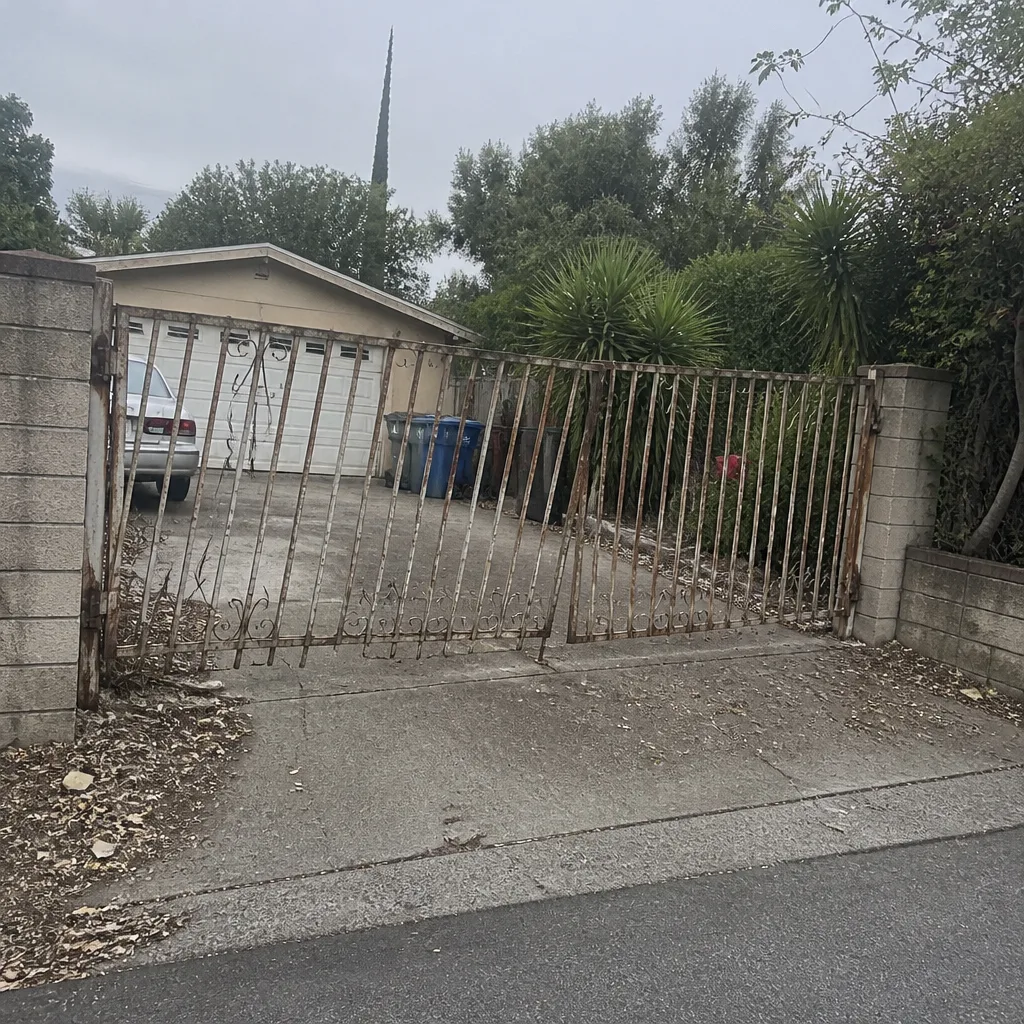 Before
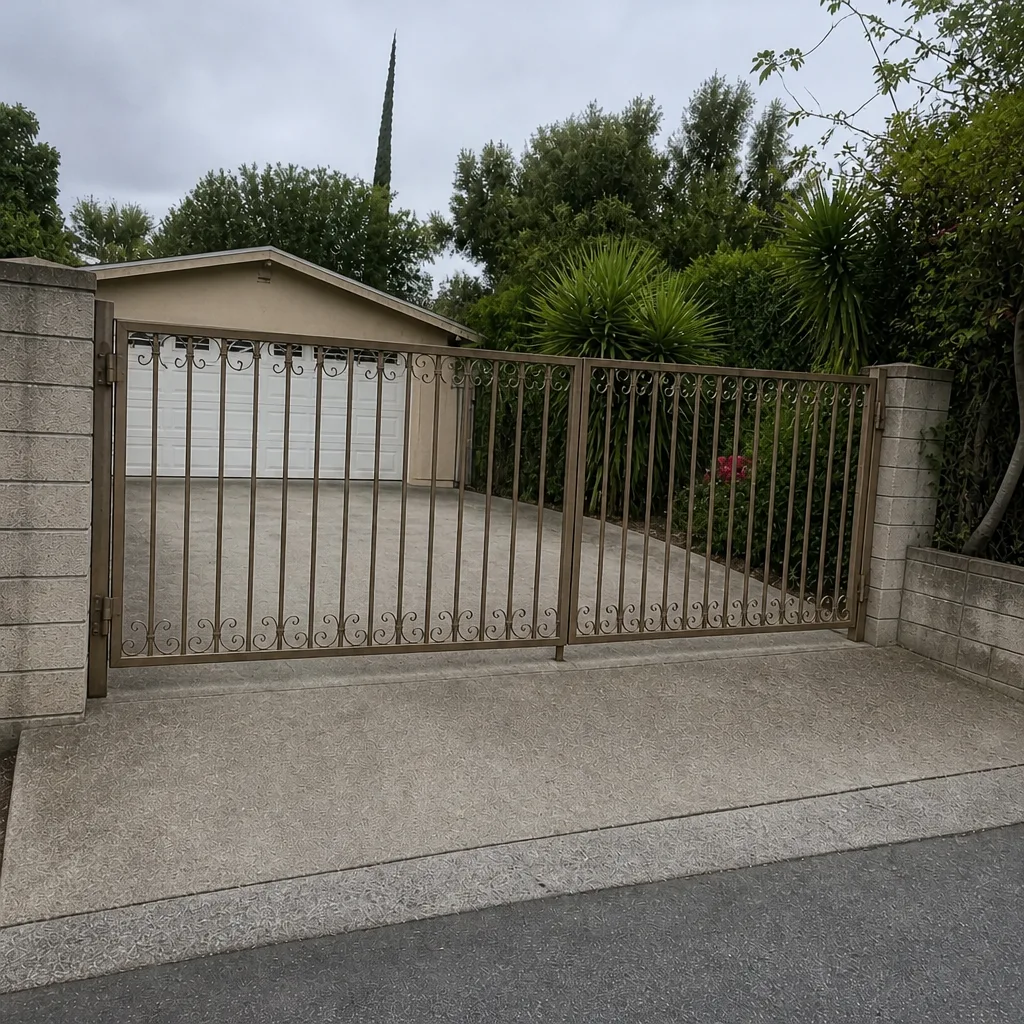 After
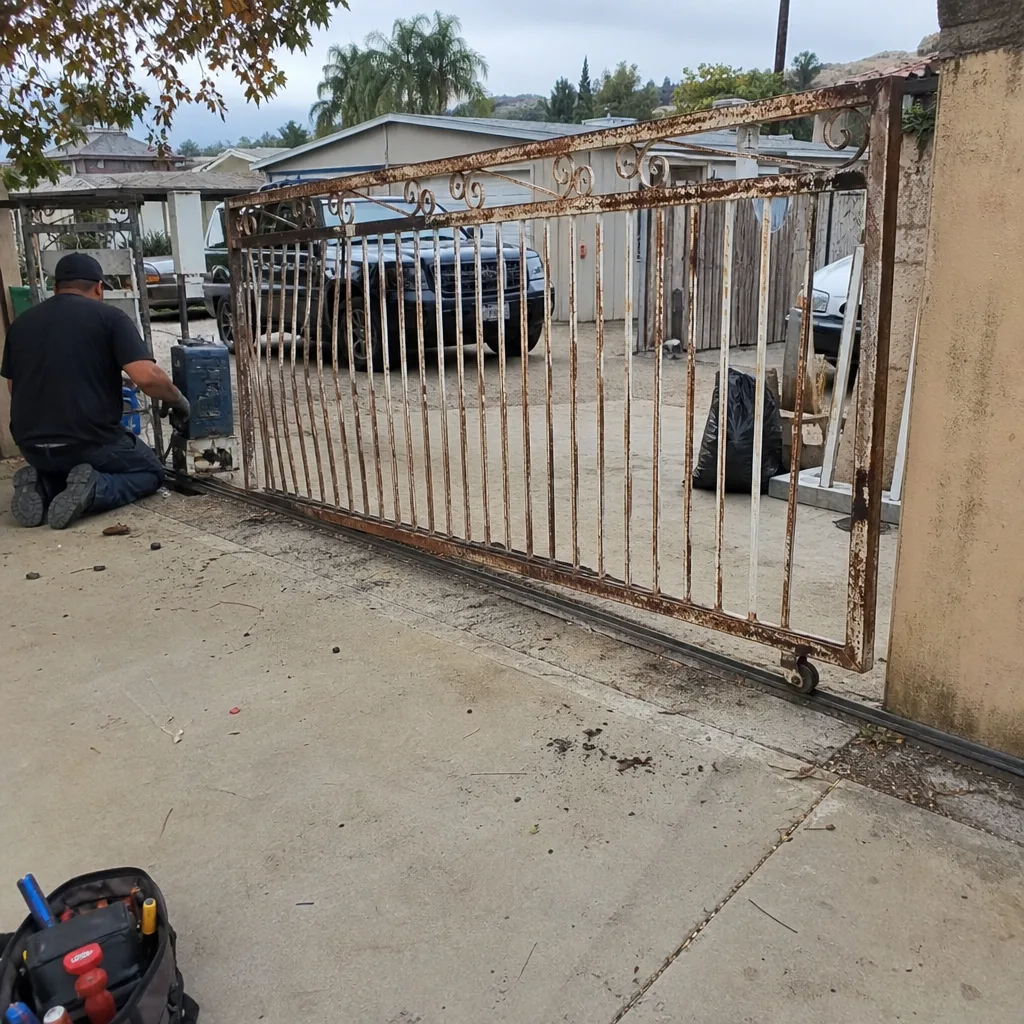 Before
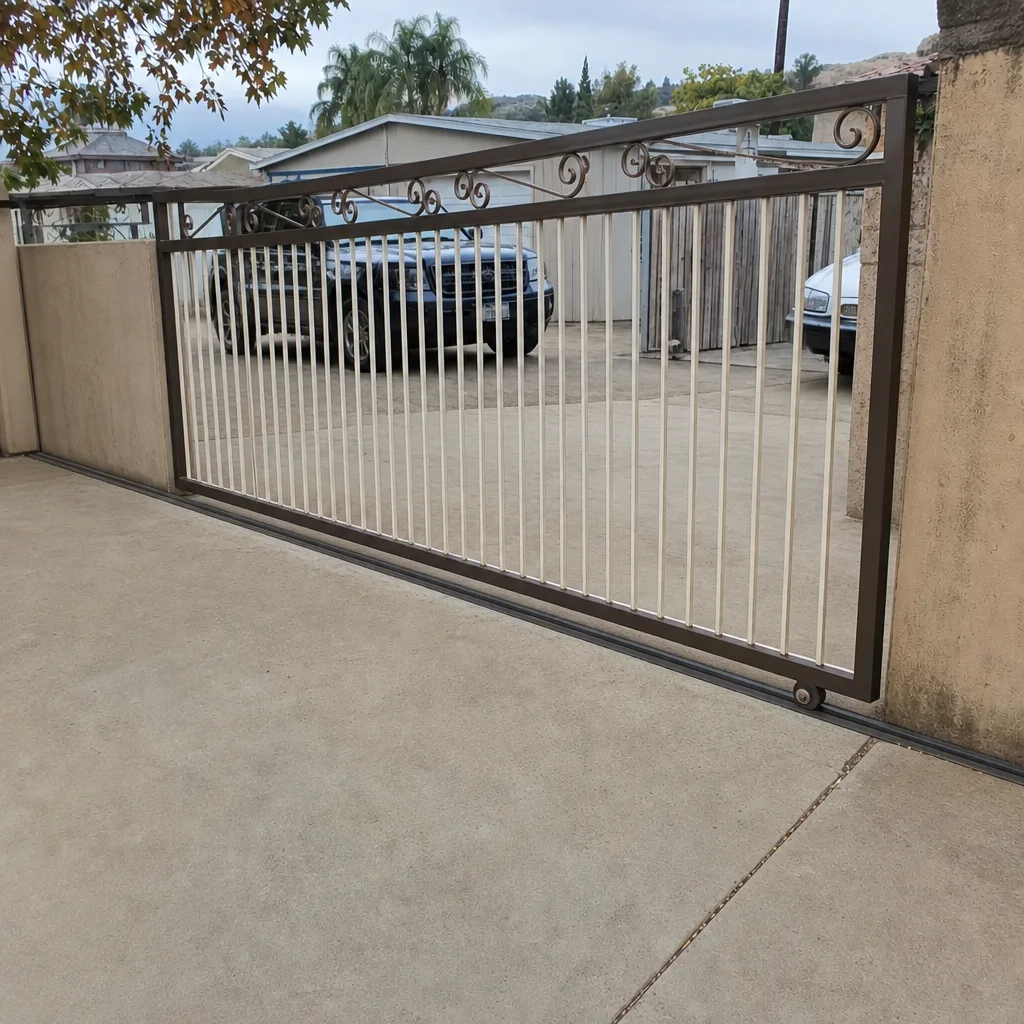 After
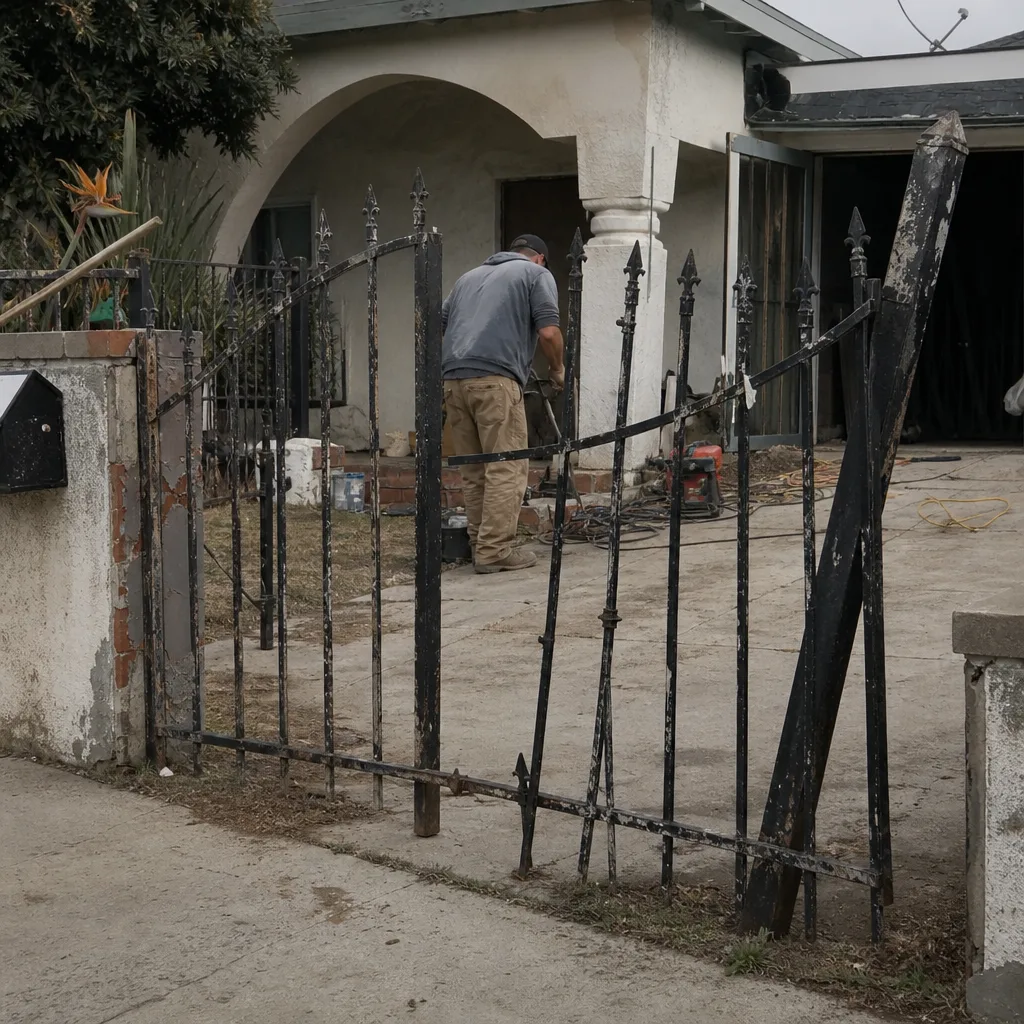 Before
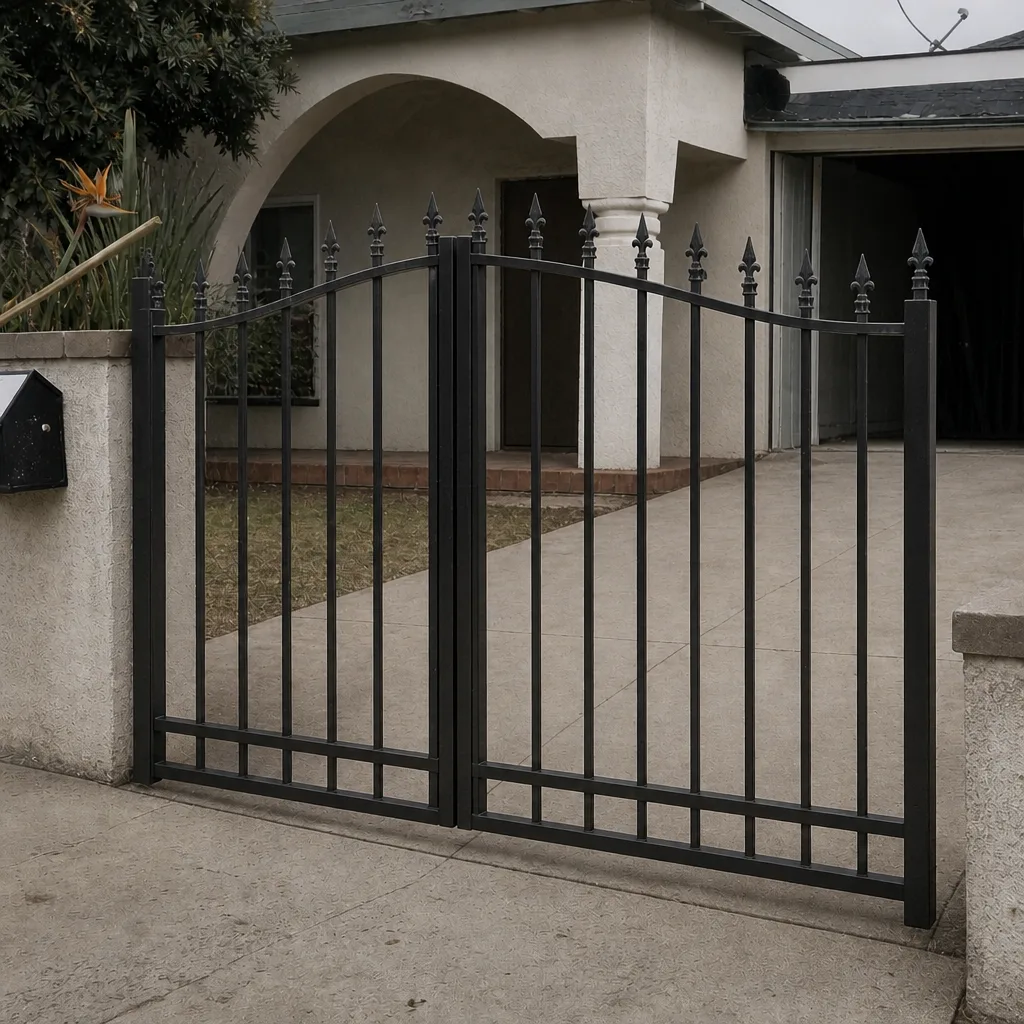 After
When to Call a Professional
Call a professional when the gate binds or grinds, when the breaker trips again right after a reset, when a heavy panel has dropped or come off its track, or when the problem is inside the operator housing. Those situations involve electrical or mechanical hazards that a homeowner shouldn’t handle, and a trained technician will diagnose them faster and safer. If your gate is fixed by a reset or a lens cleaning, that’s a good outcome; if the symptom returns, the root cause is still there and needs a specialist’s eye. Same-day repair is usually possible on standard gate faults. Our technicians have up to 15 years of experience across the major gate brands, so the diagnosis is direct rather than trial-and-error. Gate Repair El Cajon offers free estimates in El Cajon. Call (866) 361-9590. We answer 24/7, with fast dispatch from 7am to 7pm, Sunday through Friday.
Frequently Asked Questions
Your gate reverses because the safety sensor or loop detector has detected an obstruction, real or false. This is the gate working as designed, not a motor failure. Start by cleaning the photo-eye lenses, checking that they’re aligned, and watching for an indicator light that shows whether the beam is received. If the reverse happens reliably at the same point and the motor sounds normal, the sensor or loop is the fault. In older El Cajon systems the loop detector under the driveway is the usual suspect, and that needs a specialist’s test gear. Call (866) 361-9590 for an exact quote on a sensor or loop repair; estimates are free.
Not necessarily. A dead gate that ignores every input is often a tripped internal breaker or a power fault, not a failed motor. Confirm the circuit breaker feeding the operator is on, run the operator’s reset sequence, and power cycle it before assuming the motor needs replacing. If the breaker trips again right after reset, stop; that points to a short or a control board fault that needs a technician. If you hear the motor run but the gate doesn’t move, the fault is mechanical rather than electrical. Call (866) 361-9590 to schedule a diagnosis; estimates are free.
You can use the manual release when the operator is dead but the gate itself moves freely by hand. It’s the safe way to open the gate for access during an operator fault. Don’t use it if the gate binds by hand, grinds, has a bent arm or linkage, or has dropped off a hinge or track; forcing those makes the damage worse. A heavy panel that has dropped or come off its track is a safety hazard and should only be handled by a technician. Call (866) 361-9590 if the gate binds by hand; we’ll tell you what to do next and quote the repair.
El Cajon’s heat cycles expand and contract metal gate frames and posts, which causes misalignment, hinge bind, and track wander that look like motor problems. A gate that binds in the afternoon but works in the morning is usually showing thermal expansion, not a failing operator. Note when your gate misbehaves so the technician can replicate the problem and diagnose it at the right time of day. A proper diagnosis also covers motor, sensor, limit switch, control board, and mechanical misalignment. Call (866) 361-9590 for a scheduled visit; estimates are free.
You can safely clean photo-eye lenses, test the remote and keypad, confirm the breaker is on, and listen for the motor. Everything inside the operator housing, including the control board and wiring, is a job for a trained specialist: it carries live voltage, it’s easy to damage, and mistakes can cause injury. Bypassing safety sensors to get the gate working is never safe. If you’ve done the safe checks and the problem remains, call (866) 361-9590. We answer 24/7, with fast dispatch from 7am to 7pm, Sunday through Friday.
Gate repair in El Cajon is priced per job, and the written estimate sets the final price. The price depends on the fault: a sensor adjustment is a very different job from a control board replacement or an operator repair. Every estimate is free, and the price is quoted and agreed before any work starts, so there’s no surprise on the invoice. The written estimate covers the diagnosis, parts, and labor for the specific repair. Call (866) 361-9590 for your free estimate and a clear breakdown of the work.
The Bottom Line
Most gate problems trace back to five causes, and matching the symptom to the system is the fastest route to a correct fix. A reversing gate is usually a sensor or loop fault, a dead gate is often a reset or power issue, a partially opening gate points to a limit switch or mechanical bind, and erratic cycling points to the control board. In El Cajon, heat-driven misalignment and drag blur the line between mechanical and electrical problems, so the timing of the fault matters. Keep your own checks to safe observation, leave the control board and heavy panels to a specialist, and don’t bypass safety sensors. If the first reset or lens cleaning doesn’t end the problem, have it diagnosed at the source by someone fluent in your gate’s brand.
When your gate needs attention, call (866) 361-9590 for a free estimate. We answer 24/7, with fast dispatch from 7am to 7pm, Sunday through Friday. Gate Repair El Cajon handles manual and electric gate repair, troubleshooting, and new gate installation on residential and commercial systems, working on your existing equipment rather than pushing a replacement.
Written by the team at Gate Repair El Cajon.