
Last updated November 15, 2026
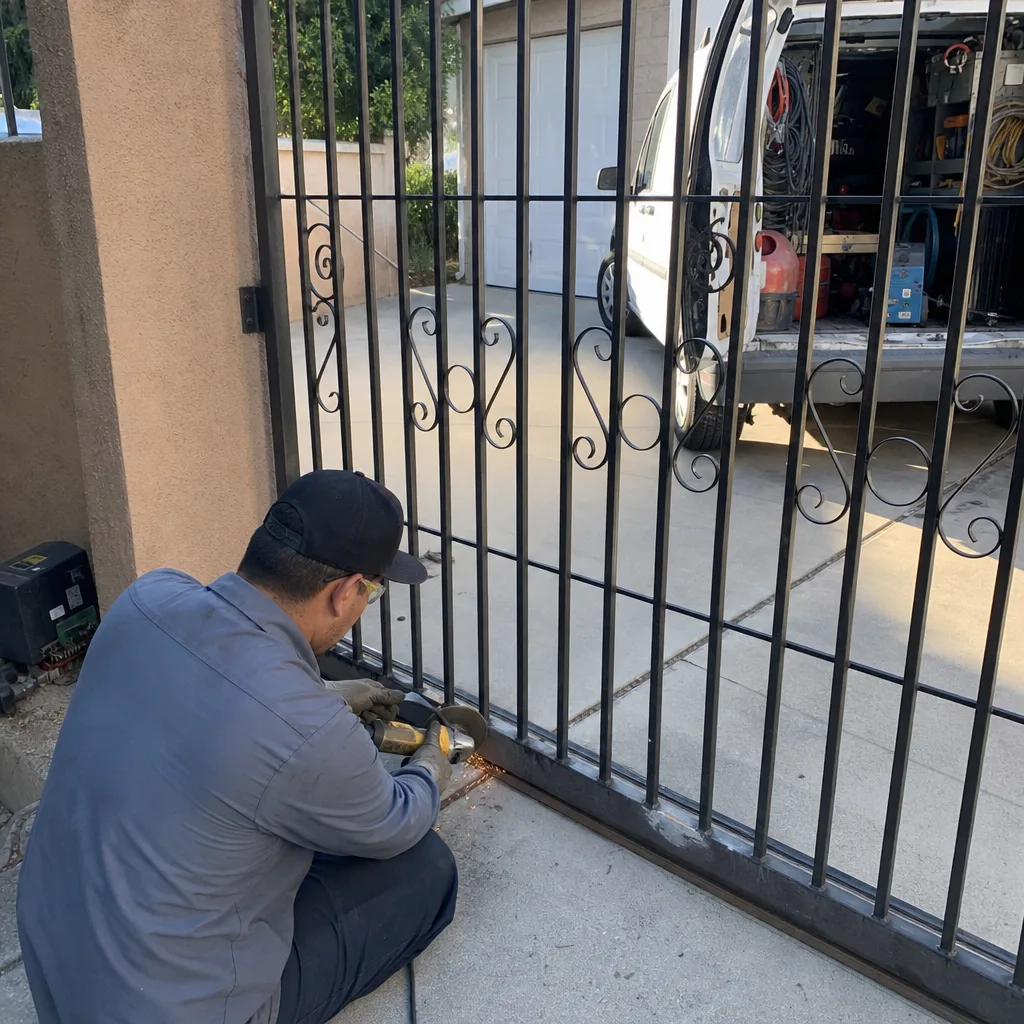
 Wrought iron
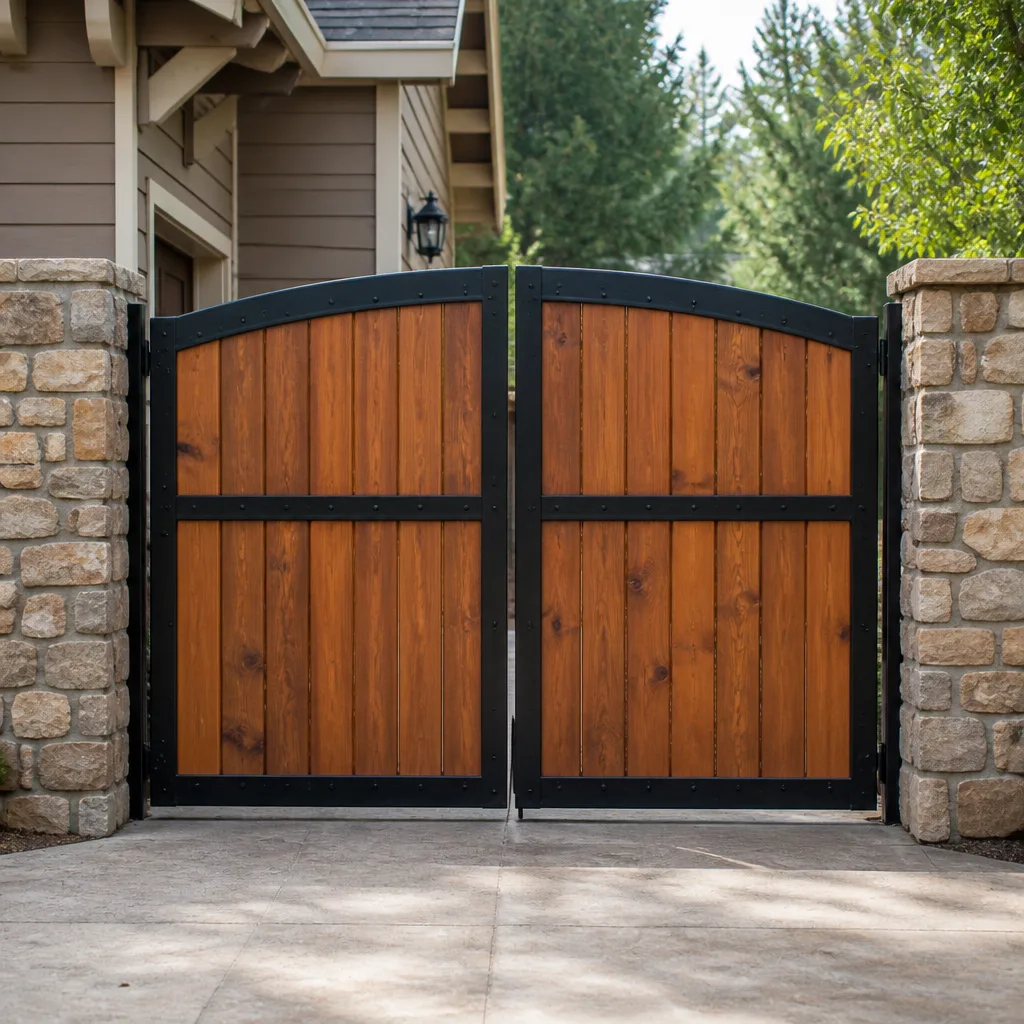 Wood & steel frame
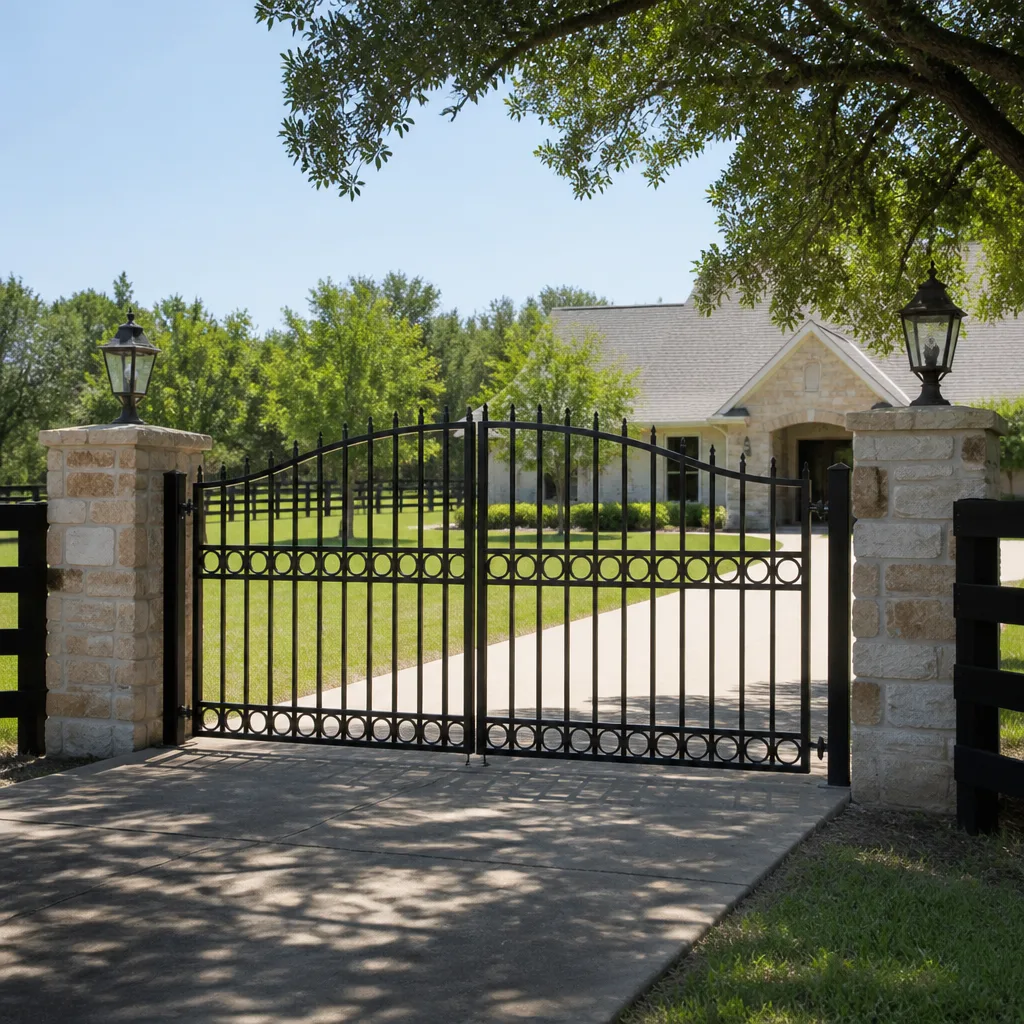 Farm & ranch
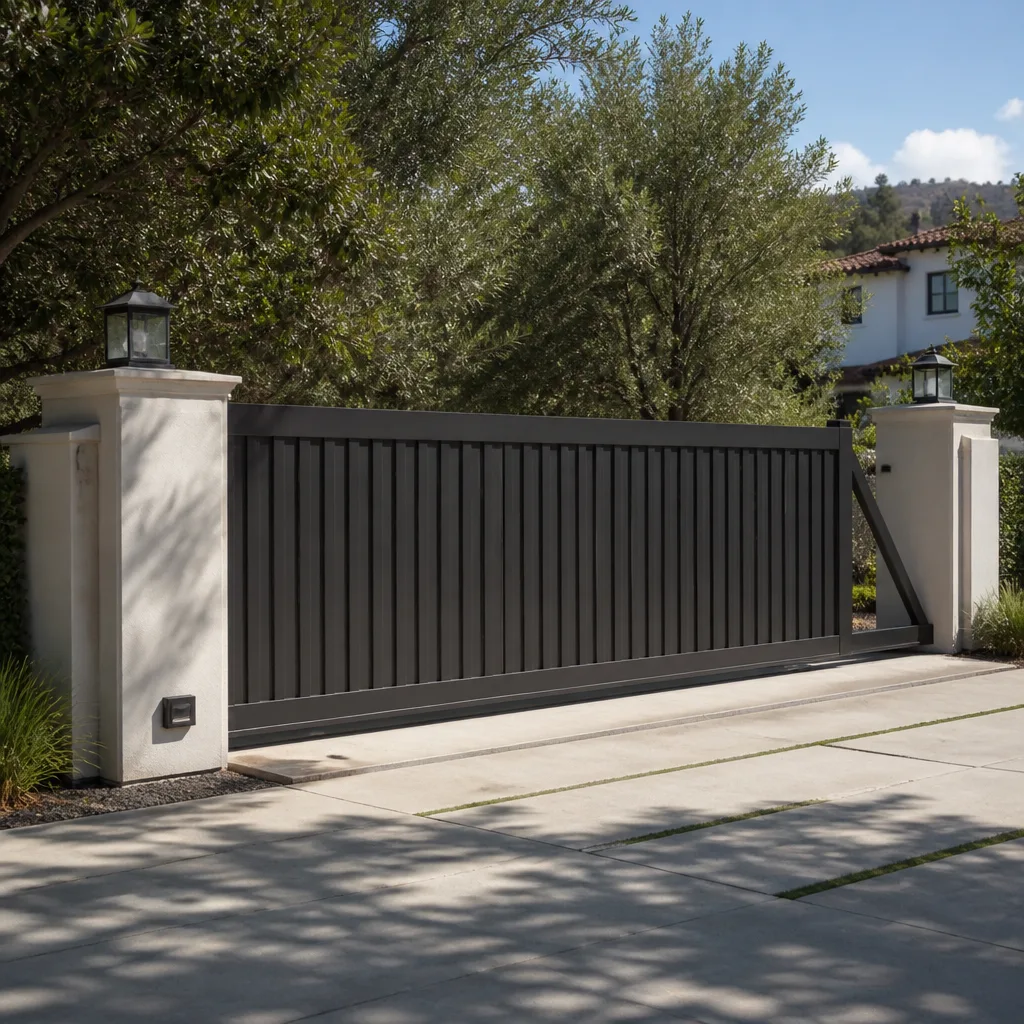 Sliding driveway gates
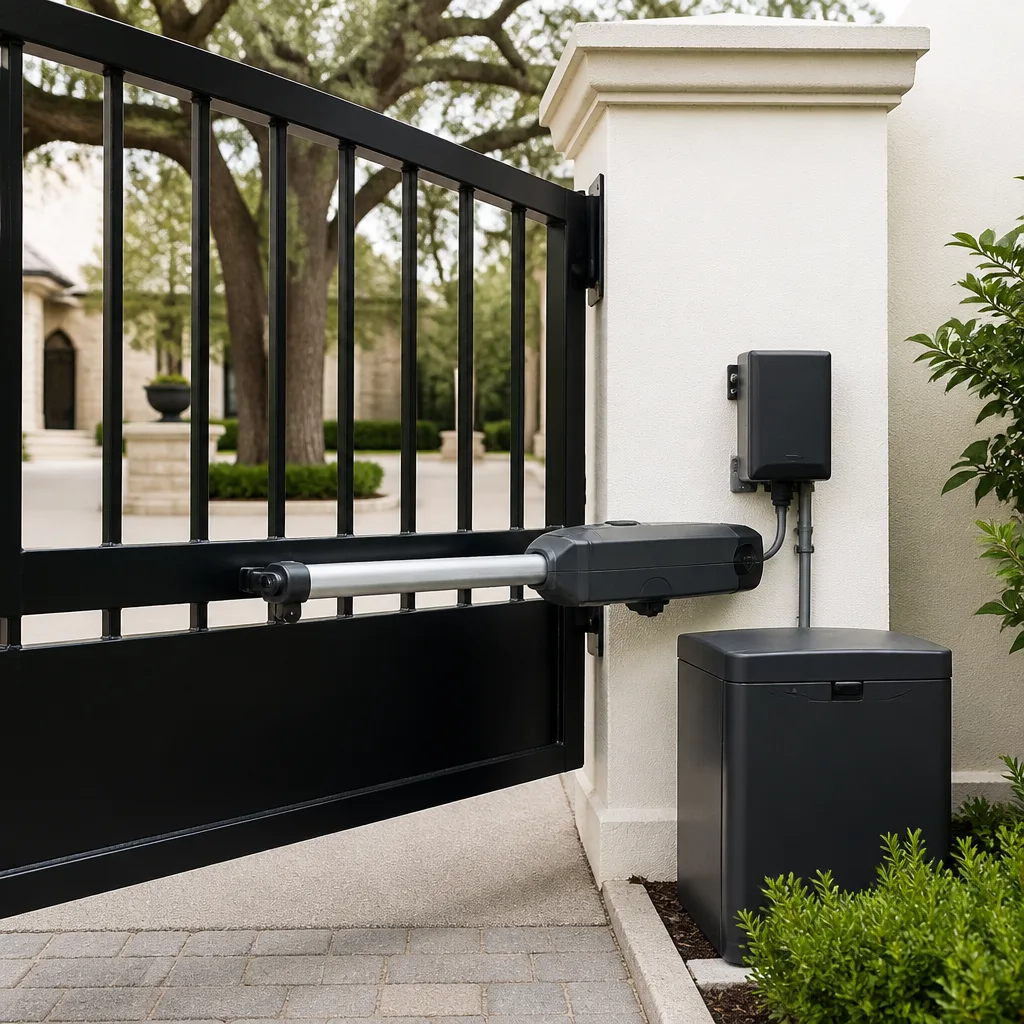 LiftMaster operators
Free on-site gate assessment - hinges, posts, and your LiftMaster or Nice gate operator checked before anything is quoted
The assessment is free and the quote is the invoice.
Get your free estimateThe Complete Guide to Gate Repair in El Cajon
Two gates can fail in exactly the same way and need completely different repairs. A sagging hinge and a dead control board both leave you with a gate that won’t open, and the gap between fixing one and replacing the other is the difference between a small hardware job and a full operator swap. The expensive part of gate repair usually isn’t the part. It’s the misdiagnosis that happens before anyone touches a wrench. This guide maps every major component of a gate system to the failure it’s most known for, so when you talk to a technician in El Cajon you already know what you’re looking at and you can tell whether a replacement quote is honest.
Quick Answer
Gate repair in El Cajon covers the moving parts (hinges, rollers, tracks, latches), the structural parts (posts, frames, panels), and the electric parts (motors, control boards, loop detectors, keypads, remotes). Most residential failures trace back to a handful of points: worn hinges on swing gates, rollers and tracks on slide gates, limit switches that drift out of alignment, and loop detectors or keypads that fail before the motor ever does. A specialist diagnoses which of these is actually causing the symptom before quoting a fix.
Styles & brands we work with
- Wrought iron
- Wood & steel frame
- Farm & ranch
- Sliding driveway gates
- LiftMaster operators
Table of Contents
- The Gate Failure Map: What Breaks First and Why
- How El Cajon’s Climate Wears Down Gates
- Repair, Realign, or Replace the Operator? Field Tests You Can Run
- Why Electric Gates Fail at the Loop Detector or Keypad First
- Brand Quirks: LiftMaster, Viking, and Mighty Mule in El Cajon
- Manual Gate Repair vs. Automatic Gate Repair
- What a Real Diagnostic Looks Like
- What Gate Repair Costs in El Cajon
The Gate Failure Map: What Breaks First and Why
Every gate is a short list of parts that fail in a predictable order. If you know the order, you can usually guess the culprit before a technician arrives. Here’s how the failures stack up, component by component.
- Hinges (swing gates): The first thing to wear on any swing gate. Hinges carry the full weight of the gate leaf and get the most movement. When they wear, the gate sags, drags, and eventually stops latching. On heavy gates the wear accelerates because the load is higher.
- Rollers and tracks (slide gates): Rollers flatten and seize; tracks fill with grit and bend out of line. A slide gate that jerks, grinds, or drifts sideways usually has a roller or track problem, not a motor problem.
- Limit switches: These tell the operator when the gate is fully open or fully closed. They drift out of adjustment over time, and a gate that stops short, over-travels, or reverses for no reason is often just a limit switch that needs resetting.
- Control boards: The brain of an electric system. Boards fail from power surges, moisture, insects, and age. A board failure looks like a dead gate even when the motor is fine.
- Motors: The most durable part of the system and the one most often blamed. Motors fail, but far less often than boards, limits, or safety devices.
That ordering matters. When a homeowner tells us the motor is dead, the actual failure is usually upstream of the motor: a limit switch, a safety loop, a keypad, or a board. A real electric gate repair call starts by testing the chain from power to motor, not by pulling the motor.
How El Cajon’s Climate Wears Down Gates
El Cajon’s weather does specific things to gate hardware, and the finish on your gate changes how fast it happens. The pattern is consistent enough that our technicians factor it into every diagnosis.
Dry heat is the slow driver. It bakes powder-coated finishes until they chalk and fade, and it works on lubricants until they thicken or dry out entirely. Hinges and rollers that stay lubricated in cooler climates seize here when the grease cooks off. Raw steel reacts faster: once powder coat chips or a scratch exposes bare metal, the dry heat doesn’t protect it the way humidity in other regions might, and rust takes hold at the chip, spreading under the coating.
Santa Ana wind events are the fast driver. Sustained dry wind loads a gate panel and works on the weakest fasteners. A gate that’s been slightly loose for months can develop a rattle or a wobble after a wind event because the wind finds the play. Wind also drives grit into tracks and around roller bearings.
Occasional hard rain is the third variable. El Cajon doesn’t get much, but when it comes it arrives hard and fast. Water gets into control boxes, keypads, and loop-detector wiring, and a single soaking can take out a board or a keypad that was already marginal. The dry months between storms mean seals crack before the next rain, so the water gets in through gaps that weren’t there last season.
What this means for a gate repair in El Cajon: hinge and roller lubrication matters more here than in cooler climates, powder-coated steel holds up much better than raw steel over a gate’s life, and anything with electronics mounted outdoors needs its seals checked, not just its motor.
Repair, Realign, or Replace the Operator? Field Tests You Can Run
This is the decision that costs homeowners the most money, and most of it can be answered with observation before anyone quotes a job. The question isn’t just “what’s broken” but “what level of intervention is this.” There are three, and they’re different: a repair fixes a failed part, a realignment corrects geometry and adjustment, and an operator replacement swaps the electric drive system.
Test 1: Does the gate move freely by hand?
Put the operator in manual release (most residential operators have a release lever or key) and move the gate by hand. If it moves smoothly with light effort, the mechanical side is healthy and the problem is electrical. If it drags, binds, or you can feel or hear grit, the mechanical side needs attention first. Replacing an operator on a binding gate is a waste – the new motor will struggle with the same load and fail early.
Test 2: Is the gate still square and plumb?
Open the gate to 90 degrees and look down the hinge line. A gate that’s sagging has dropped on its hinges; a gate that’s leaning has a post problem. Hinge sag is a repair. A loose or leaning post is structural, and no amount of hinge adjustment fixes it. A gate that drags only near the closed position but swings free near the open position usually has a hinge alignment issue.
Test 3: Does the operator run but the gate doesn’t move?
If you hear the motor but the gate barely moves, the drive is slipping – a worn drive gear, a loose chain, or a disconnected arm. That’s a drive repair, not a motor replacement.
Test 4: Does the gate run and stop for no reason?
Erratic stopping is the signature of a safety device or limit switch fault, not a dying motor. The operator is protecting itself or obeying a faulty signal. That’s a sensor-level diagnosis.
Run those four tests and you’ll usually know whether you’re looking at a repair, a realignment, or a replacement before a technician arrives. That’s how you avoid being sold the biggest job when the smallest one is right.
Why Electric Gates Fail at the Loop Detector or Keypad First
On residential driveways in El Cajon, the motor is almost never the first electric component to fail. The order is fairly reliable: loop detector, then keypad, then board, then motor. Here’s why.
The loop detector is buried in the driveway and detects vehicles so the gate knows not to close on them. It’s also the component most exposed to the environment: moisture in the saw-cut, ground movement, and low-voltage wire that corrodes or gets nicked. When the loop fails, the gate often refuses to close, opens and immediately stops, or holds open. The motor is fine. The gate just thinks a car is sitting on the loop.
The keypad is mounted outdoors and gets the most direct weather. Hard rain and sun work on the seal and the buttons. A keypad that works one week and not the next, or works with the remote but not the code, points at the keypad rather than the operator.
The control board is next. It’s indoors in the operator housing, but power surges and moisture still find it. A board failure can look like anything: dead gate, random movement, wrong-direction travel.
The motor comes last. It’s the most robust part of the system. When homeowners assume the motor is dead and call for a replacement, the actual diagnosis usually comes back to a loop, a keypad, or a safety edge. Our electric gate diagnosis starts at the sensor end and works back toward the motor, which is the opposite of how most generalist techs approach it.
We work on the major brands that show up on El Cajon driveways: Linear, Viking, DoorKing, and LiftMaster among them, alongside others. Because we work across brands, we can test your existing loop, keypad, and board with universal equipment instead of guessing at a replacement. If you’re not sure what system you have, the model plate is usually inside the operator housing.
Brand Quirks: LiftMaster, Viking, and Mighty Mule in El Cajon
A gate operator is a gate operator until you open the housing. Then the brands diverge in ways that change the diagnosis and the parts. Here’s how the three brands we see most on El Cajon residential driveways differ.
LiftMaster
LiftMaster residential gate operators are common on newer driveway systems and have their own remote and keypad ecosystem. A failed keypad on a LiftMaster system often isn’t a keypad problem at all – it’s the compatibility between the keypad frequency and the receiver. Because these systems are sold in kits, a component swapped in from another brand can produce intermittent behavior that looks like a board fault. LiftMaster’s diagnostics tend to lock onto the receiver and remote-pairing side before the board.
Viking
Viking operators are rugged and mechanical, so the electrical side is usually more stable than the drive side. The pattern here: rollers and hinges wear first on Viking slide gates, and the operator keeps running until the drag finally overloads it. A Viking system that trips its overload isn’t a motor problem; it’s telling you the gate needs mechanical service. We treat the overload as a symptom, not a fault.
Mighty Mule
Mighty Mule is a common DIY-installed residential brand, which means we often see them on gates where the install (post depth, hinge alignment, control wiring) was the original weak point. The operator is fine; the gate geometry or control run isn’t. Diagnosis on a Mighty Mule starts with the physical install and the wiring, not the board.
That’s the difference between a gate specialist and a generalist. We don’t refuse to work on your brand, and we don’t push a replacement because we don’t stock your part. We work with your existing equipment. If you’re on a Ghost Controls or DoorKing system, the same principle applies – the brand determines the failure pattern, and knowing the pattern is what keeps the repair small.
Manual Gate Repair vs. Automatic Gate Repair
Half of gate repair in El Cajon is manual gate work, and the diagnostic approach is different from electric systems. Manual gates fail on the mechanics: hinges, latches, posts, and frames. There’s no board to blame and no sensor to test. The work is about load and alignment.
Manual gate repair covers:
- Sagging or seized hinges that leave the gate dragging or unlatched
- Latch and catch failures that let the gate swing or not close
- Post and frame problems where the gate is no longer square
- Swing path corrections where the gate hits ground or a stop
Automatic gate repair covers:
- Operator, motor, and drive-system failures
- Control board and receiver diagnostics
- Loop detector testing and replacement
- Keypad and remote access repair
- Safety edge and reversing-mechanism faults
- Limit switch adjustment and travel calibration
The overlap is the mechanical side: an automatic gate still has hinges and rollers, and most “operator failures” turn out to be mechanical drag that the operator can’t overcome. If the gate is heavy, it will wear out the operator faster than the operator wears itself out. That’s the case for maintenance over replacement.
We handle both residential systems and commercial electric access systems, and because we’re a dedicated gate specialist rather than a fence company or handyman, the diagnosis isn’t split across trades. One call covers troubleshooting, parts, repair, and installation – you’re not coordinating between an electrician, a fence company, and a gate tech.
One safety note before we go further: a powered gate is a machine with a moving panel, a motor, and control wiring that can bite. If you’re inspecting an electric gate, stay clear of the swing path, never reach into the operator housing or track a moving panel with your hand, and keep children and pets away from the gate while you test it. Physical adjustments to hinges and posts on a heavy gate can drop the panel, so leave the wrenches to a trained technician.
What a Real Diagnostic Looks Like
A proper diagnostic is a sequence, not a guess. This is the order we work in on a standard El Cajon residential gate call, and it’s the order that catches root causes before parts get quoted.
- Walk the gate by hand. Release the operator and check for drag, bind, and rattle. Note where the gate resists.
- Check the hinge and roller line. Look for worn hinge pins, sagging leaves, flat rollers, and track damage. This is where the mechanical truth lives.
- Check the post and frame. A loose, leaning, or rotted post is the cause of most alignment problems. No hinge adjustment fixes a bad post.
- Test the safety devices. Loop detector, safety edge, and photo-eye. A gate that won’t close is usually a safety device doing its job.
- Test the access side. Keypad, remote, and receiver. Try the keypad and the remote separately to isolate the fault.
- Check limits and travel. Watch where the gate stops and whether it reverses. Limit adjustment is a common, cheap fix for erratic behavior.
- Open the control box. Look for moisture, insect activity, burnt components, or loose terminals. Only now do we look at the board.
- Test the motor last. Confirm the operator runs and drives. The motor is the end of the chain, not the start.
Working in that order is what separates a proper gate repair El Cajon call from a parts cannon. If a technician quotes a motor replacement before checking the loop, the keypad, and the hinge line, ask why. The honest answer is that they haven’t finished the diagnosis.
What Gate Repair Costs in El Cajon
Gate repair pricing is set per job, not per hour, so there’s no single number. But the range breaks down by component, and knowing the relative cost of each failure mode helps you sanity-check a quote. Every price is set by a written estimate before work starts, so the quote you agree to is the price you pay.
- Hinge repair or replacement: the lowest-cost repair and the most common. Worn hinges are a hardware fix.
- Roller and track repair on slide gates: a modest mechanical repair, priced by the number of rollers and the track length involved.
- Limit switch adjustment: a diagnostic-and-adjust job, not a parts job. Often the cheapest fix for erratic gate behavior.
- Loop detector replacement: involves cutting and re-sealing the driveway loop, so the price is higher than a component swap but avoids operator replacement.
- Keypad or remote receiver repair: a small parts job once the fault is isolated to the access side.
- Control board replacement: a mid-tier repair. The board is the part, and testing and calibration after install is the labor.
- Operator replacement: the largest repair, quoted after the mechanical and electrical sides are both tested. It’s the last option, not the first.
The estimate is free and the price is agreed in writing before any work begins. That’s the rule we work by, and it’s the reason we test in the order above: a proper diagnosis keeps the job at the size it actually is. For comparison, our electric gate repair costs land where the component does – a loop or a keypad costs far less than an operator, and the written estimate is what sets the number.
Call (866) 361-9590 for a free estimate on your gate. We answer 24/7. Fast dispatch from 7am to 7pm, Sunday through Friday.
Common Mistakes to Avoid
- Blaming the motor first. The motor is usually the last thing to fail. Assume a loop, keypad, limit, or board is the fault until a proper sequence proves otherwise, or you’ll pay for a motor you didn’t need.
- Replacing the operator on a binding gate. If the gate drags, the operator is fighting mechanical resistance, and a new motor will fail the same way. Fix the mechanical load first.
- Letting a generalist guess at parts. A generalist who stocks two or three gate brands will often diagnose toward what they have on hand. A brand-agnostic gate specialist works with your existing equipment instead of steering you to a replacement.
- Ignoring the hinges because the gate still opens. A worn hinge that’s “working” is accelerating wear on the operator and the posts. Early hinge work is far cheaper than the alignment or post job that follows.
- Assuming dry weather means weather isn’t the issue. El Cajon’s hard rain events arrive fast and find the cracked seals and marginal keypads. Rain is the stress test; get the seals and access hardware checked before the next storm.
- Leaving a gate that won’t close. An open driveway is an open invitation. A gate stuck open is a security problem, and it’s worth a same-day call rather than a wait-and-see.
- Skipping a post check after a wind event. Santa Ana winds find loose fasteners. A post inspection after high wind is cheap; a fallen gate is not.
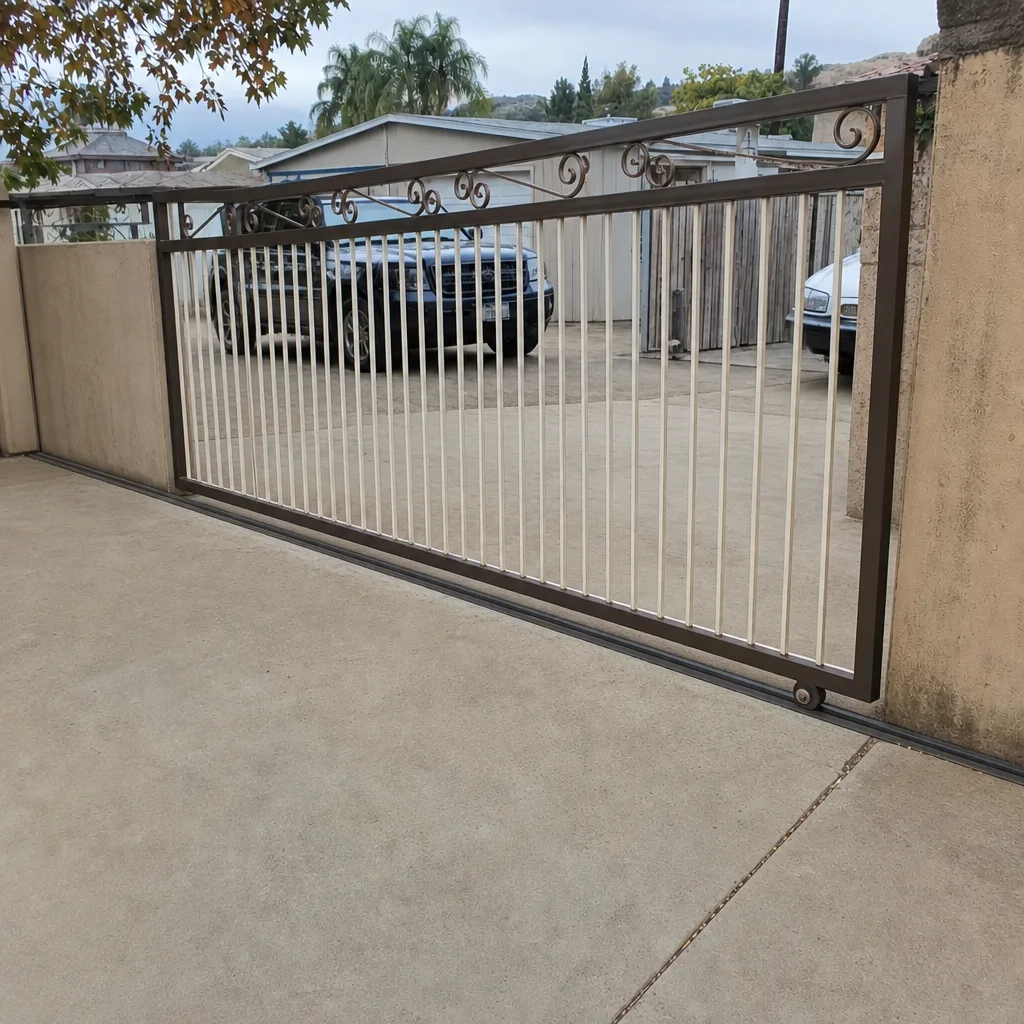
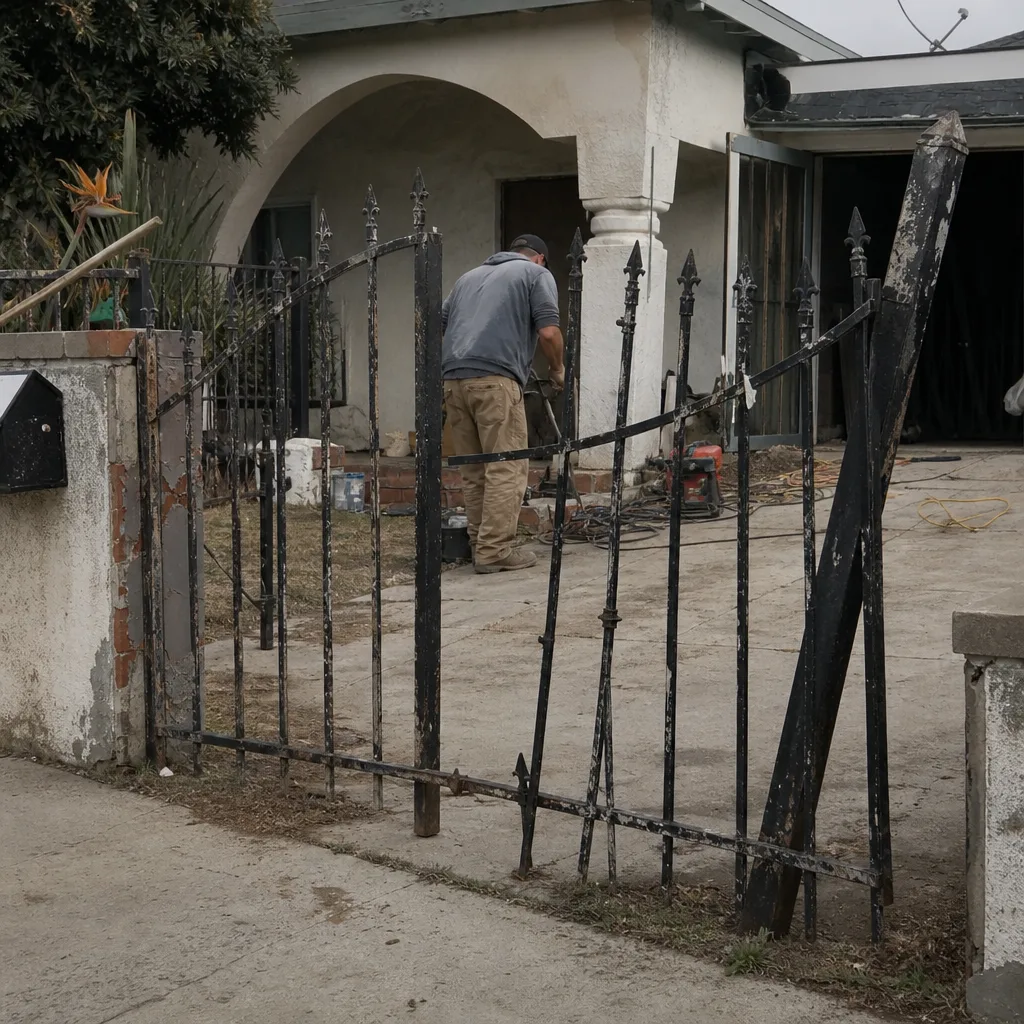
See the difference
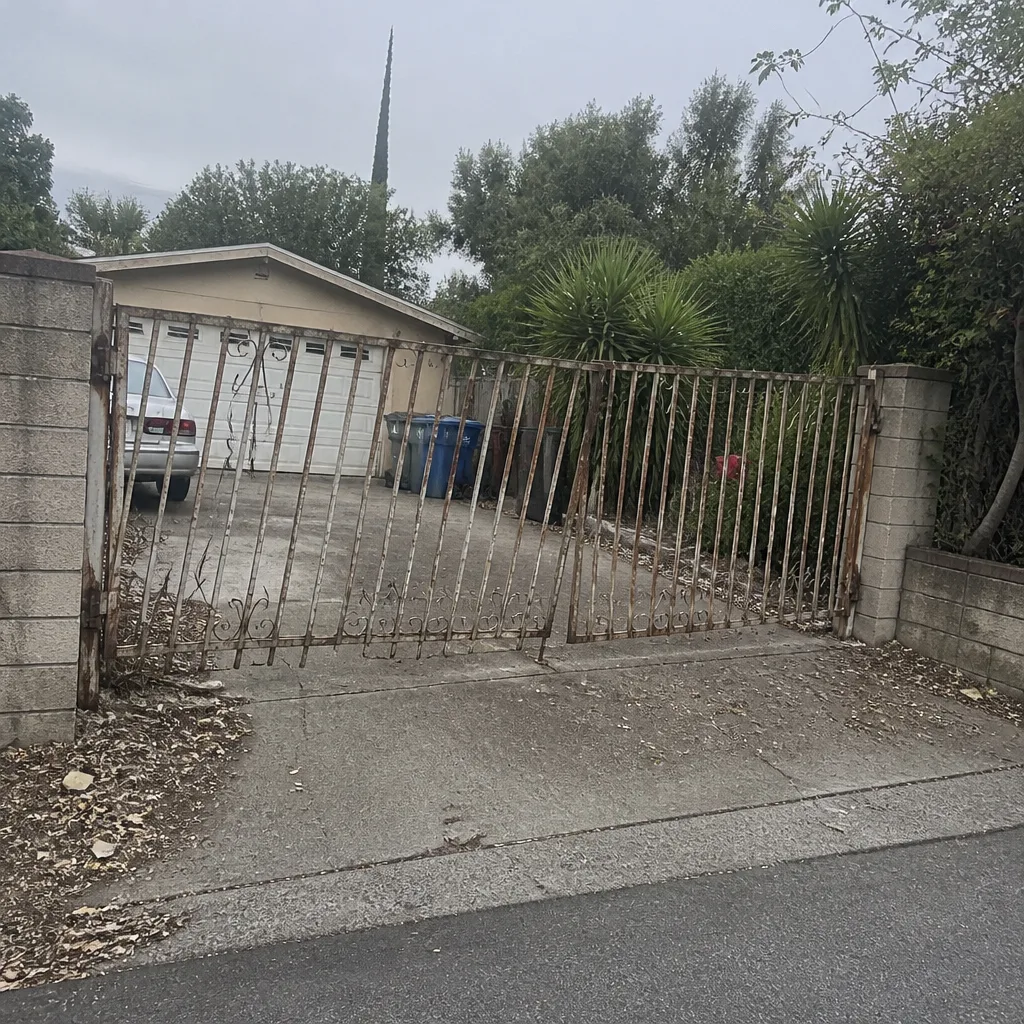 Before
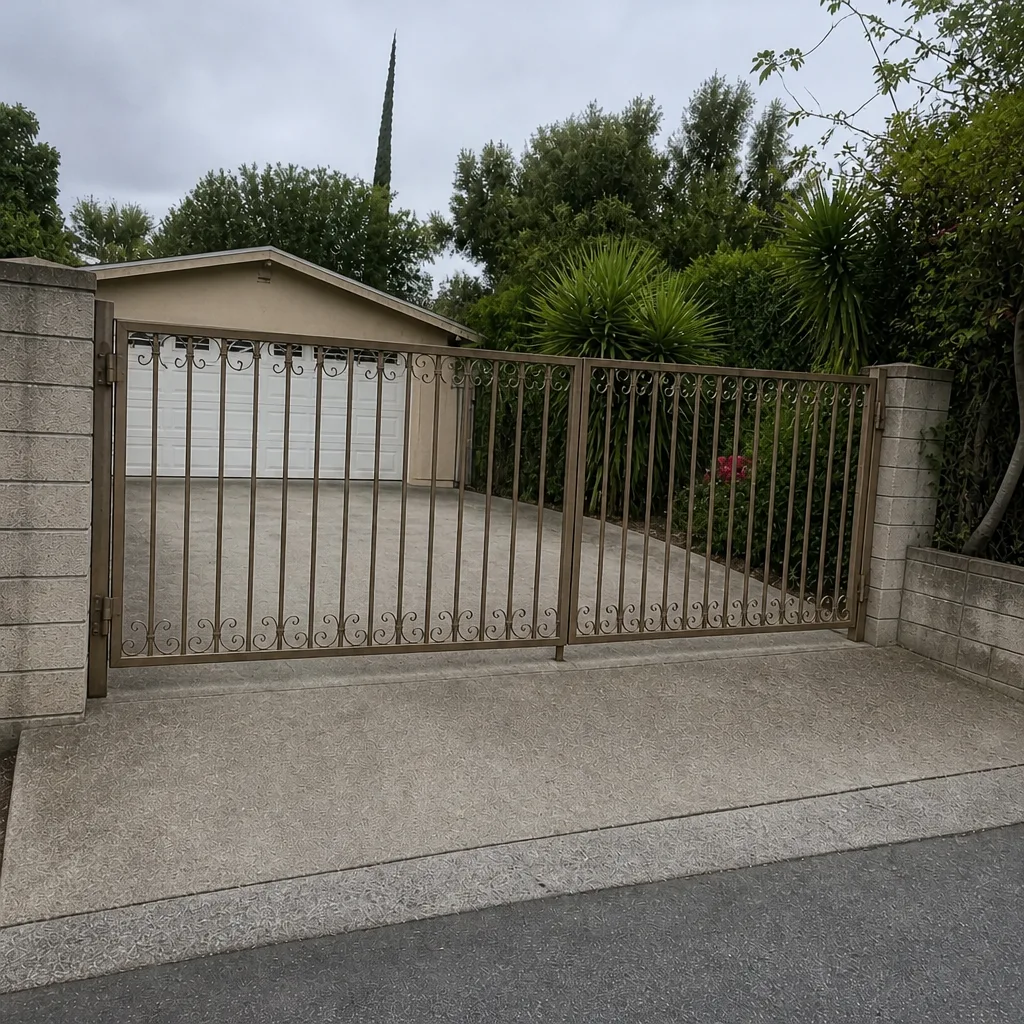 After
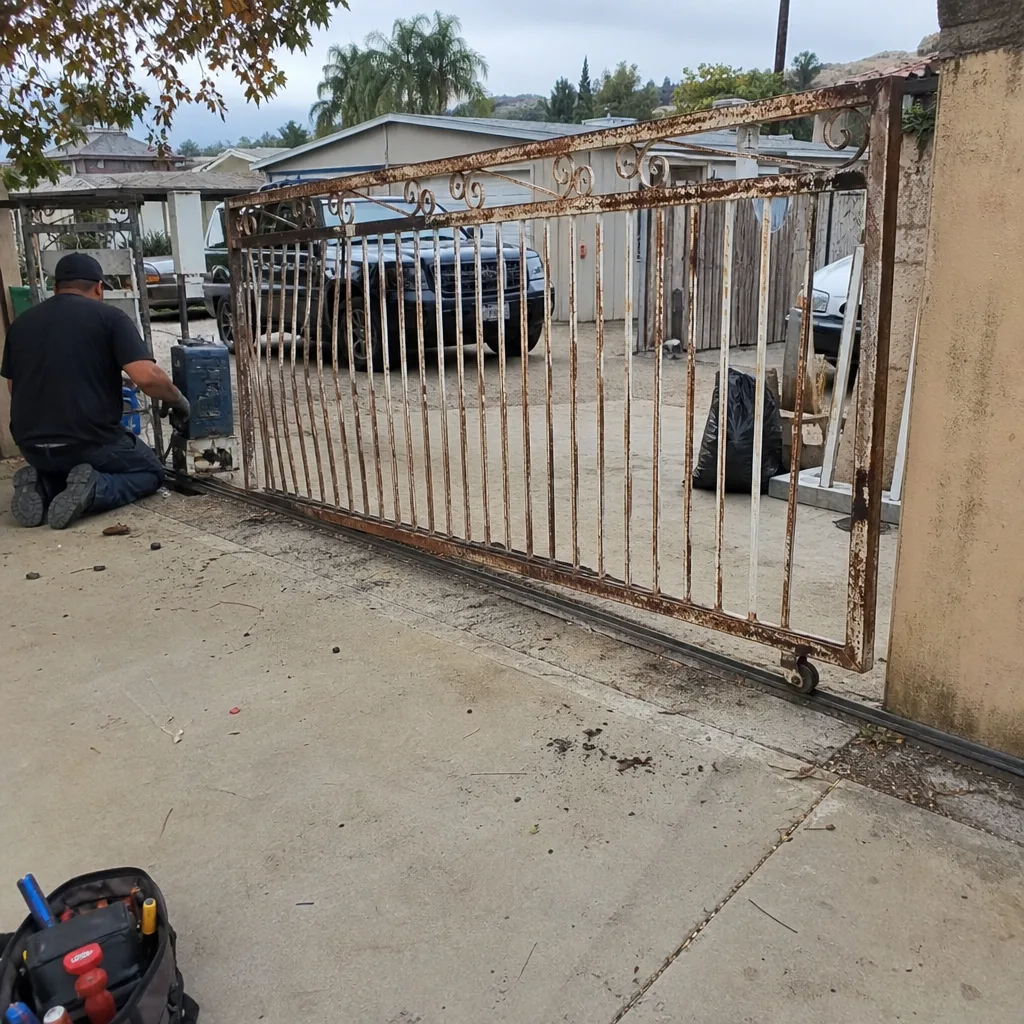 Before
 After
 Before
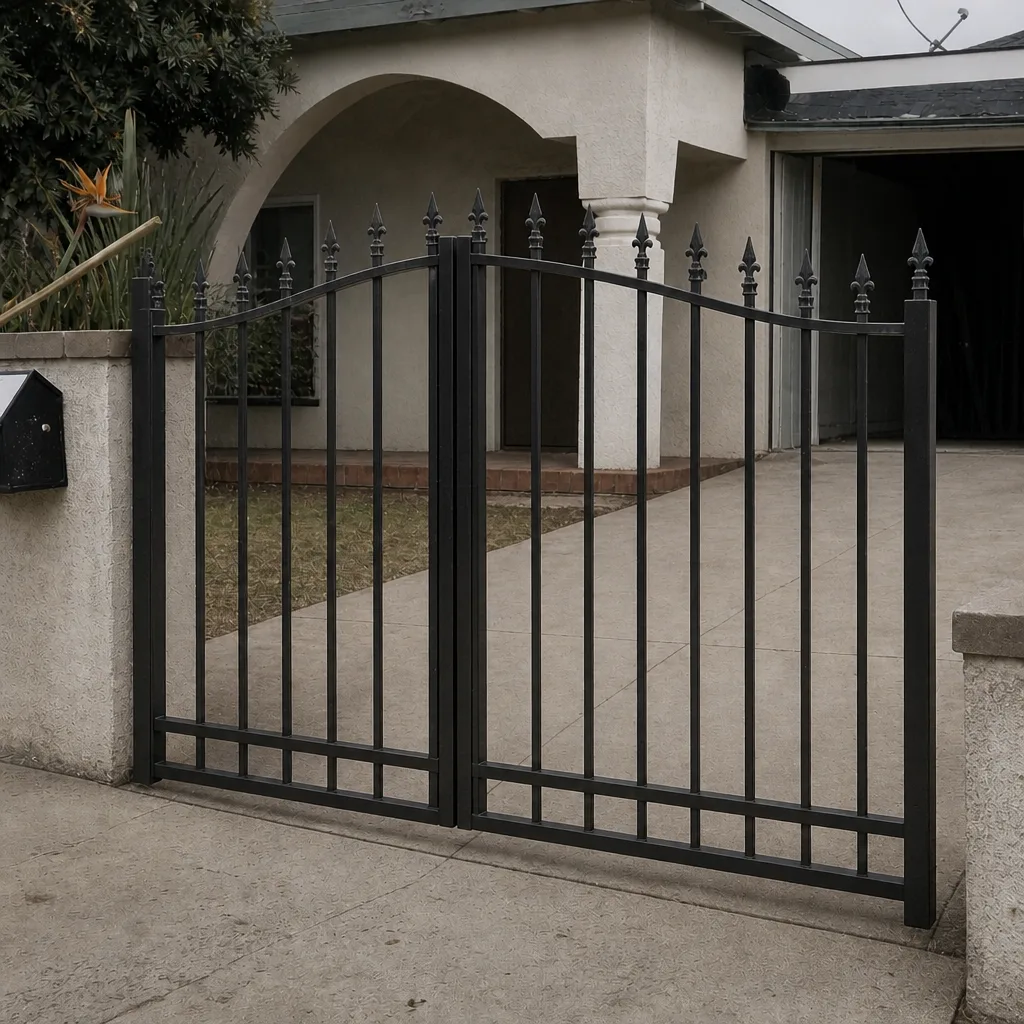 After
When to Call a Professional
Some gate problems are worth watching for a week. Others need a technician. Call us when the gate won’t close or won’t latch, when the gate reverses on its own, when the operator runs but the gate doesn’t move, when the gate has dropped on its hinges, when a post is leaning, or when a gate has taken wind damage and no longer sits square. If your electric gate won’t respond to the keypad or the remote, call – access-side faults are quick to isolate and often smaller jobs than the symptom suggests. Gate Repair El Cajon offers free estimates in El Cajon – call (866) 361-9590. We answer 24/7. Fast dispatch from 7am to 7pm, Sunday through Friday, and same-day service is often available.
Frequently Asked Questions
Gate repair in El Cajon is priced per job by a written estimate, so the number depends on the component. Hinge and roller repairs are the lowest-cost jobs; loop detector and control board work sit mid-range; operator replacement is the largest. The estimate is free and the price is agreed before any work starts. Call (866) 361-9590 for an exact quote.
Same-day service is often available for repair calls. We dispatch fast from 7am to 7pm, Sunday through Friday, and we’re closed Saturday. If your gate won’t close and you’re in El Cajon, call (866) 361-9590 and we’ll book the first opening. We answer 24/7.
Repair is usually cheaper, and most failures don’t require operator replacement at all. A dead gate is more often a failed loop detector, keypad, limit switch, or control board than a failed motor. We test from the sensor end toward the motor so the repair stays at the size it actually is, and if the operator does need replacing, the written estimate covers it before any work starts. Call (866) 361-9590 for a free estimate.
A gate that opens but won’t close is almost always obeying a safety device. The loop detector, safety edge, or photo-eye thinks something is in the path. It’s rarely a motor fault. This is one of the fastest electric gate diagnoses to isolate, and it’s worth a call rather than a guess. Call (866) 361-9590 and we’ll test the safety side first.
We work on the brands that show up on El Cajon driveways, including LiftMaster, Viking, Linear, DoorKing, FAAC, BFT, Ghost Controls, Elite, and Mighty Mule. We’re brand-agnostic, so we work with your existing equipment instead of pushing a brand replacement. Our technicians have up to 15 years of experience with residential and commercial gate systems.
Yes. Electric gate work covers the power side and the safety side: the run to the operator, the loop detector, the safety edge, and the reversing mechanism. The safety edges are the parts that protect people and vehicles, and they’re often what fails first on a residential system. Call (866) 361-9590 for a free estimate on your electric gate.
The Bottom Line
Gate repair in El Cajon comes down to knowing the failure order. Hinges, rollers, and tracks fail first. Limit switches drift. Loop detectors and keypads fail before the motor ever does. The motor is the most durable part of the system and the one most often blamed. Learn the order, run the four field tests before you call, and you’ll talk to a technician in the same language they use. That’s how you keep a $40 fix from turning into a $400 replacement – and how you know when a replacement is actually the right call. From opener to operator to control board, we diagnose at the source and work with your brand.
Call (866) 361-9590 for a free estimate on gate repair or a new gate installation. We answer 24/7. Fast dispatch from 7am to 7pm, Sunday through Friday. Both residential and commercial gate systems welcome, and you get one call for repair, troubleshooting, parts, and installation.
Written by the team at Gate Repair El Cajon.