
Last updated November 15, 2026
 Wrought iron
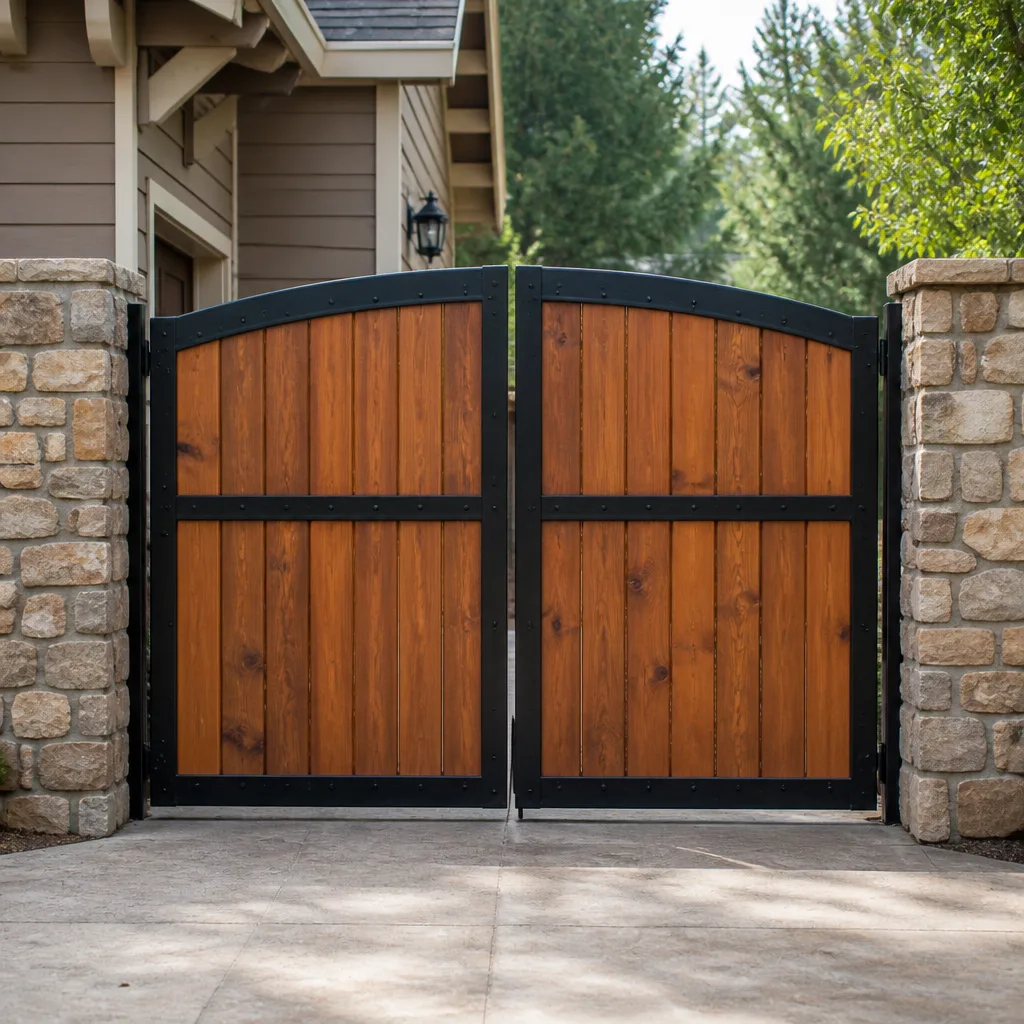 Wood & steel frame
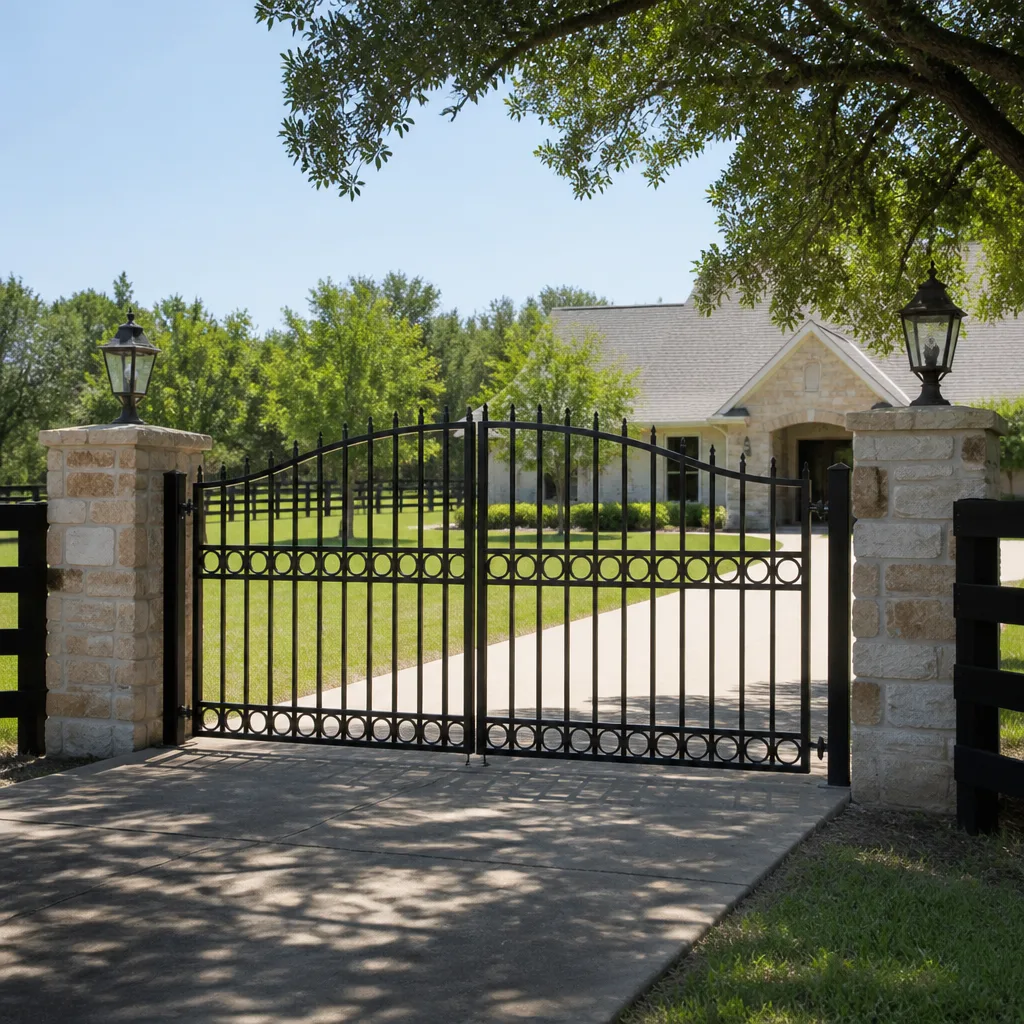 Farm & ranch
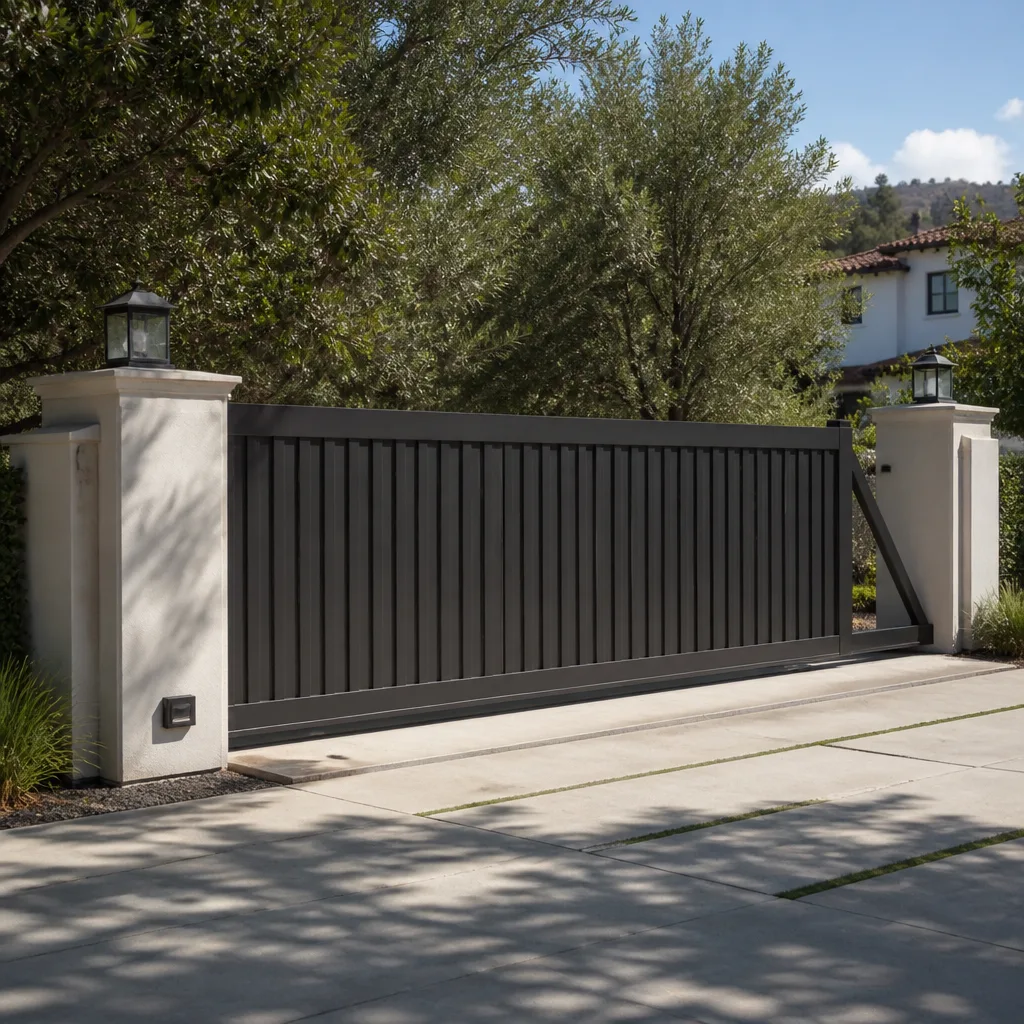 Sliding driveway gates
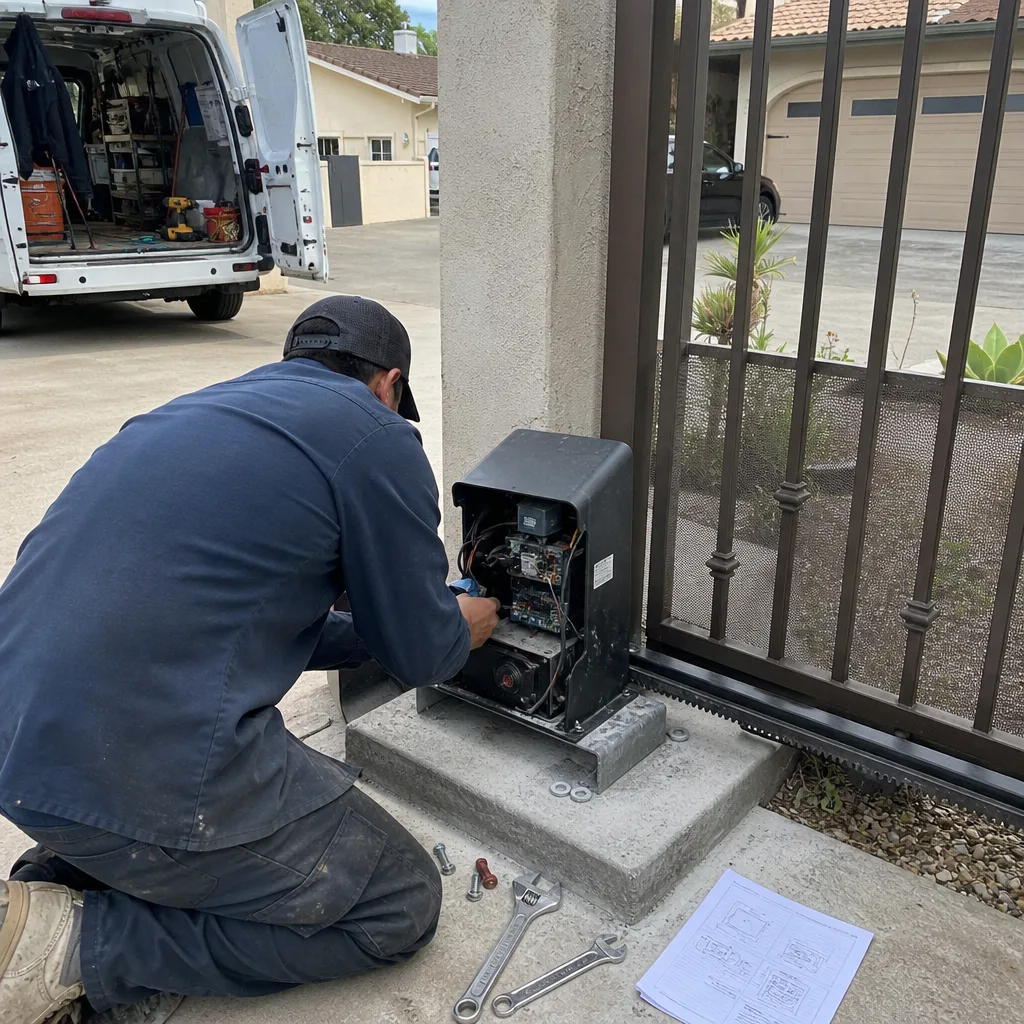
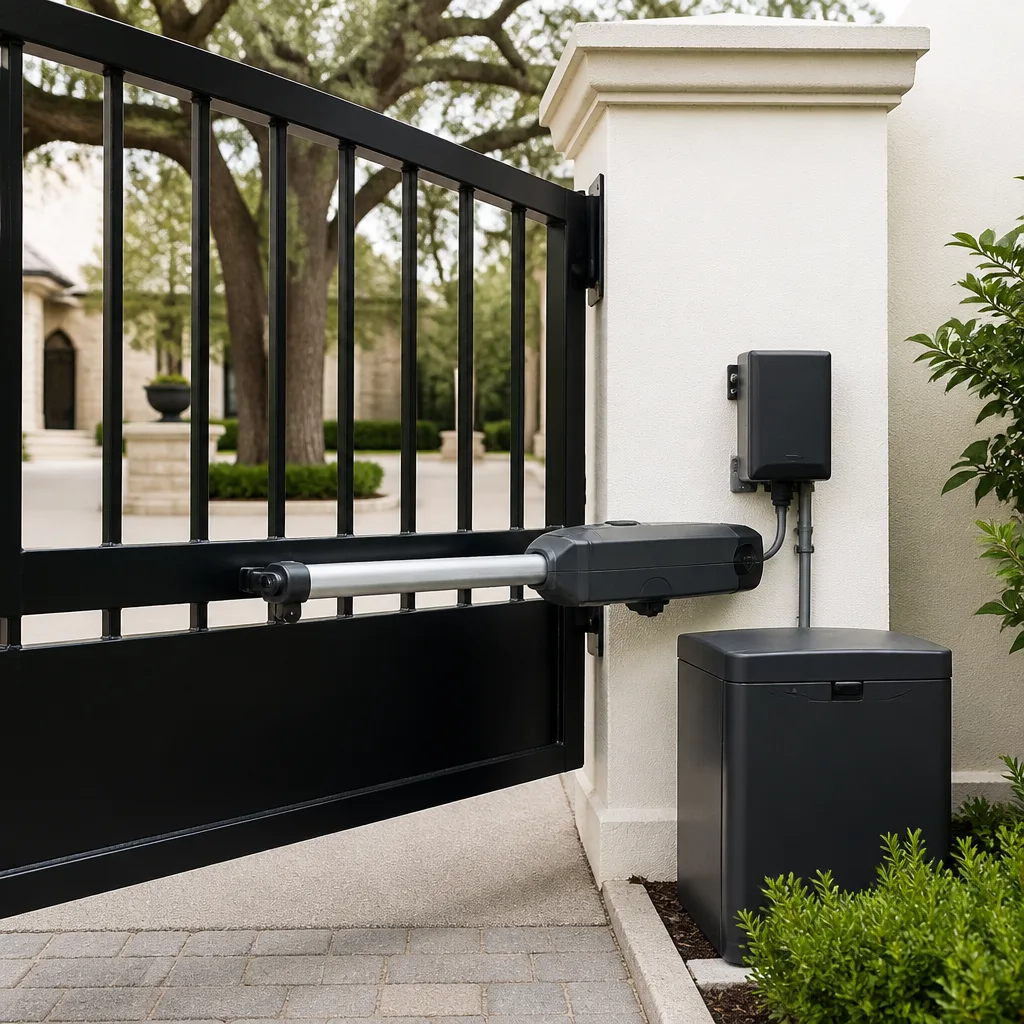 LiftMaster operators
Free on-site gate assessment - hinges, posts, and your LiftMaster or Nice gate operator checked before anything is quoted
The assessment is free and the quote is the invoice.
Get your free estimateGate Repair Permits, Codes & Inspections in El Cajon, CA: What You Need to Know
Most gate work in El Cajon needs no permit at all. That surprises people. A failed motor swapped for an identical unit, a sagging hinge welded back to true, a control board replaced because ants got into the housing – none of that requires a stamp from the city. But add an operator to a gate that never had one, change the power supply from 12V to 24V, or run new conduit for a loop detector, and you’ve crossed a line from repair into electrical work that the California Building Code and the City of El Cajon treat differently. That single distinction is what this guide is about: where repair ends, where alteration begins, what UL 325 asks of every automatic gate, and how unpermitted work surfaces at resale. If you own, rent out, or manage property in El Cajon, this is the part of gate ownership nobody explains until it becomes a problem.
Quick Answer
In El Cajon, a like-for-like repair of an existing gate or operator generally needs no permit. Adding an electric operator to a manual gate, changing voltage or power type, or installing new access control wiring is an alteration and does require a permit and inspection under California Building Code electrical provisions, checked through the City of El Cajon’s building department. Automatic operators must comply with UL 325 safety standards regardless of permits, and HOA CC&Rs often impose stricter rules than the city does.
Styles & brands we work with
- Wrought iron
- Wood & steel frame
- Farm & ranch
- Sliding driveway gates
- LiftMaster operators
Table of Contents
- Repair vs. Alteration: Where the Permit Line Actually Falls
- Step-by-Step: How the Permit Process Works in El Cajon
- UL 325 Compliance and Why It Matters at Resale
- Setbacks and Placement Changes: When the City Reviews a Gate
- HOA Requirements Layered on Top of City Code
- What Happens If Unpermitted Gate Work Is Flagged
- How to Correct Unpermitted Work Before a Sale
- What Gate Permits and Inspections Typically Cost
Repair vs. Alteration: Where the Permit Line Actually Falls
The distinction comes down to whether you’re restoring existing equipment or introducing something new. A repair keeps the gate doing what it already did. An alteration changes its capability, its power profile, or its safety systems. California’s building code treats electrical work under that second category with the same seriousness as any other permitted circuit, because an automatic gate operator is a piece of electrical equipment with a motor, a control board, and safety devices wired into it.
Here’s how the split usually looks on a typical El Cajon property:
- No permit usually required: replacing a failed motor with an identical model, swapping a control board, replacing a remote receiver, replacing a keypad that connects to existing wiring, welding or repairing hinges, straightening a sagging swing gate, replacing rollers on a slide gate, repairing or replacing an existing battery backup.
- Permit usually required: adding an electric operator to a gate that was manual, upgrading from 12V to 24V or changing the power source, installing new loop detectors that require cutting and wiring new circuits, running new conduit or a new power feed to the gate, installing a new automatic gate system from scratch.
The gray zone is where people get into trouble. Replacing a LiftMaster operator with a different model that draws more current might be a repair in spirit but an alteration in practice if the circuit needs upgrading. Elite and Mighty Mule systems on residential properties can sit close to that line depending on how they’re powered. In our experience, the safest rule is simple: if the work changes what the gate is electrically capable of doing, ask the City of El Cajon’s building department before you buy parts. A short phone call settles it faster than a repair that has to be undone.
One more piece: repair work still has to meet current safety standards for the parts you touch. You can’t install a new operator and leave off the safety edges because the original didn’t have them.
Step-by-Step: How the Permit Process Works in El Cajon
If your project falls on the alteration side, the process is manageable. It’s mostly paperwork and inspection scheduling, not a long delay. Here’s the sequence most El Cajon gate projects follow:
- Confirm the scope with the city. Call the City of El Cajon building department, describe the work in plain terms (“adding an operator to a manual swing gate,” or “changing a 12V system to 24V”), and ask whether a permit is required and whether the gate is interior or on a property line. Setbacks and lot placement matter here.
- Get the spec and the compliance documents. Automatic operators must meet UL 325. The manufacturer’s installation manual and UL 325 compliance documentation for the specific operator are what the inspector will want to see. If your technician is installing a LiftMaster or FAAC unit, ask for those documents up front.
- Pull the permit. In most cases the installing contractor pulls it. If you’re managing the job yourself, you can pull it as the property owner for work on your own residence.
- Complete the install to code. Power run, grounding, operator mounting, safety edges, photo-eye sensors, and any loop detectors all need to be done to the manual and to code. Nothing gets signed off with a safety device bypassed.
- Schedule the inspection. The inspector checks the electrical connection, the operator’s safety features, and that the gate operates within the requirements of the UL 325 standard. They’ll test that the gate reverses or stops when the safety edge or photo-eye is triggered.
- Get the sign-off and keep the paperwork. The finaled permit and inspection record are what protect you at resale. Store them with your property documents, not in a drawer in the garage.
Repair work that doesn’t require a permit still benefits from documentation. Keep the invoice and the parts list. If a home inspector or buyer’s agent asks about an operator, having a clear paper trail showing the equipment was serviced and its safety devices tested matters more than people expect.
UL 325 Compliance and Why It Matters at Resale
UL 325 is the safety standard that governs automatic gate operators sold in the US. It exists because an automatic gate is a machine that closes on people, vehicles, and pets, and it has to know when to stop. For a residential El Cajon gate, that means the operator must use at least one of the recognized means of entrapment protection, and a system with both an inherent (built-in) means and an external sensor is the safest and most common arrangement. The practical requirement is straightforward: a gate must reverse or stop when something is in its path, and the operator must have a photo-eye or safety edge (or equivalent) doing the actual sensing.
Three things about UL 325 that catch El Cajon homeowners off guard:
- It applies to the equipment, not the permit. Even a permit-free repair has to leave the operator compliant. If a technician replaced a board and disabled the photo-eye “because it was getting false trips,” the gate is now non-compliant, and the technician shouldn’t have done that.
- It’s checked at resale. A buyer’s home inspector, and increasingly the buyer’s insurance company, will look at the gate operator. A non-compliant or unpermitted operator surfaces as a repair request, a price reduction, or a cancelled sale.
- HOAs lean on it. Many El Cajon communities use UL 325 compliance as their own standard for whether an automatic gate is acceptable, sometimes without knowing the standard by name. When an HOA asks “is the gate safe,” they’re asking whether a photo-eye and safety edge are working and signed off.
If your gate has an operator with a broken or bypassed safety device, that’s a real safety problem, not a convenience issue. A gate that closes on a child because a photo-eye was taped over is exactly the scenario the standard exists to prevent. If you’re not sure whether your operator is compliant, an on-site inspection is the fastest way to find out. That’s what we’d recommend before any sale or HOA review.
Setbacks and Placement Changes: When the City Reviews a Gate
A gate that stays where it is and keeps doing what it did usually gets no setback review. A gate that moves, widens, changes from a swing to a slide, or gets installed in a new location on the property can trigger a setback question. Setbacks regulate how close a structure can sit to a property line, and in El Cajon’s hillside and canyon-edge neighborhoods, some lots have setbacks that vary from the flatland rules. A gate that swings out over a sidewalk or into a neighbor’s driveway isn’t a setback problem on paper, but it’s a line-of-sight and code-compliance problem, and it can pull the city into the review.
Here’s when a placement change usually triggers review:
- A gate is relocated to a different part of a driveway or property line.
- A swing gate is converted to a slide gate, or vice versa, because the footprint changes.
- A gate is added where none existed, and the property line runs close to the intended location.
- The gate encroaches on a public right-of-way or a sidewalk, which can require city involvement regardless of setbacks.
In our experience, homeowners in areas like Fletcher Hills or the older parts of El Cajon often assume the gate “has always been there,” which is true, but the gate may have been installed before current rules or by a previous owner without a permit. If you’re moving or replacing it, the city will look at the current location and the current rules, not the history. That’s a conversation to have with the City of El Cajon building department before the new gate goes in, not after an inspector shows up.
The good news: a straightforward mechanical repair of an existing gate doesn’t need this review at all. If the gate stays put, the setbacks don’t change.
HOA Requirements Layered on Top of City Code
City code is the floor, not the ceiling. If your El Cajon property sits in an HOA community, your CC&Rs can impose stricter standards than the city on gate materials, colors, automation, and setbacks. A gate that passes a city inspection can still fail an HOA architectural review, and the HOA has the authority to make you change it at your own cost. That’s a real risk on gate installations because the gate is visible from the street and the neighbors notice.
What HOA CC&Rs commonly address:
- Materials and finish. Wrought iron and specific metal finishes are frequently required for street-facing gates. Wood and vinyl may be restricted or banned.
- Height and style. A gate that’s taller or more open than the architectural guidelines can be rejected during the design review, even if it’s code compliant.
- Automation and access control. Some HOAs require keypad or app-based access for shared entries, and some specify visitor management requirements. If your community has a common-entry gate, the HOA’s access system is often separate from yours and governed by the HOA’s bylaws.
- UL 325 and safety. Many HOA architectural committees ask for documentation that the operator meets UL 325 and that safety devices are installed. It’s worth having that paperwork ready before you submit a request.
- Setbacks and easements. HOAs sometimes enforce landscape easements and view corridors that the city doesn’t care about.
Before buying an automated operator, get the HOA’s architectural review form and read the gate language. If the CC&Rs are silent on gate automation, ask the property manager to confirm. A written email from the HOA is worth more than a verbal “sure, that’s fine” when you’re spending money on an operator, a keypad, and a loop detector. We’ve seen projects where the equipment was fine and the paperwork wasn’t, and that’s an expensive lesson to learn after the concrete is poured.
What Happens If Unpermitted Gate Work Is Flagged
Most unpermitted gate work is discovered in one of three ways: a home inspection during a sale, an insurance review after a claim, or an HOA complaint. Once flagged, the process is predictable, and it’s usually fixable. The worst outcome isn’t a fine; it’s a stalled sale or an insurance dispute over a safety-related claim involving an automatic gate.
Here’s how discovery usually plays out:
- Home inspection. The inspector notes the operator, checks for a permit sticker or documentation, and flags anything that looks added after the original construction. In El Cajon, where many homes have been remodeled across decades, an unpermitted gate addition can look like an unpermitted anything-else to a careful inspector.
- Buyer’s response. In a hot market, the buyer may ask the seller to permit and correct, or reduce the price. In a slower market, a flagged unpermitted operator can kill the sale outright because buyers don’t want to inherit an open permit file.
- Insurance review. If the gate is part of a property claim, the insurer will ask whether the equipment was permitted and whether safety devices were working. An unpermitted, non-compliant operator can complicate a claim.
- HOA complaint. A neighbor’s concern about gate safety or appearance triggers an architectural review, which nearly always asks for city permits and safety documentation.
Getting ahead of it is straightforward. If you’re selling and you’re not sure whether the gate operator was permitted, ask the City of El Cajon building department to pull any permit history for the address before listing. Discovery is far cheaper than repair under a deadline.
How to Correct Unpermitted Work Before a Sale
Correcting unpermitted gate work is a process, and it’s rarely as bad as the seller fears. The steps usually look like this:
- Get the permit history. Ask the City of El Cajon building department what permits exist for the address. You’ll want to know whether the operator was ever permitted, and when.
- Have the installation inspected by a gate specialist. A technician looks at the operator, the power run, the safety devices, and the UL 325 compliance documentation. They identify what needs to change to meet code and pass inspection.
- Bring the install up to code. Depending on the situation, this can mean adding a missing photo-eye or safety edge, correcting a non-compliant power run, or replacing an operator that shouldn’t have been installed in the first place. In many cases the equipment is fine and only a safety device or the documentation is missing.
- Pull the permit for the corrective work. The city will want a permit for the alteration being corrected. Your contractor can pull it. Sometimes a “retroactive” permit is issued for work already done, on the condition that it passes inspection.
- Pass the final inspection and get the finaled permit. Store the signed-off documentation with the title paperwork. The buyer’s agent will ask for it, and having it ready is what turns a flagged item into a non-issue.
The cost of correcting unpermitted work depends on what’s missing. A missing photo-eye and safety edge on an otherwise fine operator is a quick fix. A gate installed on an unpermitted circuit that requires re-running power is a bigger job. A gate company that works on both the mechanical and electrical side can handle the whole correction as one project, which is how we approach it. One call for the diagnosis, the parts, the code correction, and the final signed-off inspection.
What Gate Permits and Inspections Typically Cost
We can’t quote El Cajon permit fees for you because the City sets them by project type and the fees change. But we can give you the shape of the cost so you’re not surprised. Permit fees for gate electrical work are usually a modest line item next to the equipment and installation costs, and the inspection is typically included in the permit fee. What varies more is the corrective work if documentation is missing or a safety device needs to be added.
A quick way to think about the estimate:
- Permit fee: set by the City of El Cajon, typically a small administrative charge relative to the project.
- Installation labor: quoted per job, based on the equipment, the power run, and the safety devices required.
- UL 325 safety devices: photo-eyes and safety edges are part of the install, not an accessory.
- Corrective work (if unpermitted): quoted after an on-site look, based on what’s actually missing.
The estimate is free, and the price is set per job by a written estimate before any work starts. That’s the promise worth making to yourself as a homeowner: get the scope in writing and compare the scope, not just the number. A quote that’s missing the safety devices or the permit is not a lower price, it’s a smaller job.
Common Mistakes to Avoid
- Assuming “it’s just a repair” without checking. Replacing a 12V operator with a 24V unit is not a like-for-like repair, and doing it without a permit creates an unpermitted alteration on the property record. Confirm with the City of El Cajon before you order the equipment; a short call beats a sale-killing discovery.
- Letting a technician bypass a safety device to stop false trips. A photo-eye that’s been taped over or disconnected to “fix” a tripping gate is a safety hazard and a compliance violation. The right fix is diagnosing the false trips, not deleting the sensor.
- Skipping the HOA architectural review. In El Cajon HOA communities, a gate that passes the city inspection can still fail the HOA review on materials, height, or color. Read the CC&Rs before the gate goes in.
- Not keeping the finaled permit. The signed-off inspection record is the proof that protects you at resale. If it’s not in the property folder, assume it will be asked for.
- Hiring a general handyman for a gate operator install. Gate operators and control boards are their own specialty, and the person who installed your cabinets is not the person who should be wiring a UL 325 safety system. The gate repair specialists who do this every day are the right call.
- Changing the gate’s footprint without a setback review. Moving a gate closer to the property line or converting swing to slide can require review depending on the lot. Ask the city before you build, not after.
- Assuming a pre-2000 gate is grandfathered. Older gates were often installed before current rules, and once you touch them, the current rules apply to the scope you’re changing.
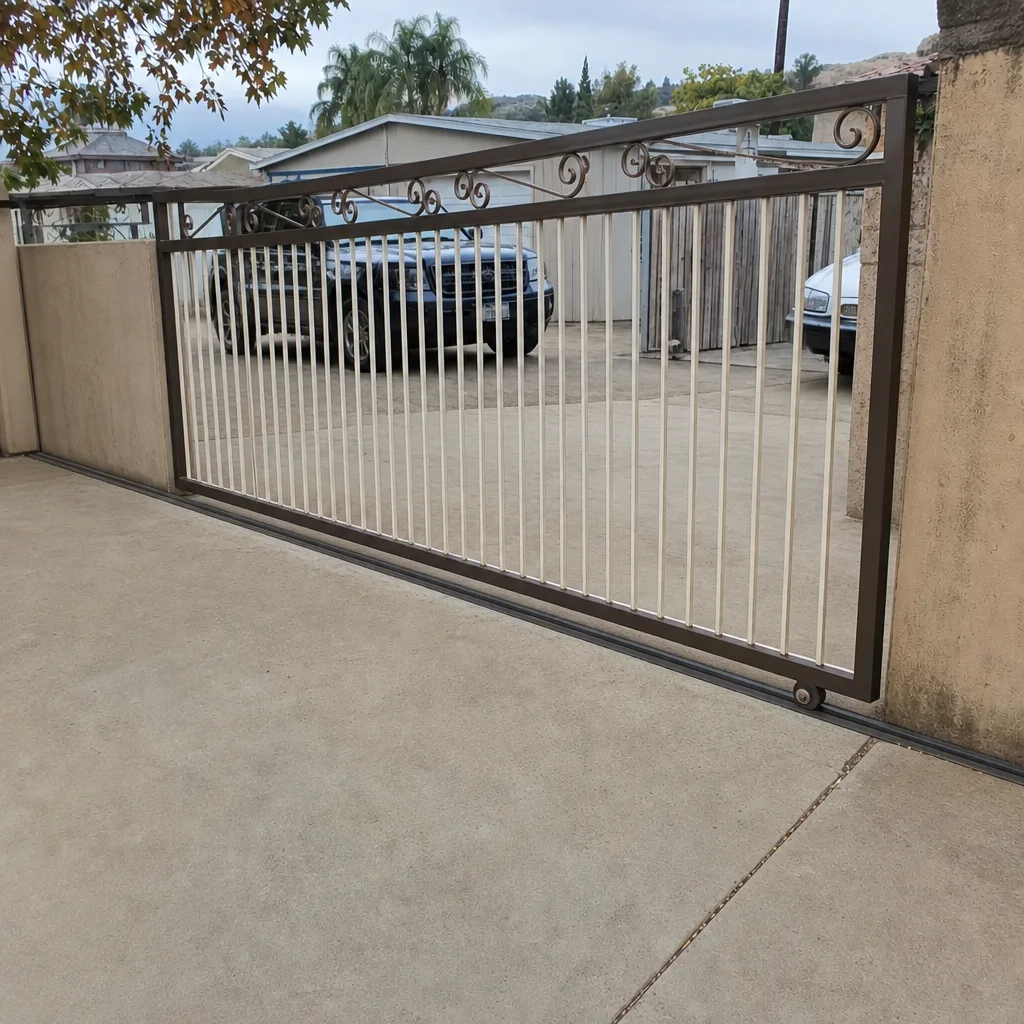
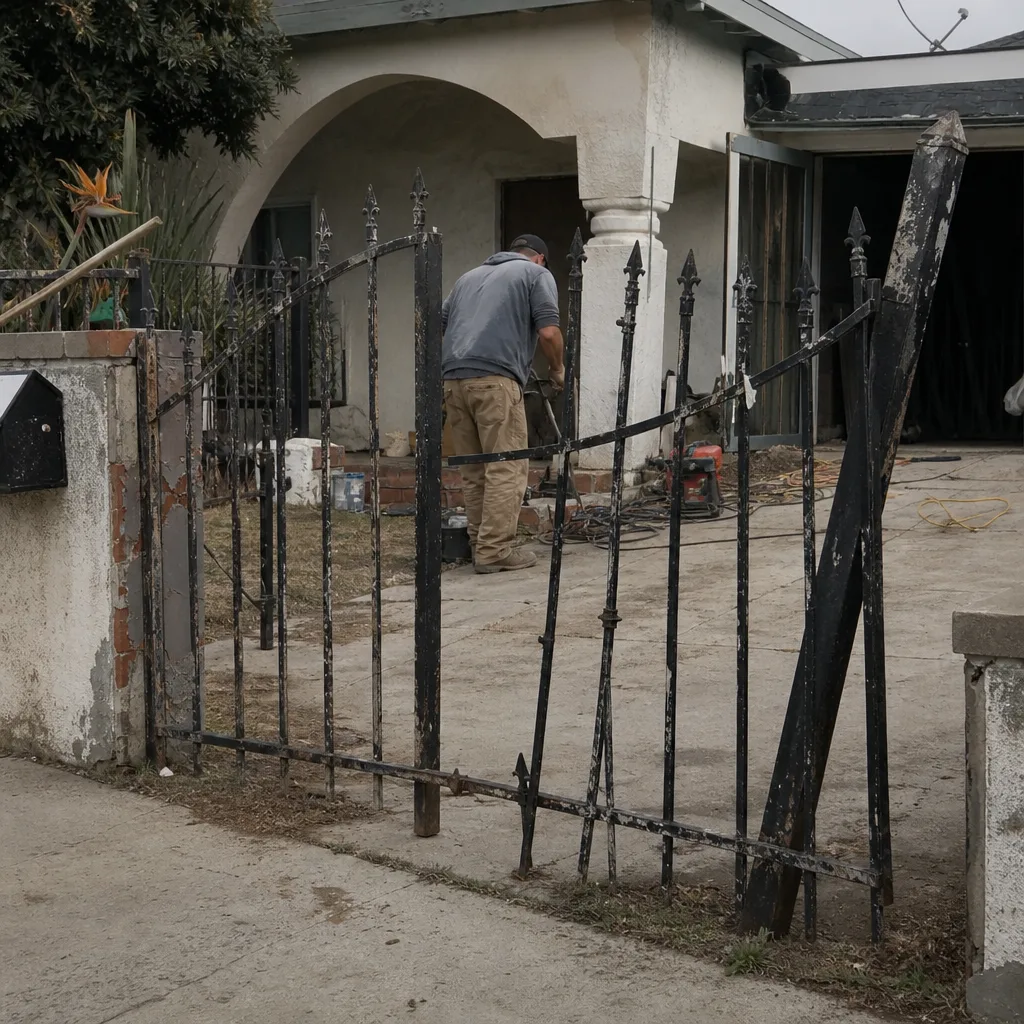
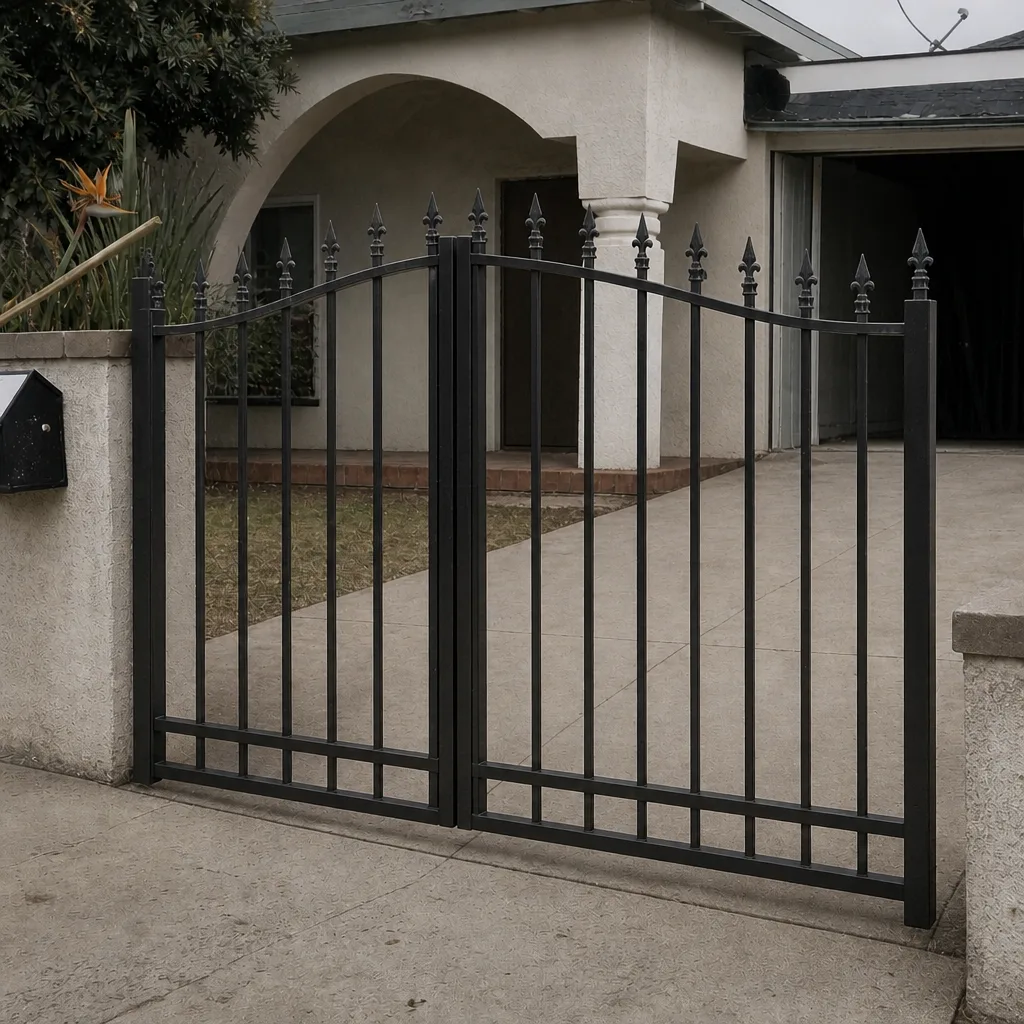
See the difference
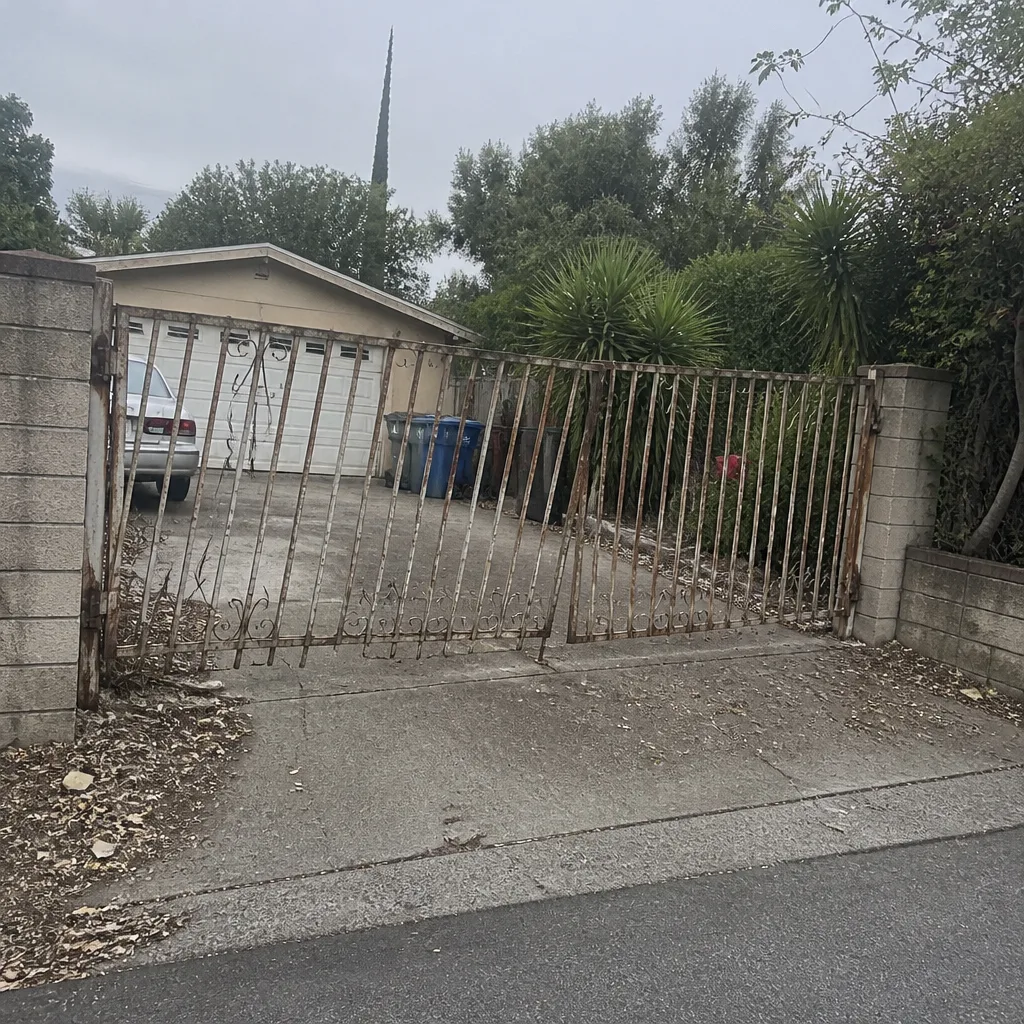 Before
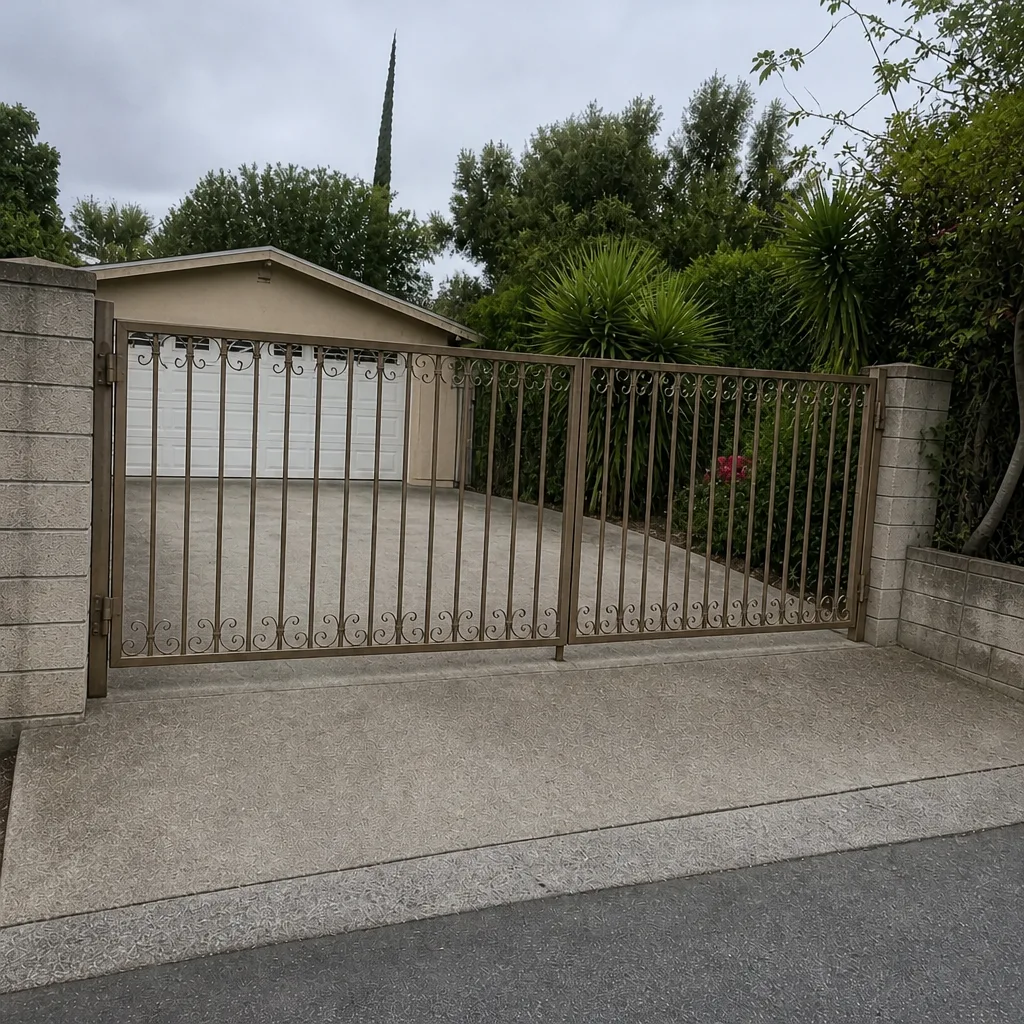 After
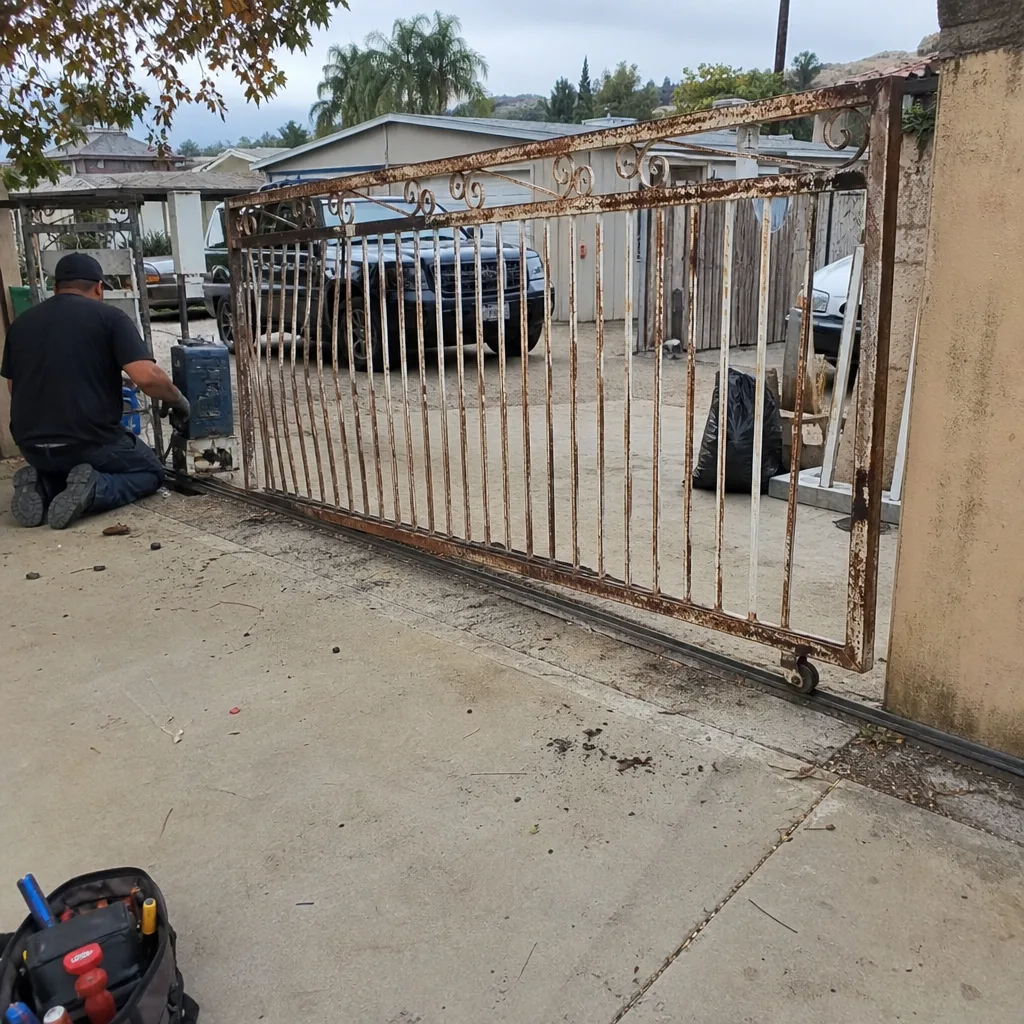 Before
 After
 Before
 After
When to Call a Professional
Most El Cajon gate work that touches electricity, safety devices, or a new installation belongs in the hands of a gate specialist. Call a professional if your gate operator is failing intermittently, if a photo-eye or safety edge is tripping or has been bypassed, if you’re planning to add an operator to a manual gate, if you’re changing the voltage or power source, if a home inspection has flagged unpermitted work, or if your HOA has asked for documentation on the gate’s code compliance. Diagnostic work on control boards and loop detectors is also specialist territory: a generalist will guess, and the right gate technician will diagnose at the source and tell you what needs a permit before you commit to the work. If you’re not sure whether your situation warrants a call, it’s usually worth one. An on-site look costs you nothing and may save a resale problem later. Gate Repair El Cajon offers free estimates in El Cajon. Call (866) 361-9590. We answer 24/7. Fast dispatch from 7am to 7pm, Sunday through Friday.
Frequently Asked Questions
In most cases, no. A like-for-like repair of an existing gate or operator, such as replacing a failed motor with an identical model or welding a hinge, generally doesn’t require a permit. The line is crossed when the work changes the gate’s capability or power: adding an operator to a manual gate, upgrading from 12V to 24V, or installing new loop detector wiring requires a permit and inspection. If you’re unsure, a quick call to the City of El Cajon building department settles it. Call (866) 361-9590 for a free estimate on the repair itself.
UL 325 is the safety standard that requires automatic operators to sense obstructions and stop or reverse. Every automatic gate operator, whether installed under a permit or repaired without one, should comply. In practice that means your gate needs working photo-eyes, safety edges, or equivalent sensors that stop the gate when something is in its path. If a safety device on your gate is broken or bypassed, call (866) 361-9590 to have it inspected and corrected.
Yes, in most cases. Adding an operator to a manual gate is an alteration, not a repair, because it introduces electrical equipment and safety systems that weren’t there before. That means a permit and a final inspection, and the installation must meet UL 325 for entrapment protection. Call (866) 361-9590 to ask about the scope of the work before you order equipment.
It can. A home inspector’s report that flags an unpermitted operator can lead to a buyer requesting a price reduction, or the deal falling apart if the listing is otherwise tight. The correction process usually involves pulling a permit for the corrective work, bringing the install up to code, and passing a final inspection. Getting ahead of it by checking the permit history before listing is cheaper and faster than discovery during escrow. Call (866) 361-9590 to have the installation inspected before the sale.
In many cases, yes. HOA CC&Rs can impose stricter requirements than the city on gate materials, height, color, and automation. A gate that passes a city inspection can still fail an architectural review, and the HOA has the authority to require changes at the owner’s cost. Read the CC&Rs and get the architectural review approval in writing before ordering equipment. Call (866) 361-9590 to schedule an on-site look if you need to document what your current gate does.
We can’t quote turnaround times because the City sets its own review and inspection schedules, and those vary by project. The work that takes longest is usually the electrical inspection scheduling, not the gate installation itself. The practical takeaway is to pull the permit before the work begins so nothing is on the critical path at resale. Call (866) 361-9590 for a free estimate on the installation and a clear picture of what the permit scope will cover.
The Bottom Line
The line between repair and alteration is what most El Cajon homeowners don’t know, and it’s the line that matters at resale. A like-for-like repair of an existing gate usually needs no permit; adding an operator, changing voltage, or installing new access control wiring is permitted work with a final inspection attached. UL 325 applies to every automatic gate regardless of permits, and HOAs in El Cajon can require stricter standards than the city. If you’re planning a gate project or a sale, know your permit history, keep your finaled paperwork, and don’t let a generalist wire a safety system. Call (866) 361-9590 for a free estimate. We answer 24/7. Fast dispatch from 7am to 7pm, Sunday through Friday. Your gate questions about permits and code in El Cajon are one call from a straight answer.
Written by the team at Gate Repair El Cajon.