
Last updated November 15, 2026
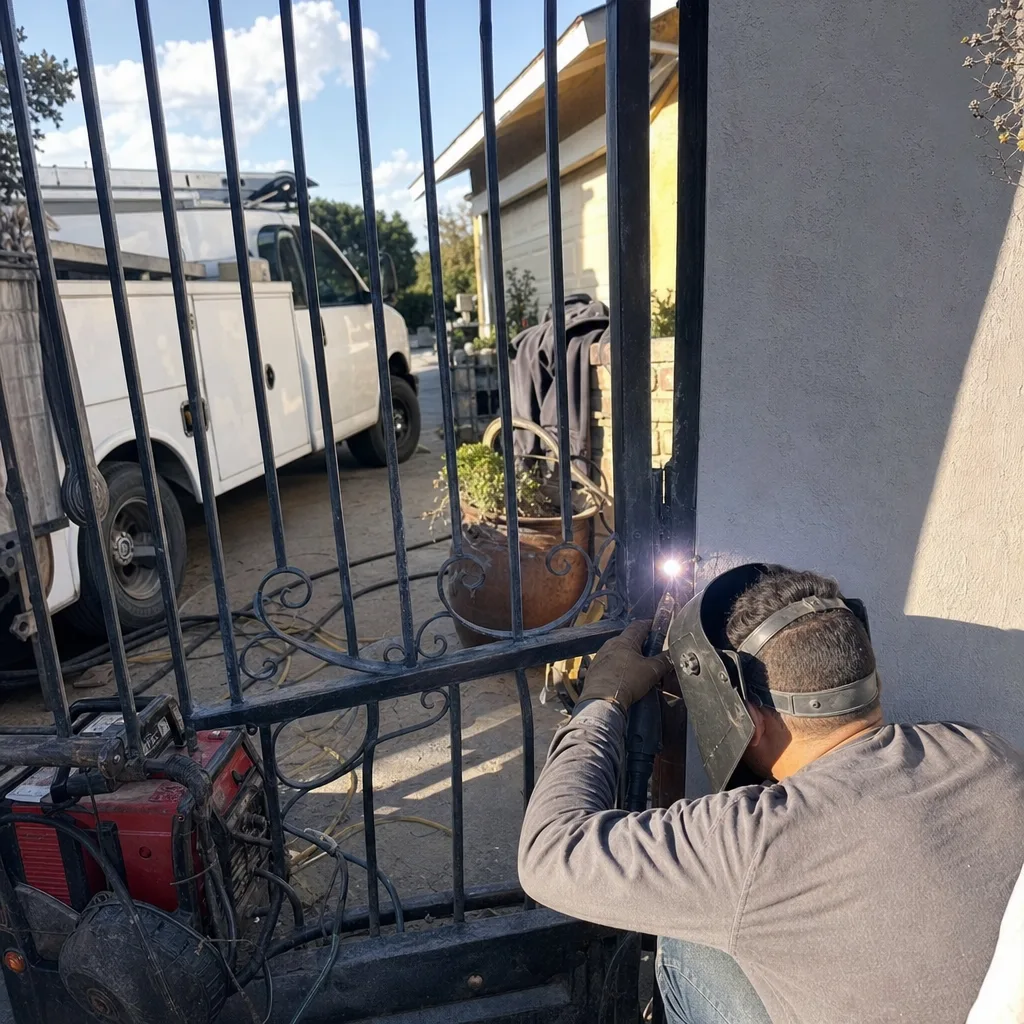
 Wrought iron
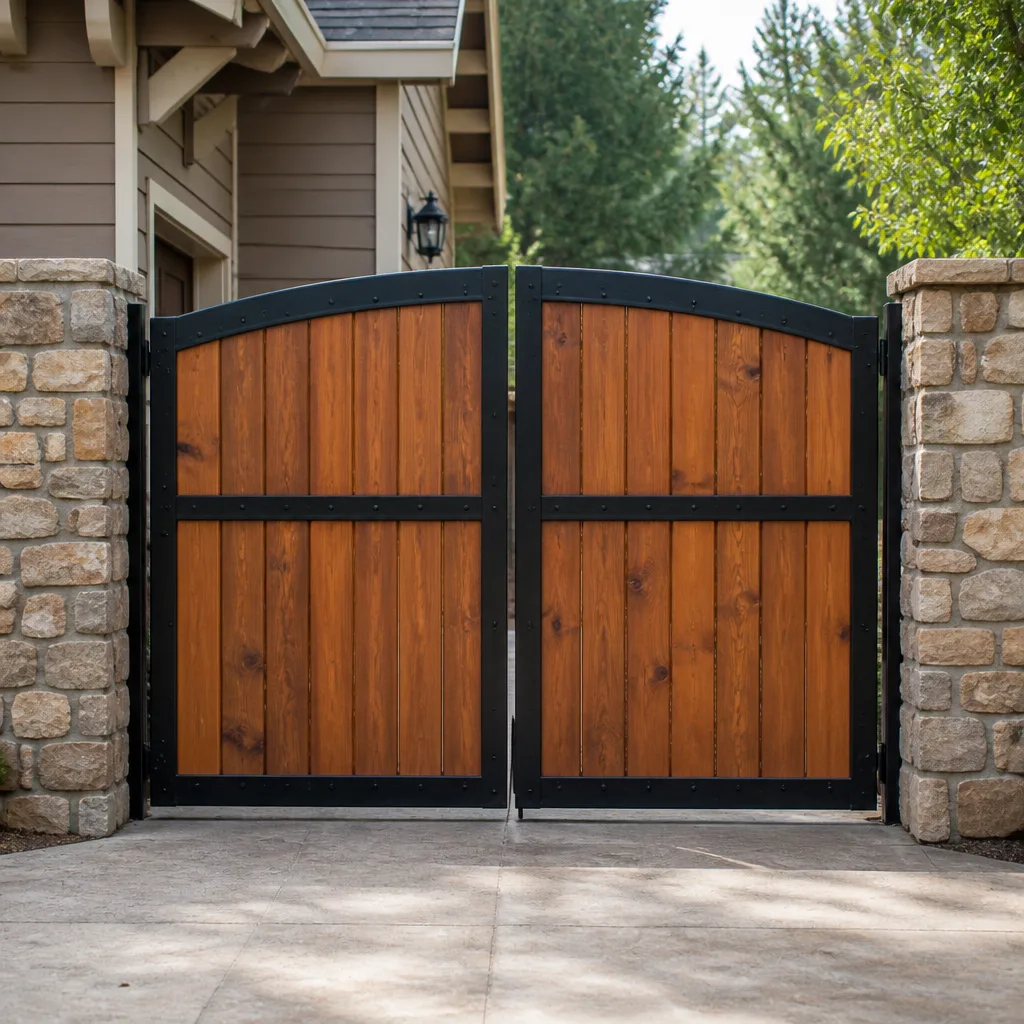 Wood & steel frame
 Farm & ranch
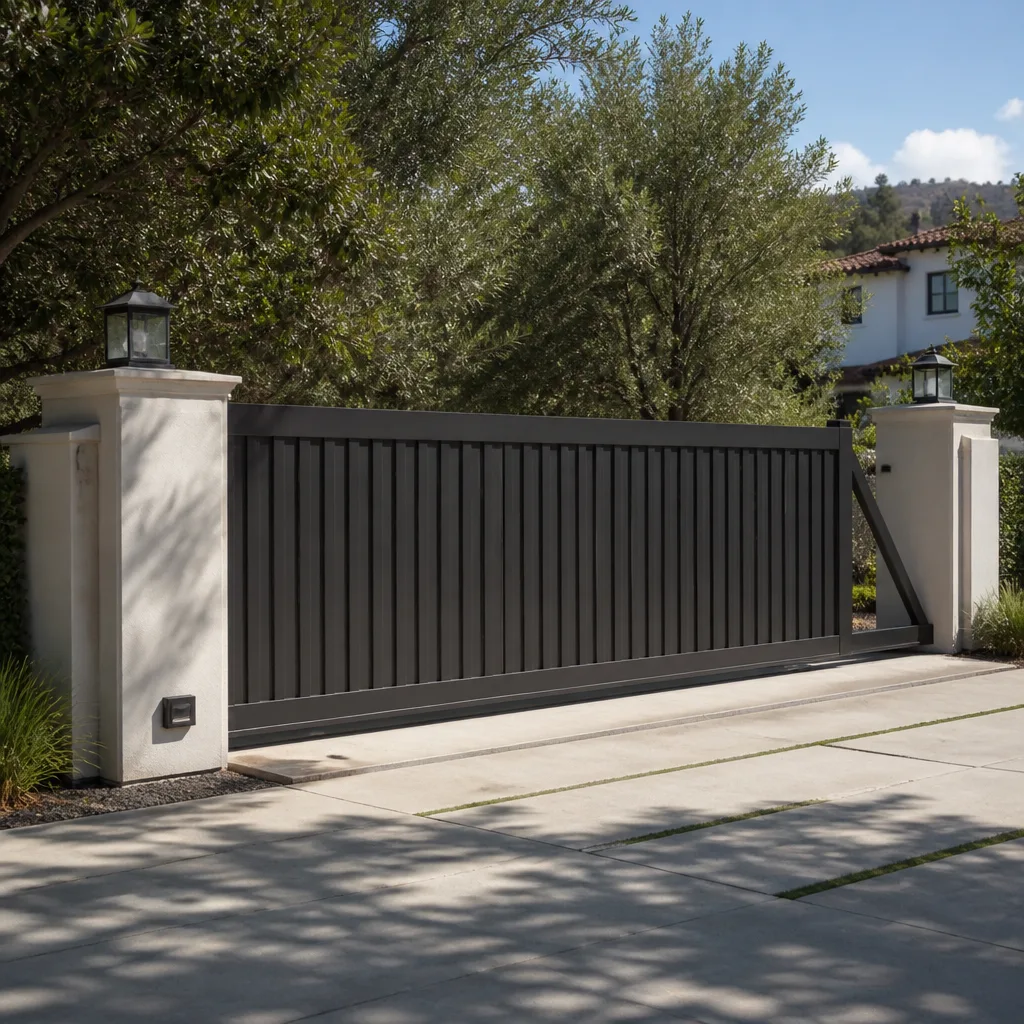 Sliding driveway gates
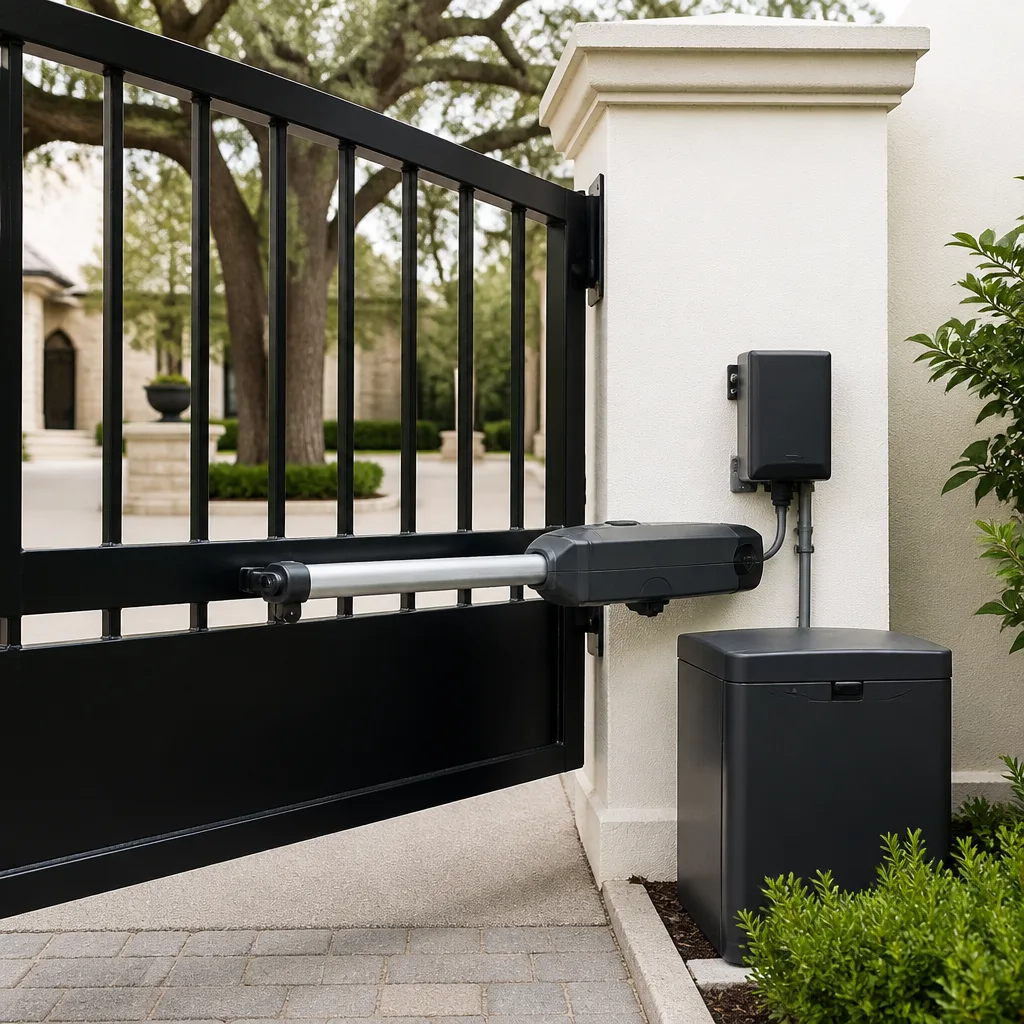 LiftMaster operators
Free on-site gate assessment - hinges, posts, and your LiftMaster or Nice gate operator checked before anything is quoted
The assessment is free and the quote is the invoice.
Get your free estimateGate Repair Maintenance Schedule: What to Do and When
Lubricating your gate hinges every three months is the standard advice, and in El Cajon it’s often the wrong advice. Summer heat here pushes operator housings well past 100°F, and a wet chain lubricant applied in June does more harm than good: it turns into a sticky film that grabs grit and dust, and that paste wears the chain faster than a dry, clean chain ever would. The real maintenance question isn’t “what month is it?” but “what has this gate been through lately?” What follows is a condition-driven schedule built around how gates actually age in El Cajon’s dry heat, stucco dust, and Santa Ana wind events, with the exact tasks, the right lubricants by component, and a clear line between what you can safely handle and what needs a technician.
Quick Answer
A gate maintenance schedule for El Cajon should be built around local conditions, not the calendar. Check and clean the track, rollers, and sensors monthly, inspect the gate frame and hardware after every Santa Ana wind event, test the battery backup every 90 days, and have a technician inspect the operator, control board, and safety devices once a year. Lubrication depends on the drive type: dry-film or silicone-based lube for roller chains, manufacturer-specified grease for screw drives, and a light oil on hinge pins, never a sticky spray-on grease that collects dust.
Styles & brands we work with
- Wrought iron
- Wood & steel frame
- Farm & ranch
- Sliding driveway gates
- LiftMaster operators
Table of Contents
- Why El Cajon Conditions Rewrite the Maintenance Calendar
- Monthly Tasks You Can Do Yourself
- The Right Lubricant for Every Gate Component
- The 90-Second Battery Backup Test
- The Post-Santa-Ana-Wind Inspection Checklist
- Annual Tasks That Need a Technician
- A Season-by-Season Schedule for El Cajon
- Extra Steps for Commercial and Multi-Unit Gates
Why El Cajon Conditions Rewrite the Maintenance Calendar
Most generic maintenance schedules are written by companies in mild climates, and they assume stable temperatures, moderate humidity, and few airborne particulates. El Cajon doesn’t cooperate with any of that. Summer afternoons regularly cross 100°F, the air holds fine stucco and masonry dust from ongoing construction and repainting, and the Santa Ana winds push through the valleys every autumn loaded with debris. Each of these stresses gate hardware in a specific way, and a schedule that ignores them will either over-service the easy parts or under-service the dangerous ones.
Heat is the biggest factor. Hydraulic operators become less efficient as the fluid warms, and their internal seals harden faster in dry, hot air. Rubber weather seals on control boxes, remote receivers, and battery housings crack earlier than they would in a milder climate. Battery backup systems, which rely on lead-acid or sealed AGM cells, age faster when stored at sustained high temperatures. A backup battery that would last five years in a cool garage may need replacement sooner in an outdoor gate box on a sunny El Cajon driveway.
Dust is the second. Stucco dust is abrasive and slightly alkaline, and it settles into chain drives, screw drives, and roller tracks. That’s why the standard “spray grease on everything” advice backfires here. The grease traps the grit, the grit grinds, and the wear accelerates. Dry-film and silicone-based lubricants leave less sticky residue and let dust shed off instead of accumulating.
Wind is the third. Santa Ana events in El Cajon bring dry, gusty conditions that stress gate frames, push against sensors, and drive debris into tracks. A post-wind inspection is one of the highest-value tasks you can do, and it’s almost always skipped. If you need gate repair after a wind event, that’s a normal part of life here, not a sign of a badly built gate.
Monthly Tasks You Can Do Yourself
Monthly homeowner tasks are limited to cleaning, visual inspection, and the safe hardware checks. Anything involving electricity, the operator housing, or the springs and cables of the gate itself belongs to a technician. The monthly list takes about 15 minutes and catches most developing problems before they become repairs.
- Clear the track. Use a stiff brush or a leaf blower on low to remove leaves, grit, and stucco dust from the slide track. Do not hose it down; water plus dust becomes a paste that grinds rollers.
- Wipe the photoelectric sensors. A dry microfiber cloth on the sensor lenses takes seconds and prevents false triggers that look like operator failures.
- Walk the gate travel by hand. With the operator disengaged (following the manufacturer’s release instructions), push the gate along its full opening. It should move smoothly with no catching, grinding, or wobble. Stiff spots point to worn rollers or a track out of alignment.
- Look at the frame welds and bolts. Check for cracks, loose bolts, or rust blooming at weld joints. Heat cycling loosens hardware over time, and El Cajon’s dry-to-hot swing is enough to work fasteners loose.
- Inspect the safety edges and photo-eye alignment. Bump the safety edge gently and confirm it stops the gate when close; break the photo-eye beam with your hand and confirm the gate reverses or stops. Do this only while standing clear of the path.
- Listen to the operator. A healthy operator runs at a consistent tone. Growling, grinding, or a change in pitch is early warning of a bearing or gearbox issue.
If any of these checks turns up something that concerns you, don’t run the gate. Call (866) 361-9590. We answer 24/7, and fast dispatch from 7am to 7pm keeps you from sitting with a stuck gate for long. Our technicians have up to 15 years of experience, and the estimate is free.
The Right Lubricant for Every Gate Component
The lubricant that works for a roller chain will ruin a screw drive, and the grease that protects a hinge pin will gum up a track. This is the section most maintenance guides skip, and in El Cajon’s dust it matters more than anywhere. Here’s the component-by-component breakdown.
Roller-chain drives
Use a dry-film or a PTFE-based chain lubricant, applied sparingly. It goes on as a liquid, the carrier evaporates, and what’s left is a thin, non-sticky film that doesn’t grab stucco dust. Avoid any “heavy-duty” grease in a spray can; those products are designed for wet, dirty environments and are exactly wrong for dry climates. Apply every two to three months, and wipe the chain with a dry rag first. The brands we service most in El Cajon, including LiftMaster and FAAC operators, all specify dry or light-film lubrication in their manuals.
Screw drives
Screw drives on sliding gates need the manufacturer-specified grease, and only the manufacturer-specified grease. These are almost always lithium-based or a proprietary blend, and substituting a general-purpose product can shorten the screw’s life. If you don’t have the manual, ask us before applying anything. In our experience, a screw drive that’s been greased with the wrong product develops a squeal within a season.
Hinge pins on swing gates
A few drops of light machine oil or a silicone spray on each hinge pin, worked in by opening and closing the gate by hand. No grease. Grease on a hinge pin becomes a dust magnet, and in El Cajon’s stucco-dust environment that grit grinds the pin down faster than no lube at all.
Rollers and track
Rollers should be cleaned, not lubricated. If they’re sealed bearings, they’re already lubricated. If they’re worn, replace them. Track surfaces get wiped clean, not greased. Any guide telling you to grease a slide track has probably never serviced a gate in a dusty climate.
What to never lubricate
- Photoelectric sensor lenses (clean only, with a dry cloth)
- Safety edge rubber (clean and inspect only)
- Control board and terminal blocks (keep dry; never apply anything)
- Operator gearbox or hydraulic housing (sealed; technician-only)
- Limit switches (clean only)
The 90-Second Battery Backup Test
Most homeowners find out their gate’s backup battery is dead during the one outage that matters: after a storm, at the end of a long day, or exactly when the household needs the gate to open and a delivery or emergency vehicle is waiting. The test takes 90 seconds and should be on the schedule every quarter. Here’s how to do it without touching anything dangerous.
- Confirm the gate is closed and the area around it is clear of people and vehicles.
- Locate the operator’s power disconnect switch (or shut off the breaker serving the gate).
- Press the control button or your remote to open the gate. A healthy backup battery will open the gate at normal speed.
- Open and close it once more on battery. A backup that sags or slows on the second cycle is on its way out.
- Turn the power back on and cycle the gate once to confirm normal operation.
If the gate doesn’t move on the first attempt with the power off, the backup battery or its charging circuit has failed. This is one of the most common service calls we get in El Cajon after a summer heat wave, because heat degrades sealed batteries faster than cool climates do. Replacing a backup battery is straightforward, but confirming that the charger and the control board are working is a technician task. Our electric gate repair work routinely includes backup battery diagnosis, and we handle the brands that show up most here, including DoorKing and Elite operators.
Also check the battery housing itself. Heat can warp plastic enclosures and crack rubber gaskets, and a housing that lets in dust won’t protect the terminals. If you see corrosion on the terminals, don’t clean it yourself; call us.
The Post-Santa-Ana-Wind Inspection Checklist
Santa Ana winds are the most underrated maintenance event in El Cajon. A single gusty night pushes palm fronds, dust, roof debris, and paper into tracks and chain runs, and the stress on the frame and hinges can pull fasteners loose. The morning after any significant wind event, spend ten minutes on this checklist. It catches most wind-related damage before it becomes a repair.
- Track and chain: Look for debris, palm fronds, and fine dust. Clear with a stiff brush or leaf blower before running the gate.
- Frame welds and corner brackets: Check for new cracks. Wind pressure flexes frames, and a crack that starts small can grow quickly once the operator keeps pushing the gate.
- Post and pier bolts: Look for loosened bolts or a gate that has shifted out of alignment. A post that’s moved even a quarter inch will throw the operator’s limit settings off.
- Photoelectric sensors: Wind-blown dust leaves a film on the lenses that causes false triggers. Wipe them clean.
- Limit switches: Run the gate through its full cycle. If it stops short or overshoots, the limit switches have moved and need adjustment.
- Safety edges: Confirm the rubber is intact, not torn or pinched. A wind-dropped branch can cut a safety edge without obvious signs.
- Operator housing: Check that the cover is seated and the gasket is intact. A loose cover lets in dust that shortens the control board’s life.
One wind event won’t usually break a gate. Repeated events without inspection will. If you’re not comfortable checking the limit switches or the frame welds yourself, that’s not a failure; it’s the right call. Give us a call at (866) 361-9590 and we’ll do a full post-wind inspection, which is exactly the kind of residential and commercial electric access work we do every week in El Cajon.
Annual Tasks That Need a Technician
Some maintenance is genuine DIY territory. Other tasks are dangerous or require diagnostic equipment you don’t have, and doing them wrong can destroy the operator or cause a serious injury. This is the line.
Owner-serviceable (safe)
- Cleaning the track, rails, and sensor lenses
- Lubricating a chain drive, screw drive, or hinge pins with the correct product
- Testing and, if the manual permits, replacing a backup battery
- Testing the safety edges and photo eyes
- Cleaning the operator housing exterior (never opening it)
- Visual inspection of the frame, bolts, and post base
Technician-only (do not attempt)
- Control board diagnostics. The control board carries line voltage and a charged capacitor. A short or a misdiagnosed board can destroy the operator and, more importantly, harm you. Leave it to a technician.
- Any work on the operator’s electrical supply or wiring. The 120V or 240V line feeding the operator is live and dangerous. Every electric gate service call should begin with the power isolated by a professional.
- Adjusting the force, speed, and limit settings. These parameters are set with a meter and depend on the gate’s weight and travel. Getting them wrong overloads the motor or defeats the safety features.
- Safety edge and photo-eye replacement. These components save lives and limbs. Replacing or repairing them is a technician job.
- Any heavy panel, pivot, or counterweight work. Swing gate panels are extremely heavy and can crush. Never lift or adjust one yourself.
- Operator gearbox or hydraulic fluid service. Sealed components; internal work needs specialist tools.
- Springless gate issues, pivot alignment, roller replacement on heavy commercial gates. Frame and hardware work on a heavy panel is a two-technician job with the right equipment.
We recommend one annual technician visit for every electric or automatic gate. That visit covers a full safety inspection, control board health, limit and force calibration, safety device testing, and operator lubrication. Manual swing and slide gates need a technician visit every two years unless something feels off. If your gate is from Viking or Ghost Controls, both are brands we regularly service, and the annual visit gives the operator a clean inspection baseline for next year.
A Season-by-Season Schedule for El Cajon
Here’s how the tasks come together across the year in El Cajon. This isn’t a rigid calendar; it’s a pattern that matches how the local climate actually stresses gates. You can shift a week or two in either direction without harm.
Spring (March – May)
- Full clean of the track, chain, and rollers after winter dust accumulation
- Lubricate chain or screw drive with the correct product
- Test the backup battery and inspect the housing for cracks
- Clean the sensor lenses and confirm photo-eye alignment
- Walk the gate by hand and check for stiff spots or wobble
Summer (June – August)
- Monthly inspection of the operator housing for heat damage
- Check hydraulic operators for fluid leaks or sluggish operation in the afternoon heat; call early if you suspect an issue
- Test the backup battery more frequently (every 60 days in high heat)
- Check rubber seals and gaskets on the control box for cracking
- Confirm the operator still cycles at normal speed when the gate is hot
Fall (September – November)
- Ready for Santa Ana season: complete the post-wind checklist after each event
- Annual technician visit (safety devices, control board, limit and force setting)
- Lubricate chain or screw drive again
- Inspect frame welds and post bolts for wind-related movement
- Clean battery terminals (visually only; call if corroded)
Winter (December – February)
- Winter is mild here; this is a good window for a full hardware check
- Test the safety edges and photo eyes
- Inspect the operator cover gasket and reseat if needed
- Look for rust blooms at any unsealed metal, touched up promptly
- Lightly oil hinge pins on swing gates
If you’ve never had a technician do a full annual visit, this is the year to start. We offer free estimates in El Cajon, and a full inspection is usually the moment homeowners learn their control board was already declining, or that a limit switch was one windstorm from failing.
Extra Steps for Commercial and Multi-Unit Gates
Commercial gates in El Cajon carry everything the residential list does, plus a layer of duty-cycle and safety-compliance checks that matter a great deal. Parking lot gates, apartment complex entrances, and access-controlled sliding gates at business parks run hundreds of cycles a day. Maintenance that works on a home gate is not enough here.
- Cycle count check. Many commercial operators log cycles; that data tells you the actual wear pattern and tells you when to pre-emptively service the gearbox.
- Loop detector testing. Vehicle loop detectors need to be tested with an actual vehicle, not just a hand wave. A failed loop is a common reason commercial gates appear “stuck open.”
- Access control panel inspection. Keypad, fob reader, and intercom systems need monthly testing. Failures here are often mistaken for gate problems.
- Safety device testing per the site’s requirements. Commercial gates need documented testing of safety edges, photo eyes, and loop detectors. Ask us what your site needs.
- Post-pier inspection. Commercial gate posts take significantly more load, and a loosened anchor bolt is a real risk. Inspect base plates and anchor bolts every month.
Property managers who want a single provider for repair, diagnosis, and new installation should keep our number handy. One call covers electric and automatic gate repair, manual gate repair, and new gate installation for both residential and commercial sites. We’re a gate specialist, not a fence company or a general handyman, and every technician’s time is spent on gates and gate systems. We also work with the equipment you already have, including DoorKing, Elite, LiftMaster, FAAC, BFT, Linear, Viking, Ghost Controls, and Mighty Mule, rather than pushing a replacement because a generalist couldn’t source the part.
Common Mistakes to Avoid
- Spraying wet grease on a chain in summer. In El Cajon’s dust, grease becomes a grinding paste that wears the chain faster than a clean dry chain. Use dry-film or PTFE-based lube, and wipe the chain down first.
- Greasing a screw drive with the wrong product. Screw drives need the manufacturer’s specified grease. Generic grease on a LiftMaster or Elite screw drive shortens its life and can void the manufacturer’s coverage on the operator.
- Skipping the post-wind inspection. A quick walk-through after each Santa Ana event catches loose bolts, misaligned limits, and debris before they turn into repairs.
- Opening the operator housing “just to look.” The control board and capacitor hold a charge even when the power is off. Only a technician should open the housing.
- Waiting until the battery fails during an outage. Test the backup every 90 days, and more often in the summer. Heat degrades sealed batteries quickly, and the failure always seems to happen at the worst moment.
- Ignoring small frame cracks. In a hot, windy climate, a hairline weld crack grows. Catching it early is a small repair; catching it after the gate has dropped is not.
- Using a general handyman for an electric gate. A generalist often can’t source the right parts or diagnose the control board, and you end up paying twice. Gate specialists work on the specific equipment you own.
See the difference
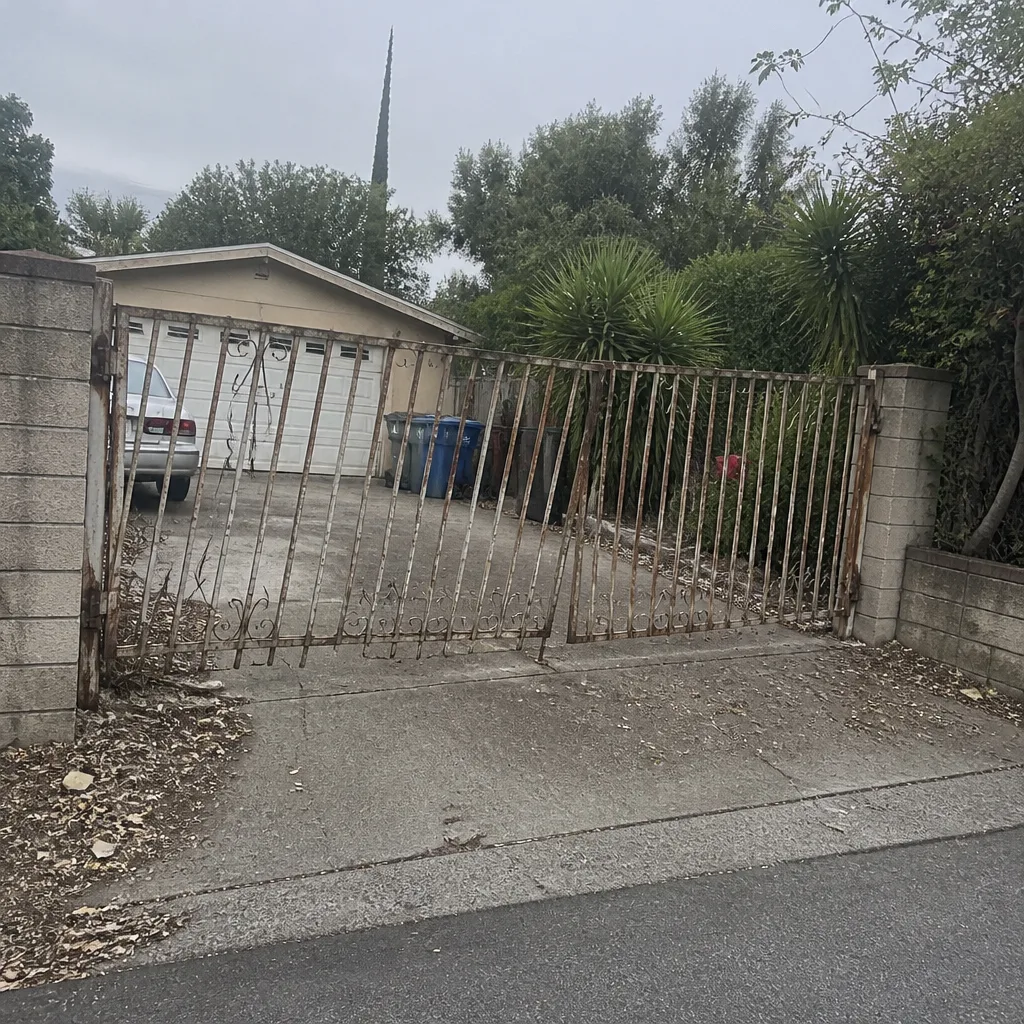 Before
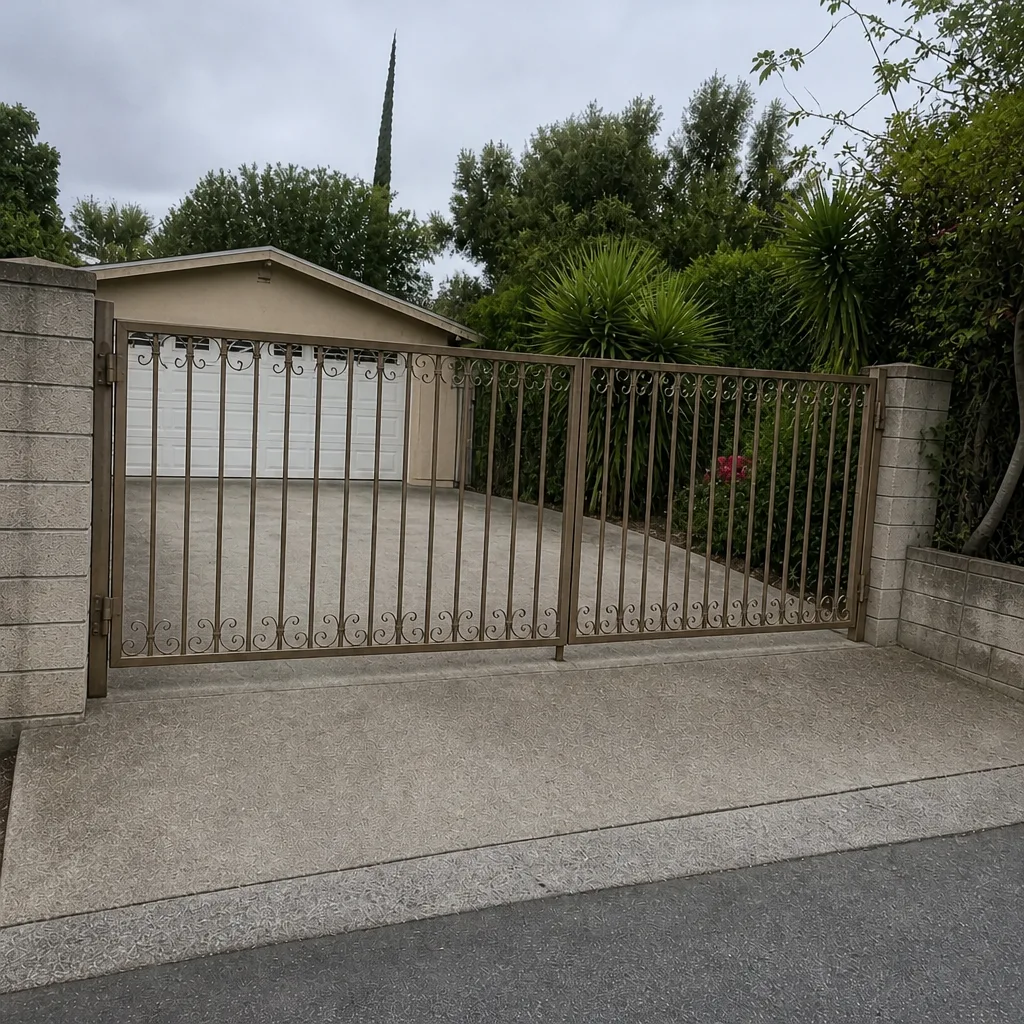 After
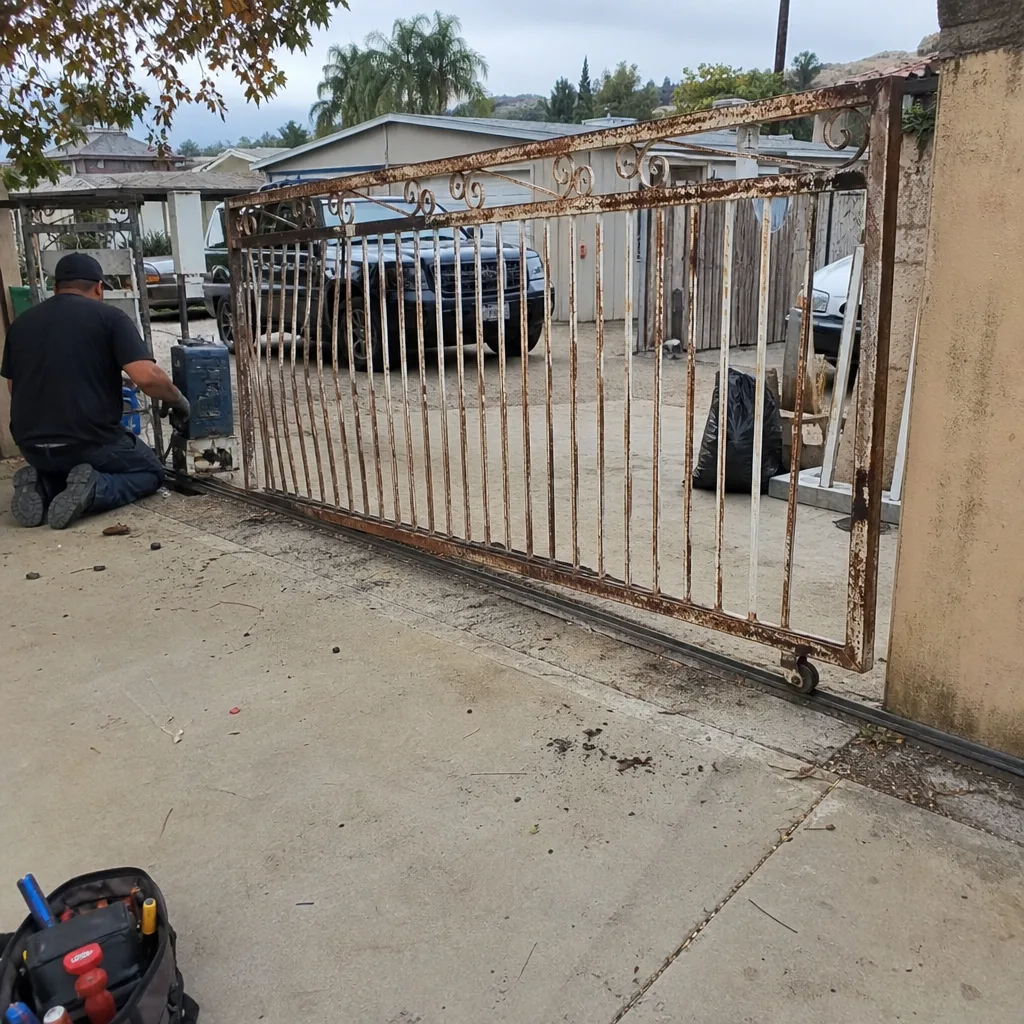 Before
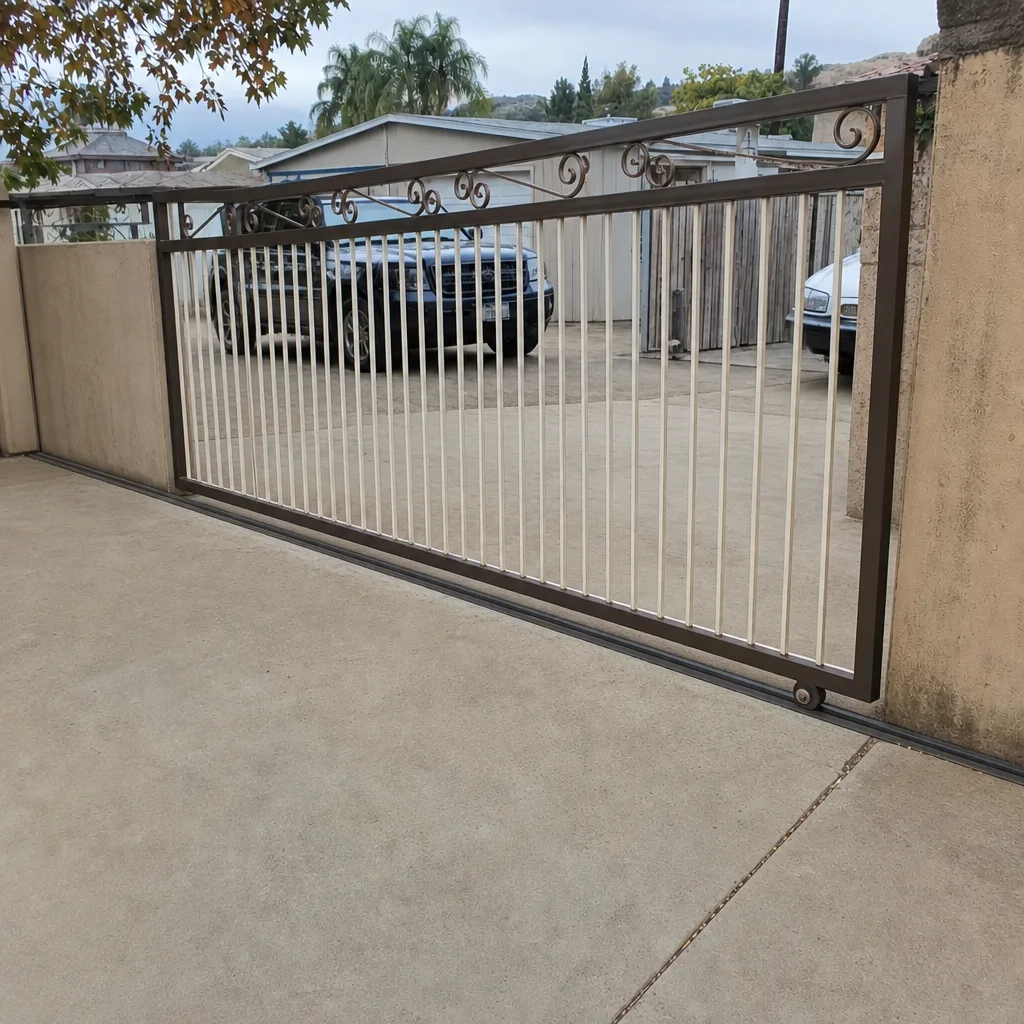 After
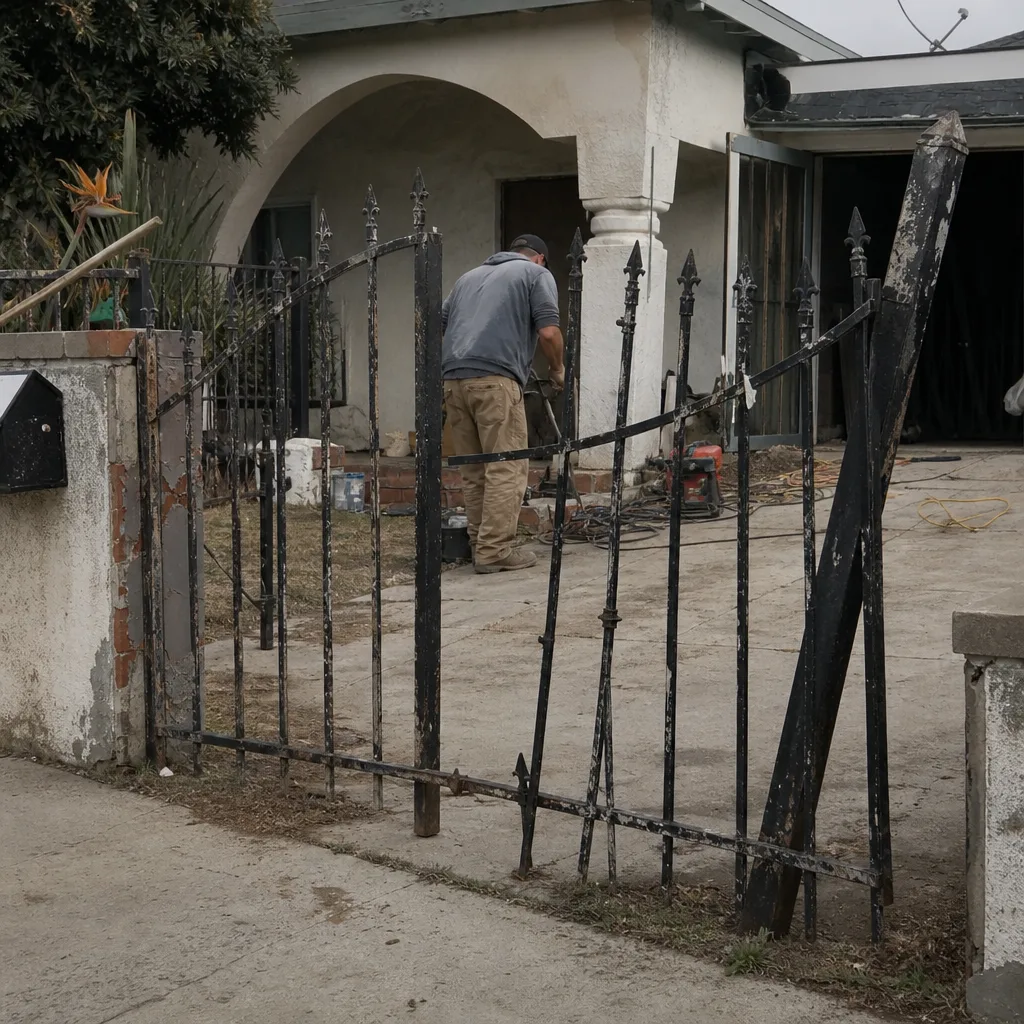 Before
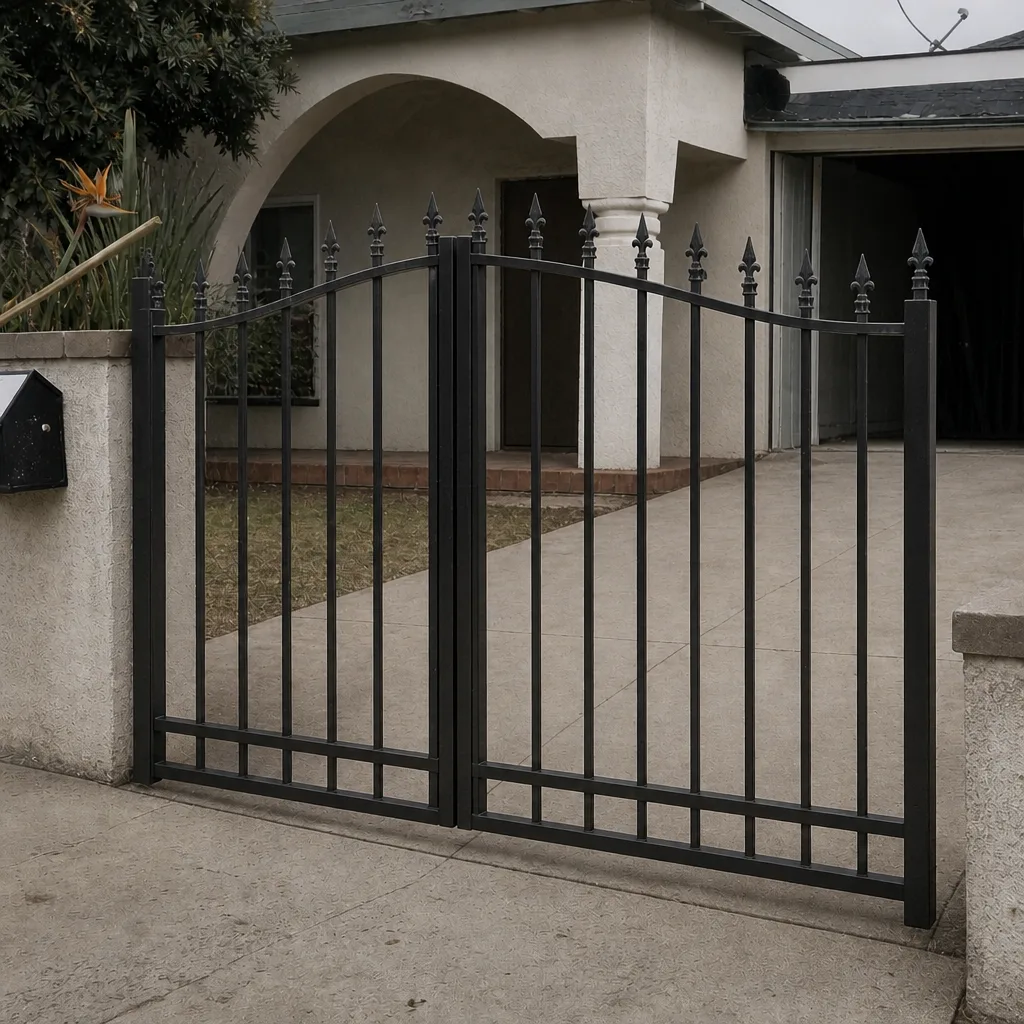 After
When to Call a Professional
Some situations call for a technician right away. If the gate stops mid-cycle and won’t respond to the remote or keypad, if the operator hums without moving the gate, if the gate reverses for no reason, if you smell burning or see a tripped breaker on the operator’s circuit, or if a safety edge or photo eye has stopped working, don’t cycle the gate again. If the frame looks bent, the post has shifted, or you see a panel that’s leaning, keep people and vehicles clear and call us. If you’re a property manager and a commercial gate won’t close, call us before the site is left unsecured. Gate Repair El Cajon offers free estimates in El Cajon: call (866) 361-9590. We answer 24/7. Fast dispatch from 7am to 7pm, Sunday through Friday.
Frequently Asked Questions
Electric and automatic gates in El Cajon should get a professional service visit once a year, with monthly homeowner checks in between and a full post-Santa-Ana-wind inspection after every significant wind event. Manual swing and slide gates can stretch to a technician visit every two years if monthly checks are done. The annual visit covers the operator, control board, safety devices, and limit and force settings, which is where the real wear happens. Call (866) 361-9590 for a free estimate on your next service visit.
Yes, if you use a sticky wet grease. In El Cajon’s dry, dusty summer environment, a wet grease traps stucco dust and grit, and that mixture grinds the chain on every cycle. Use a dry-film or PTFE-based chain lubricant instead, applied in a thin coat. Wipe the chain down with a dry rag before applying. If you’re not sure which product is right for your operator, call us and we’ll tell you what the manufacturer specifies.
With the gate closed and the area clear, shut off power to the operator, then press the control button to open the gate. A healthy backup battery opens the gate at normal speed. Cycle it once more to confirm; if the second cycle sags or stalls, the battery or its charger needs attention. Turn the power back on and test normal operation once. The whole test takes about 90 seconds and should be repeated every 90 days, and every 60 days in high summer heat. Call us if the backup fails; diagnosing the charger and the control board is a technician task.
Ask the City of El Cajon’s building department before you install anything. Permit requirements for new electric gates can vary based on height, setback, and the electrical work involved, and we don’t want you relying on a general rule. What we can tell you is that our installation work is done with the manufacturer’s specifications in hand and the site measured properly before we order anything. We’re happy to walk you through what the install involves; call (866) 361-9590 for a free estimate.
Yes. We work with the equipment you already have and identify most operator brands and their common failure patterns on the first visit. The brands we see most include LiftMaster, FAAC, BFT, Linear, Viking, Ghost Controls, DoorKing, Elite, and Mighty Mule, but we’re brand-agnostic. Call us with a photo of the operator and any label you can find, and we’ll tell you what we can do.
Any work on the operator’s electrical wiring or the control board. The line feeding the operator is live and can carry significant current, and the control board holds a charge even when the power is off. Heavy swing panels are the other major risk; they can crush or pin a person during adjustment. Stick to cleaning, lubricating, and visual checks, and let a technician handle anything inside the operator housing or on the gate’s electrical system.
The Bottom Line
Build your gate maintenance schedule around El Cajon’s conditions, not the calendar. Monthly cleaning and inspection, the correct lubricant per component, a 90-second battery test every quarter, a walk-through after every Santa Ana wind event, and one annual technician visit will keep a gate reliable for years. Stay out of the operator housing and off the electrical work; those jobs save lives when a technician does them and cause injuries when a homeowner tries. The cheap, small tasks you can handle. The expensive, dangerous ones should go to someone who does them every day. If you’re not sure where the line is on your gate, call us and we’ll tell you without a sales pitch.
We’re a dedicated gate specialist, not a fence company or a general handyman. Our work runs from manual gate repair to electric and automatic gate repair to full new gate installation, and our technicians have up to 15 years of experience. We diagnose the problem at the source, whether it’s the opener, the operator, or the control board, and we work with the equipment you have. If you’re in El Cajon and want a gate specialist on the phone, call (866) 361-9590 for a free estimate. We answer 24/7. Fast dispatch from 7am to 7pm, Sunday through Friday.
Written by the team at Gate Repair El Cajon.